English for Baristas: Real Language in UK Coffee Shops
All the English language terms spoken around the coffee machine.

Real Language Around the Coffee Machine
At Blue Noun, we help people use English in real situations — not just learn it in theory.
Our English experiences in Scotland are built around conversation, movement, and everyday interaction. There are no classrooms or textbooks. Instead, English develops through real moments: walking, talking, sharing meals, and spending time with people.
This page is a small example of that approach. A free resource we’ve shared for anyone working in cafés in the UK — take what’s useful.

Why Coffee?
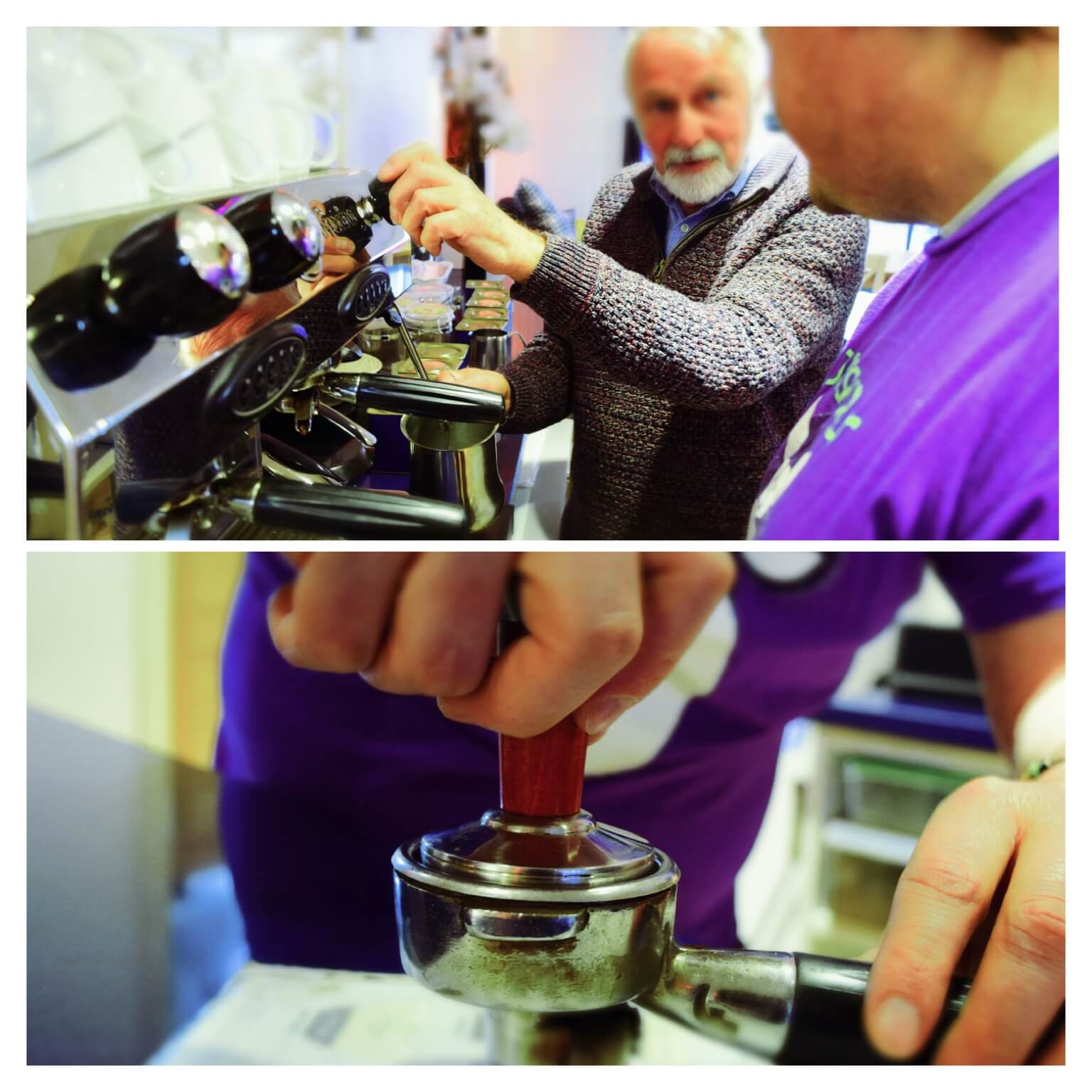
At our language hub in Crieff, we have a former coffee shop machine that we use during our sessions and social events.
Good coffee matters — and so does the language around it.
When we first got the machine, we had to learn how to use it properly. We took notes during a demonstration and turned them into something practical for English learners.
This resource comes directly from that experience.
Who This Is For
This guide is for:
- anyone working in a coffee shop in English
- anyone preparing for a barista job
- travellers looking for practical work in the UK
Coffee shops are a common entry point for international workers, and much of the language used is specific, fast, and rarely taught clearly.

What You’ll Learn
- the language used around the coffee machine
- common instructions and actions
- everyday phrases used during service
- key phrasal verbs and functional vocabulary
Everything is presented in context, so you can recognise it when you hear it and use it when you need it.
How to Use This Guide
This is a practical, real-world language guide.
If you’re preparing to work as a barista — or you’re already working in English — don’t just read it.
Use your imagination.
Work through each section step by step and picture yourself at the machine.
As you read, imagine the actions: switching the machine on, grinding the coffee, wiping down the surfaces, pouring the espresso.
If you can, act it out.
These small physical movements help build muscle memory — so the language becomes linked to what you’re doing, not something you have to stop and think about.
This matters because a café is a busy, noisy environment.
You won’t always have time to process every word.
Instead, you rely on familiarity:
hearing a phrase, recognising it quickly, and responding while you’re already moving.
As you go, pay attention to the verbs and phrasal verbs.
These are the action words you’ll hear again and again during a shift.
You don’t need to memorise everything.
The aim is to connect the language to real movements and situations — so when you hear it at work, it already feels familiar.
Common Phrasal Verbs You’ll Hear
Working in a café, you’ll hear the same actions again and again — often as phrasal verbs.
For example:
- switch on the machine
- heat up the water
- wipe down the surfaces
- rinse out the group head
- throw away the grounds
- top up the milk
- clean up as you go
These don’t always appear in textbooks, but they are part of everyday spoken English at work.
The more familiar they become, the easier it is to follow what’s happening around you.

The Coffee Machine: Step by Step
The Coffee Machine: Step by Step
The Start
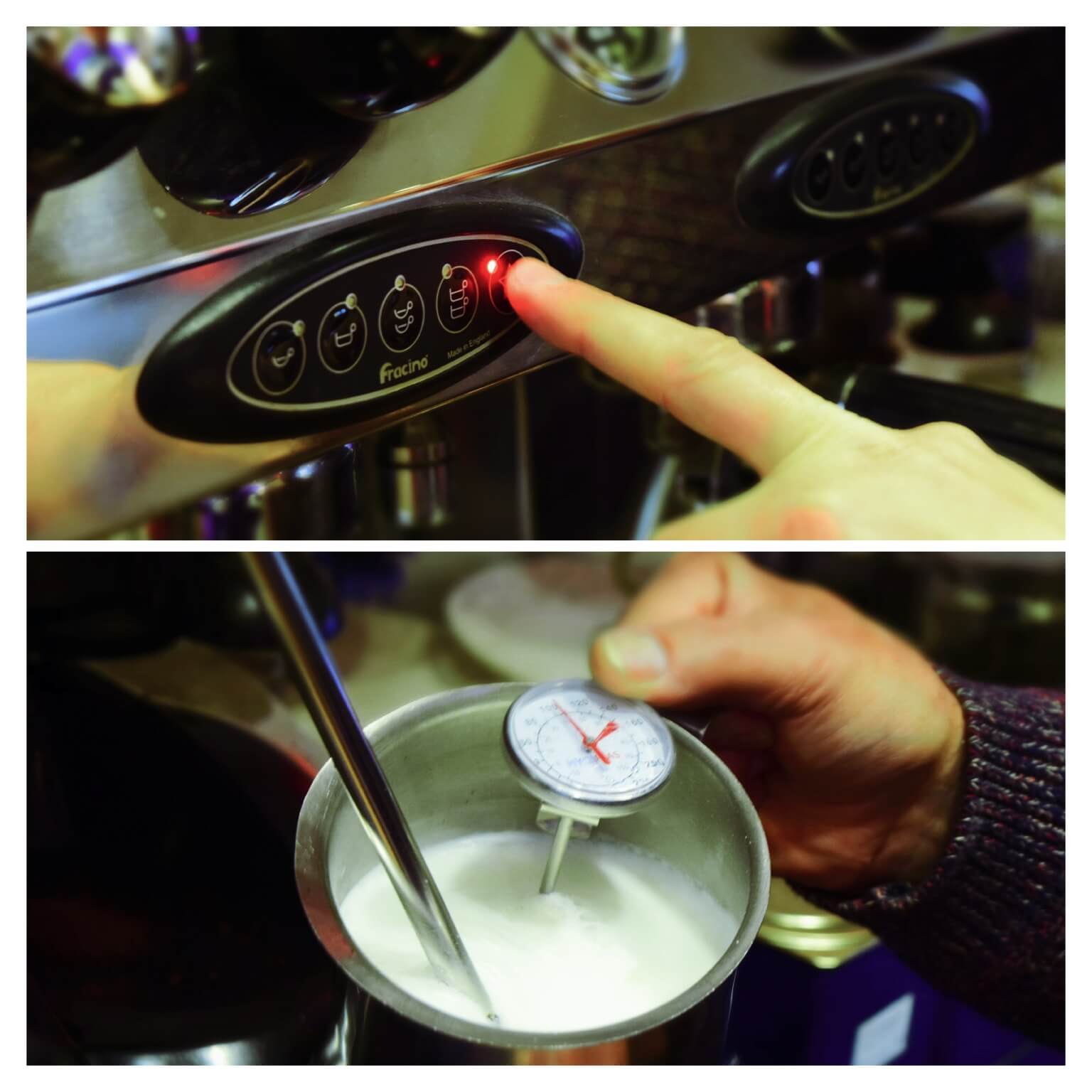
Switch the machine on at least 15 minutes before you need it. This gives it time to heat up properly.
When it reaches the correct temperature, the needle on the dial will sit in the green zone.
Grinder and Knock-Out Drawer
Turn the grinder on using the green switch. Do not adjust the settings — they are already calibrated.
Grind coffee as needed. Grinding too far in advance reduces flavour.
After serving, empty the grounds into the knock-out drawer. Tap firmly to release them. Well-prepared coffee will come out as a single compact piece.
Clean the coffee head using a dry brush, then run water through it until it runs clear. Leave it to dry.
Wipe surfaces as you go and keep the floor dry.
At the end of the day:
- rinse the drainage plate
- rinse the knock-out drawer
No soap is needed.
There is a cleaning kit under the counter, but only use it when necessary. Overuse can damage the machine.
Tamping and Preparing the Coffee
Tamping is essential.
Use the metal tamper on the rubber mat — not the built-in one under the grinder.
After tamping, the coffee should sit about 3mm below the rim.
The pressure should allow water to pass through in around 20–30 seconds. Too slow, and the coffee becomes bitter.
Remove loose grounds from the edges using a brush or by lightly brushing them away with your hand. This helps create a proper seal.
This action is sometimes called “blessing the coffee” — simply a way to describe the movement.
Making an Espresso
Everything starts with an espresso.
Use the control panel buttons:
- one controls quantity manually
- the other delivers a calibrated double shot (around 60ml)
Watch the coffee as it pours. It should move from dark to a toffee colour.
The crema should be thick and consistent.
Handle the machine gently:
- smooth movements
- no sudden pressure
Always rinse the machine after use.
Single or Double?
Use a double shot and pour away half if needed.
Single shots are harder to prepare correctly.
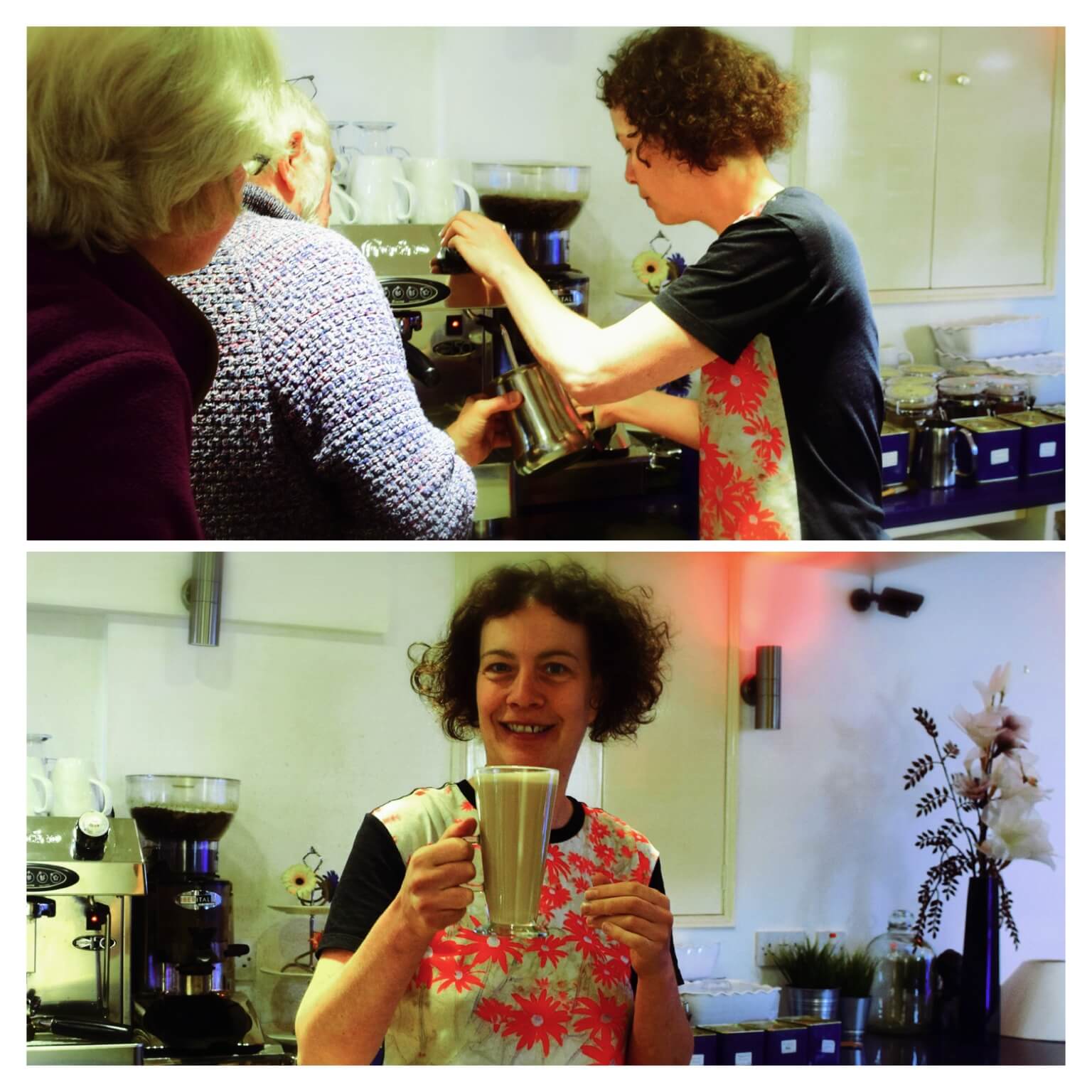
Latte
Use full-fat (blue top) milk.
Fill the jug no more than halfway.
Set the temperature to just above the red mark — not too high.
Before steaming, flush the steam wand briefly.
Create a gentle vortex in the milk. Too shallow or too deep will affect the texture.
Once ready:
- clean the wand immediately
- prepare your espresso
- pour steadily
A good latte forms layers:
- milk
- coffee
- light foam on top
If the milk isn’t right, discard it and start again.
Cappuccino
Use low-fat (green top) milk.
Prepare the espresso first.
Swirl it in the cup before adding milk to create the characteristic ring.
Steam the milk as before, then pour, controlling the balance of milk and foam.
A slight movement of the jug helps control the texture.
Wanting to Understand Spoken English in the UK?
Make time.
Be consistent.
Understanding spoken English isn’t just about vocabulary. It’s about getting used to how people actually speak — quickly, casually, and often without finishing their sentences.
If you feel like you don’t have time, don’t try to create more. Instead, use what’s already part of your day.
You don’t need long study sessions. You need regular contact with real English.
Here are some simple ways to build that:
Listen in Short Bursts
Put on UK-based podcasts, radio, or short videos while you’re having a coffee or getting ready. Even 5–10 minutes a day helps your ear adjust.
Use Your Commute
If you travel by bus or train, use part of that time to listen. You don’t need to understand everything. Focus on recognising familiar words and phrases.
Repeat What You Hear
If you hear a phrase you recognise, say it quietly to yourself. This helps connect listening and speaking.
Get Used to Different Voices
In the UK, accents vary a lot. Try listening to different speakers so your ear becomes more flexible.
Watch Real Interactions
Short clips of people ordering coffee, talking in shops, or having casual conversations are more useful than formal lessons. This is the kind of English you’ll hear at work.
Don’t Wait to Understand Everything
At work, you won’t catch every word — and that’s normal. Focus on key words, tone, and context. Over time, your understanding will grow.

Not Doing This Alone
If you’re working or travelling in the UK, especially on your own, using English all day can feel tiring.
Not just the language, but everything around it — new routines, new people, small interactions that add up.
We recorded a short podcast series called Alone with English for people in that position.
It’s full of small reflections, practical ideas, and honest conversations about how English can feel — not just how it works.
It won’t teach you vocabulary for your shift.
But it can help you stay with the process, enjoy it more, and feel a bit less on your own while you’re doing it.

Understanding Scottish Accents
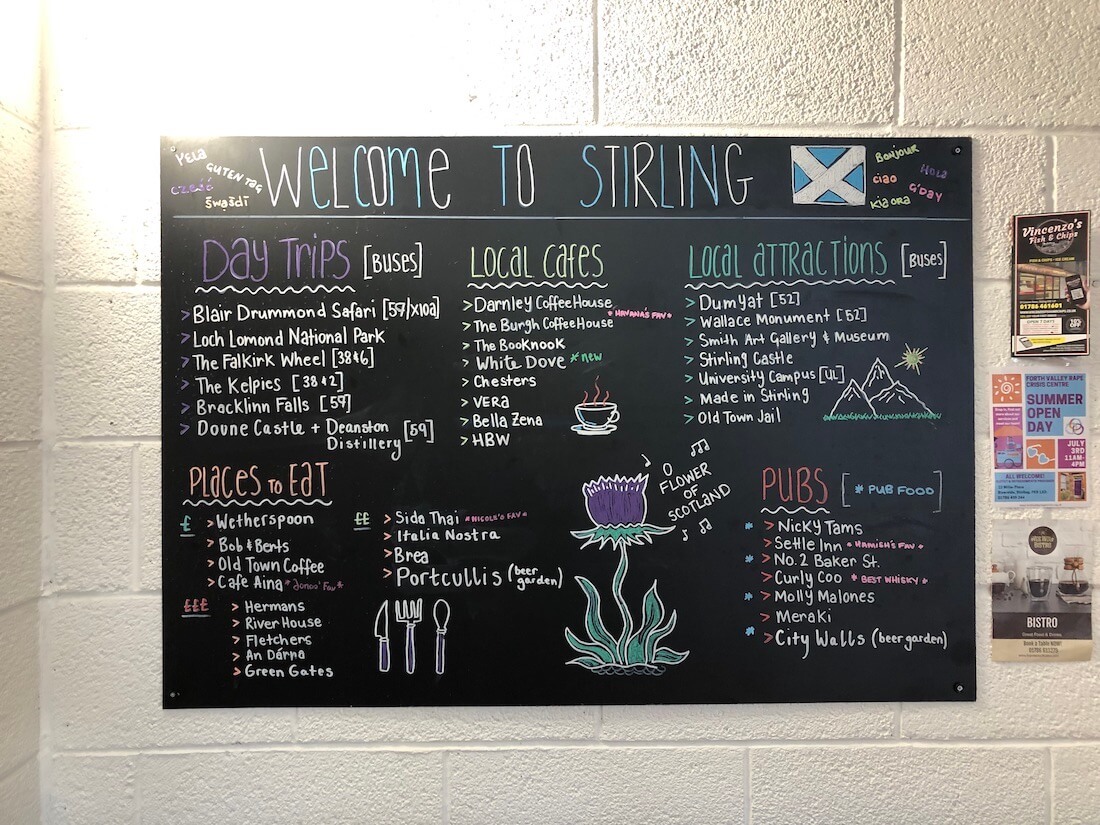
If you’re planning to work as a barista in Scotland, one of the biggest challenges isn’t vocabulary — it’s understanding how people speak.
Accents, speed, and everyday expressions can feel unfamiliar at first, even if your English level is good.
We’ve written a separate guide to help you get used to this, with examples and practical tips:
→ Understanding Scottish Accents
Give yourself time with this. The more you hear it, the more it starts to make sense.
A Final Note
This guide will help you handle the language around a coffee machine.
But more importantly, it shows how English works in real situations — practical, repeated, and connected to what you’re doing.
If you’ve already studied English but find it difficult to use in real life, that’s the gap we focus on more deeply through our English experiences in Scotland.
This is a small, practical example of how we approach English at Blue Noun — through real situations, movement, and everyday interaction.
Bonus Tips: Finding Barista Work in the UK
If you’re looking for barista work, language helps — but so does how you approach the search.
Here are a few things that make a real difference:
Apply in Person (When You Can)
Many cafés still prefer meeting people face-to-face. Bring a printed CV and ask politely if the manager is available. Even a short interaction helps them remember you.
Use the Café as a Customer First
Before applying, spend a bit of time there.
Notice:
- how staff speak to each other
- how they speak to customers
- the pace of the environment
This gives you a feel for the kind of English used — and whether it’s somewhere you’d enjoy working.
Keep Your English Simple and Clear
You don’t need perfect English. Clear and polite is enough.
For example:
- “Hi, I’m looking for work. Is the manager available?”
- “Could I leave my CV with you?”
These small interactions matter.
Have a UK Phone Number
It makes it much easier for employers to contact you quickly.
Check Online Listings — But Don’t Rely on Them Alone
Websites like Indeed are useful, but many café jobs are filled through walk-ins or word of mouth.

Free English Guides
Help Positioning
If you feel stuck, frustrated, or worn down by English, start with recovery.
Before strategy or decisions, focus on rest, steadiness and emotional reset. When you feel regulated, direction becomes clearer.
→ Help with English — Where Steadiness Comes Before Strategy
Help to Ensure Your Choice is Good
Already close to choosing?
Pause briefly before committing your time, money and energy. A few focused questions can help you confirm that your next step genuinely fits.