How We Use Scottish History on Our Language Holidays
A rich sense of place builds stories and language connections.
Our region, Perthshire, is drenched in history, layers and layers of it.
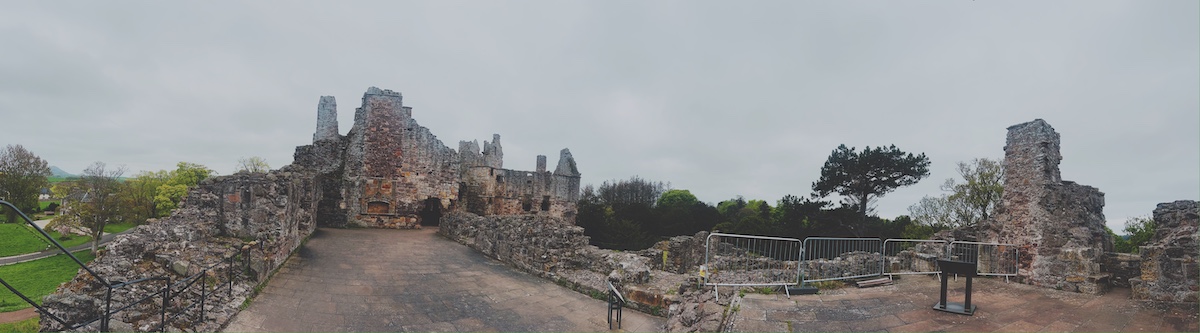
Some of it is obvious: medieval churches, castles and monuments.
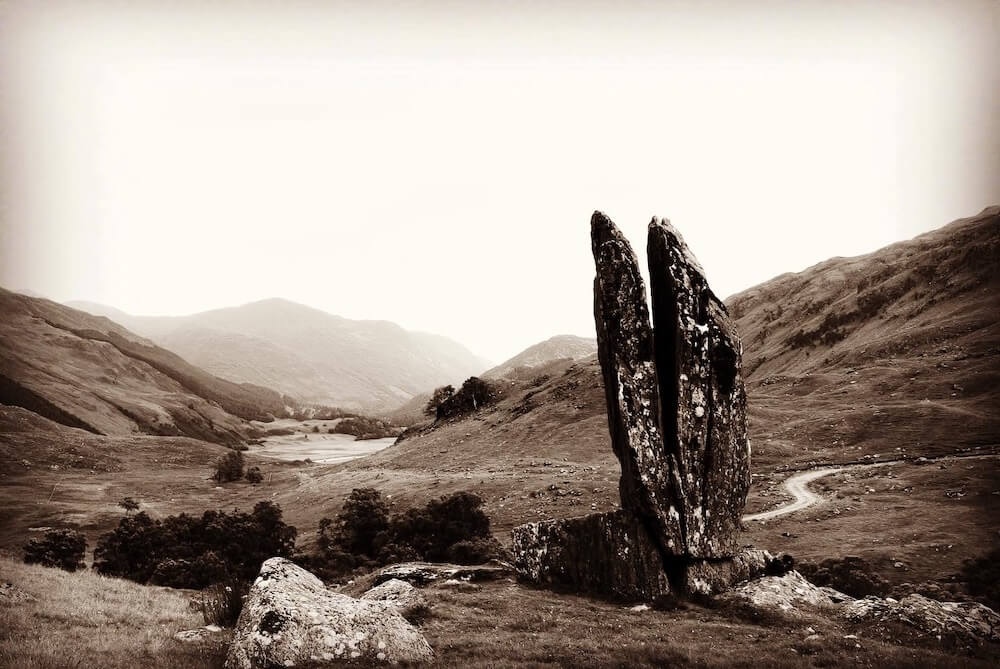
Some of it gets revealed: the standing stones in fields we cycle past, engravings on rocks, ruined houses in our landscape from the Clearances.
Depending on the level of interest of our guests, history is either part of the story of the way we share Scotland – or the whole lens we view our region through.
You Don’t Have to Be Wild About History, But if You are, We Can Help
We often help historians and guests with a passion for history, but (like anything we do- art, outdoor activities) we have so many options we can touch it lightly or go for a full week of immersing ourselves in history.
History is an important part of discovering any place.
Scottish history appears naturally as part of the places we move through: in buildings, landscapes, local stories, and everyday conversations.
These history encounters create shared reference points, spark curiosity, and give people something real to talk about — without lessons, timelines, or pressure.
By engaging with history in this way, English becomes connected to meaning and memory rather than performance. Conversation grows out of noticing, wondering, and sharing responses to what’s around us — exactly as it does in real life.
This page explains how layers of history show up in our language holidays: from a full-blown week of hunting for Romans to enjoying a castle and a coffee at sunset.
It also collects pages that support our belief that encountering the past as part of place supports confidence, connection, and contemporary English use.
HIstorical Landscapes
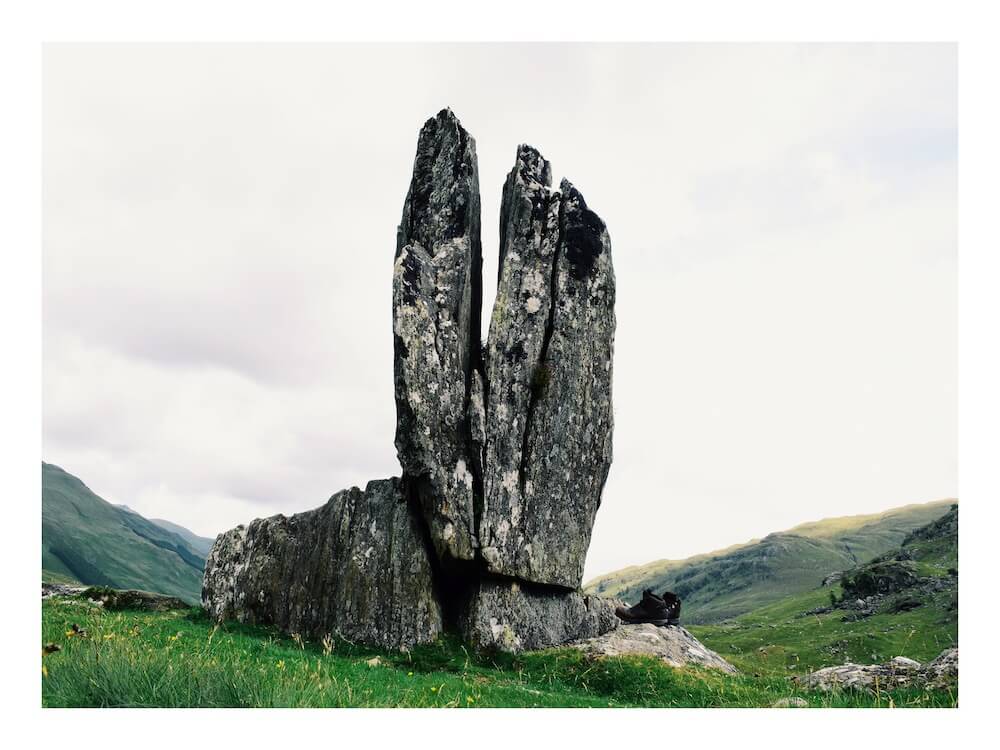
→ Perthshire’s Standing Stones
Crieff has a standing stone – an 8-foot-high menhir. It’s one of many covering our region.
→ The Lost Souls of Glen Quaich
At Geln Quaich, the Highland Clearances and wildlife displacement come into view—stories that still echo in today’s debates about land use.
→ Understand the Highland Clearances
No one knows for certain why the Jacobites torched villages and towns, but thanks to illustrator Laura Darling, no one will ever forget…
HIstorical Places
→ Tour Scottish Castles
We are lucky to have so many great castles on our doorstep.
Without knowing much of the individual history, you can get the thrill from this type of dramatic architecture – the solid walls, winding staircases and superb view created by thin archers’ windows.
No trip to Scotland is complete without exploring at least 1 Scottish castle.
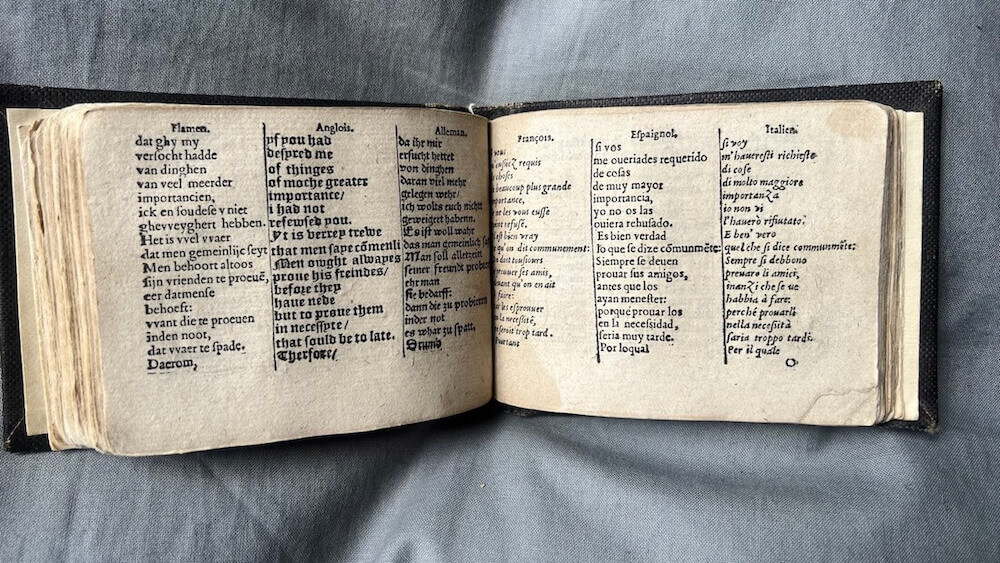
→ Innerpeffray Library
Scotland’s oldest lending library has not only preserved its collection of lending books, but it also has a borrowers’ list too.
→ Museum Visits
We frequently make language excursion visits to museums.
Not just to see the collection, but to question how the institutions are curating, preserving and presenting Scottish culture.
Favourites include:
The Burrell Collection, Glasgow
The V&A, Dundee (Scotland’s Design Museum)
Perth Museum (including the Stone of Destiny Display)
→Perth Museum: Gift Horse or Trojan Unicorn?
→ Loch Katrine
There is no better way to explore the Scottish Trossachs than from the hills around Loch Katrine, then from the deck of its 125 year old steamship.
Books
The Blue Noun Library is a huge ingredient in how we share local and national history through fiction, non-fiction, art, photography, and social lenses.
Traditional Culture
→ Traditional Scottish Music
Much Celtic song written about the homeland, was not written by people in the homeland, but by those separated from it.
If you have joined us for a holiday, you’ll know that we love sharing Scottish music with our guests.
→ Traditional Scottish Clothes
We take you to The Scottish Register of Tartans here in Crieff, and explore how tartan is used in contemporary fashion.
→ Read about how one scrap of Scottish Tartan Found a New Life in New Zealand
→ Dip into Traditional Languages
Scots and Celtic Languages
We know that our guests are here to improve in English, not to learn Gaelic, but we often take a quick look at the Scots language in relation to place names or understanding the regional dialects that cover the UK.
A quick overview can help anyone spending time in Scotland and struggling to understand the Scottish accent.
Advanced L2 English users can have fun with the often visual language of Scots poetry, and the quite phonetic orthography.
→ Enjoy the blog, 3 Craws, A Bard and a Wistful Dram
How We Use Scottish History in Our Language Holidays
Scottish history runs quietly through everyday life here — in the landscapes we walk through, the buildings we pause at, and the traditions that still shape local communities. Encountered in context, it creates shared reference points and natural reasons to talk, reflect, and connect.
The links above explore these themes in more detail and show how history becomes part of real-world English use on our language holidays — not as a subject to study, but as something lived, noticed, and talked about along the way.
This video helps you understand what we value and how we share the mix.
Festivals
→ Cultural Festivals
Festivals can be a great way into culture and history because they are immersive and captivating. You can lose your inhibitions and be whoever you wish – including a powerful English speaker.
→ Hogmanay
Here in Scotland, celebrating the New Year – which we call Hogmanay – is a big deal.
This blog is an overview of 5 Scottish New Year Traditions and Celebrations.
→ Halloween
This blog is an overview of Halloween celebrations in Scotland: their origins and the ways they are changing.
It’s also a thought piece exploring what we are getting wrong.
→ Halloween in Scotland | Past and Present