

What can a small town offer that a big city can’t?
When it comes to choosing an English language holiday in Scotland, many people still flock to big cities: busy streets, large schools, full classrooms, and a packed social calendar.
And for some learners, that’s exactly what they want.
City-based courses can be more affordable, more anonymous, and better suited to younger travellers who enjoy nightlife and high energy.
But there often comes a point when that style of learning and travelling stops feeling exciting — and starts to feel draining.
More noise.
More people.
Less space to think, notice, or actually use the language in a meaningful way.
That’s where small-town language holidays come in.
They’re not about doing less.
They’re about doing things at human scale — where conversations repeat, places become familiar, and English starts to feel part of daily life rather than a separate activity.
In this post, I’m openly biased. I’ll share seven reasons why a small-town destination can be a powerful setting for language learning — especially if you’re looking for depth, connection, and breathing room.
Small-town language holidays aren’t right for everyone.
But if you’re craving focus, calm, and real conversations that grow naturally over time, they might be exactly what you’ve been looking for.
(If you’d like a more neutral comparison between rural and urban language holidays, you’ll find a sister article linked at the bottom of the page.)


1. Conversations with locals happen naturally
A high population doesn’t automatically mean more opportunities to speak English.
In fact, it often means the opposite.
In busy cities, people are usually in a hurry — commuting, navigating crowds, moving with purpose. Even friendly strangers can feel hard to approach when everyone seems under pressure.
In a small town, the rhythm is different.
Short, everyday conversations happen organically: a comment at the bus stop, a question in a shop, a chat while waiting in a queue. These brief exchanges might seem insignificant, but together they build something powerful — confidence, familiarity, and ease.
Crieff isn’t just set in a beautiful part of the Scottish landscape; it’s also one of the friendliest places I’ve ever lived.
People talk. They notice each other. Conversations don’t feel like interruptions — they’re part of daily life.
It’s completely normal to find yourself chatting in the supermarket queue…
(and if you’re in a rush, fair warning — this may not be the place for you).

2. Access to Landscape
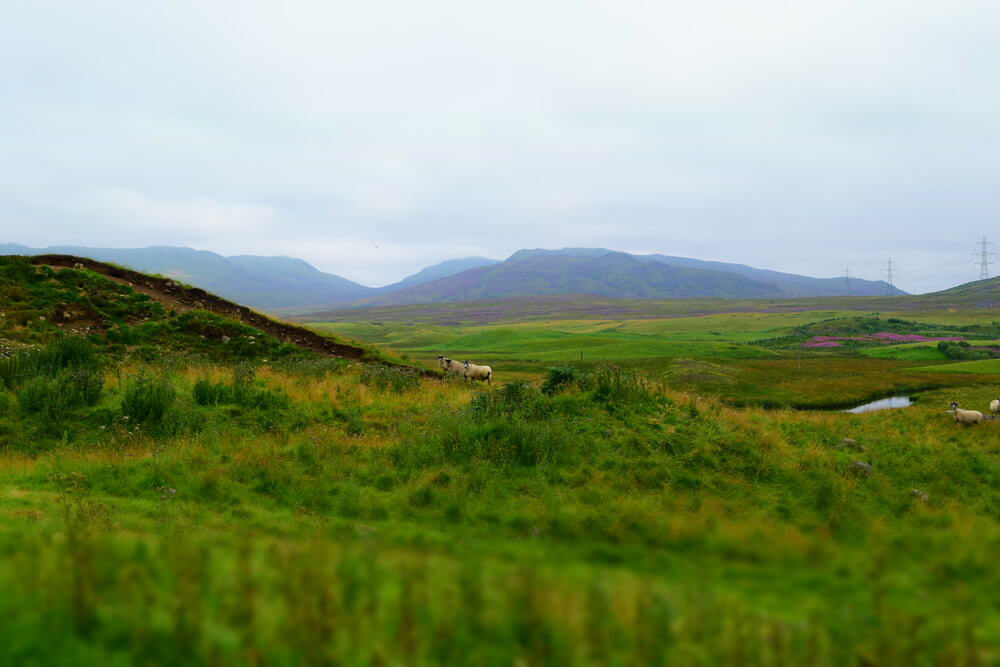
Spending time in nature changes how we feel — and that has a direct impact on how we use language.
When the body is relaxed and the senses are engaged, conversations tend to slow down. Words come more easily. There’s more space to notice, reflect, and respond rather than rush.
One of the reasons people travel to Scotland is for its landscape, and Perthshire — often called Big Tree Country — offers unusually easy access to it. Woodland, rivers, hills, and open countryside are woven into everyday life rather than treated as special excursions.
In a small-town setting, nature isn’t something you have to plan around or travel far to reach. A walk, a pause, or a shared moment outdoors becomes part of the day — and with it, more natural opportunities for conversation.
For many learners, this kind of environment supports a calmer, more embodied relationship with English — one that feels connected to real experiences rather than effort or performance.


3. A sense of community
In a big city, it’s easy for second-language speakers to feel invisible — surrounded by people, yet slightly outside the flow of things.
Small towns work differently.
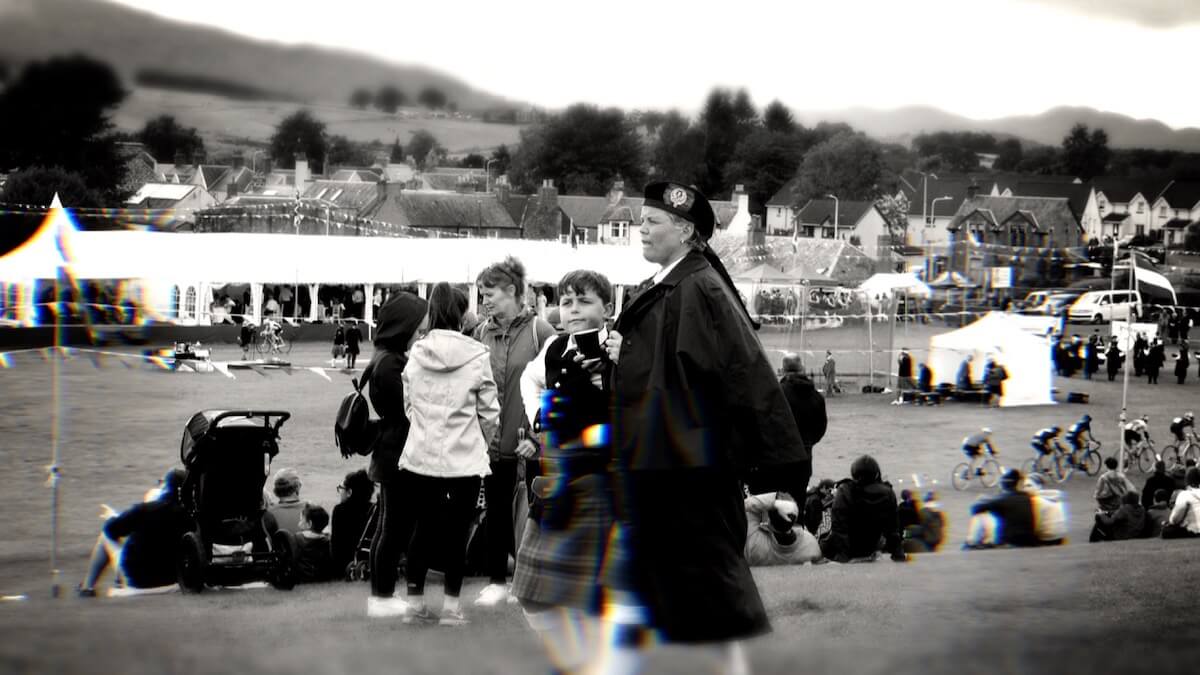
When you spend time in one place, patterns emerge. You recognise faces. People begin to recognise you. Shops, cafés, walking routes, and routines start to feel familiar rather than overwhelming.
That growing familiarity creates a tangible sense of belonging — not as a tourist passing through, but as someone temporarily woven into the life of a place.
These experiences matter for language learning. Feeling noticed, remembered, and included helps shift English from something you use into something that feels part of who you are.
For many learners, this is where confidence deepens — not through performance, but through connection.


4. Easy access to cities — without living in one
Choosing a small-town base doesn’t mean cutting yourself off from city life.
In Scotland, cities like Edinburgh, Glasgow, Stirling, and Dundee are close enough to be enjoyed as day trips rather than full-time environments. That changes the experience entirely.
Instead of navigating crowds every day, cities become places you visit with intention — to see a show, explore an exhibition, wander a gallery, or spend an afternoon somewhere stimulating before returning to quieter surroundings.
This balance often works well for language learners. Cities offer cultural depth and creative energy, while a small-town base provides continuity, calm, and space to process experiences — linguistically and personally.
Rather than choosing between rural or urban, a small-town setting allows both: everyday life at a slower pace, with the option to dip into the richness that cities offer when you want it.


5. Closer connections to food and drink
Food and drink are powerful links between place, culture, and language — especially when you encounter them close to their source.
Seeing food grown in fields, harvested from gardens, or made by hand changes how it’s talked about. Conversations become more specific, more sensory, and more rooted in real experience rather than abstraction.
In rural areas, this connection is easier to access. Farms, market gardens, distilleries, and small producers are part of the surrounding landscape rather than hidden behind supply chains. You can see where things come from, ask questions, and hear the language people naturally use to describe their work.
Perthshire is often referred to as Scotland’s larder, and spending time in a small-town setting makes it possible to encounter food and drink as something lived and local — not just consumed.
For language learners, these moments create shared reference points: tastes, places, stories, and vocabulary that stick because they’re connected to something tangible.


6. History and heritage, without the crowds
Cities offer history too — but in smaller places, it’s often encountered more quietly.
Historic sites aren’t something you queue for or rush through. They’re part of the surrounding landscape, visited slowly, sometimes almost by accident. That difference matters. It allows history to be absorbed rather than consumed.
Understanding the past of a place can deepen a visit — moving it from something briefly seen to something more fully understood. In small towns and rural areas, history often feels less curated and more open to interpretation.
This kind of engagement isn’t about dates or lectures. It’s about standing in places shaped by long periods of change and noticing what remains: buildings, libraries, churches, routes through the land.
Approached with curiosity rather than nostalgia or nationalism, these sites invite reflection and conversation — about power, belief, work, loss, continuity, and change.
For language learners, they offer shared reference points and meaningful topics, grounded in real places rather than textbook summaries.


7. Everyday encounters with wildlife
Scotland is well known for its wildlife, and in places like Perthshire, nature is part of daily life rather than something set aside for special trips.
Walks become opportunities to notice what’s growing, moving, and living around you — birds overhead, tracks by the river, signs of activity in hedgerows and woodland edges. You don’t need to travel far or plan extensively; awareness builds through repetition and time spent outdoors.
These moments encourage a different kind of attention. Conversations slow down. Language becomes more observational, more shared — shaped by what’s being seen, pointed out, or quietly noticed together.
When wildlife experiences are approached with care and respect, they deepen connection without disruption. The emphasis isn’t on spectacle, but on learning how to be present in a landscape without leaving a mark.
For many visitors, this gentle exposure to the living environment becomes one of the most memorable parts of time spent in a small-town setting — not because it’s dramatic, but because it’s real.

Making English Memorable
More than a list
These are just seven reasons to choose a small-town English language holiday in Scotland — but they really point to something broader.
Moments like:
-
a campfire beside a loch
-
the view from the top of a mountain.
-
a cup of tea in an artist’s studio, listening to how they work and why
Experiences like these don’t replace language learning. They give it texture, meaning, and somewhere to land.
A rural base doesn’t limit what you see. It widens it.
Rather than passing through a single city, you begin to encounter Scotland as a place — its pace, its landscapes, its everyday conversations.
And perhaps most importantly, it removes the idea that learning English has to mean being confined to a classroom.
The aim isn’t escape for its own sake.
It’s returning home with stories — cultural, personal, ordinary — and feeling more able to tell them in English because they’re genuinely yours.
For some people, this way of learning simply fits better: quieter, more human, and more connected to real life.
And when language becomes part of lived experience rather than something performed, it tends to stay.
Further Information
Choosing a Language Holiday in the UK? Should You Go Rural or Urban?
You can read the companion blog: Language Holiday in the UK – Go Rural or Go Urban?
Our Guides to Find Your Next Step
What's the Next for My English?
A supportive space to find your next step
Help Choosing a Language Holiday
Choosing the right English language holiday can be confusing.
Check out our guides to help you ask better questions and invest well.