
Ruth Pringle Shares her Inspiration for Blue Noun
When I was in my final year of art school in Dundee, I made friends with an Italian exchange student, Alessio, and a French exchange student, Odette.
Odette’s boyfriend came to visit Scotland for a week, and I ended up borrowing a cottage on the Isle of Harris from our painting instructor, arranging to hire a car, which Odette’s boyfriend drove (he was the only one with a licence), and taking the four of us to the Isle of Harris for a week by car and ferry.
Thirty years later, I’m reflecting on how unusual that was for a student to do. It neither my responsibility or business. I just remember strongly wanting to share this extraordinary part of Scotland (and, quite selfishly, wanting to return to this enchanting land of otters and moors and turquoise seas myself).
If you don’t know Scotland, you may not realise how epic this trip was, especially on a student budget and with final-year time pressures.
Knowing What to Share
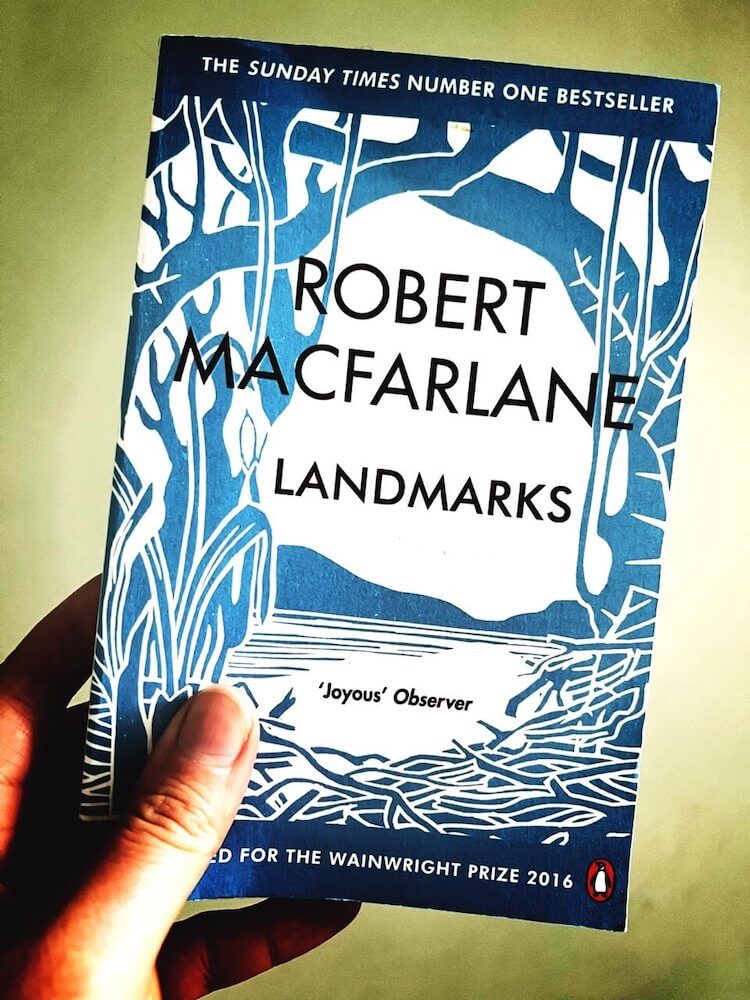
This morning I was reading Landmarks by Robert Macfarlane. His description of the Isle of Lewis and Harris as terra nullius reminds me of how desolate and otherworldly it could seem to visitors.
I really took a risk.
Robert Macfarlane discusses the idea of terra nullius in Landmarks when reflecting on landscapes that appear empty or uninhabited: places that some visitors misread as blank, vacant, or without story.
This island may look austere, sparse, or otherworldly, but it is not empty. It is culturally layered, linguistically rich, and historically inhabited. It is vital.
I could have taken them to Inverness or Stirling Castle (visitor favourites for good reason), or shared the landscape of Callander, where I grew up. They would all have been much easier, but I don’t think it even occurred to me.
I’d fallen in love with the isle of Harris and Lewis, and I felt that to be there was to understand Scotland.
I wanted to take my temporary friends somewhere that held my heart and give them the best experience of Scotland possible.
A Different Way of Creating
There has been much debate in recent years about the worth of an art degree, with few graduates directly working within their industry five years on (I was so sure I’d be one of the ones who made it).
I hadn’t connected my Harris trip with my current career until recently. Reflecting on that debate made me articulate how I was discovering a different, but valuable, set of skills and principles, so vague I couldn’t name them or conceive of them becoming my career. Immeasurable in terms of an art degree, yes — yet so fundamental to my creative identity that I can’t fully untangle this kind of sharing from drawing, sculpting, and all the other forms of making I did and still do.
I could not do the work I do now without eight years of art and postgraduate training.
Art school trained me to critique structures, strip them back, and rebuild them with intention. It trained me to work with ambiguity, to iterate, to compose experiences carefully, and to trust disciplined creativity rather than formula.
I learned “useful” skills later, in workplaces and low-paid jobs. But the foundation — the way I see systems and reshape them — came from art education.
When I look at English language training, I see its scaffolding. I see what serves learners and what does not. Part of Blue Noun’s work is quietly calling out the bland learning options that leave adults underused and underchallenged. I am not interested in preserving tradition for its own sake.
I change my industry by doing it differently. I dismantle what does not serve my clients and elevate what does. I remove what is mechanical and impersonal and rebuild something more human, more precise, and more alive.
There is a certain audacity in that. In a field full of safe, repeatable formats, I choose to design something richer and more responsive. The creativity may be innate, but how I apply it — rigorously, structurally, intentionally — comes directly from my art training.
That is not improvisation without grounding. It is trained judgement at work.
Ruth, (LinkedIn comment)
Travel as a Gift
The Innate Instinct to Share Scotland
Now I make art as a hobby and share Scotland with international visitors as my career. I have a client, R., visiting for three weeks, and I floated the idea of squeezing in a trip to the Isle of Gigha, an island so lovely I feel compelled to share it with him (he will love the free-roaming dairy cows).
→ Read about Gigha and its wonderful dairy in our blog: Imagining ‘What if’ for your English.
I felt a tingle of recognition when I said it. Then, when I picked up Landmarks, my student Harris road trip came flooding back.
Since those days, I’ve spent 13 years living abroad, so I am genuinely excited to share my local, familiar landscape, castles, and a few more tourist spots too.
Looking back, I can see that this instinct — to choose depth over convenience, to share what feels essential rather than obvious — has shaped the way I design English holidays now.
It did not begin as a strategy. It began as a sincere love of sharing.
A Guide to Blue Noun
Invisible Expertise
Lightness in practice requires depth underneath. The training and experience that support our work are outlined here.


Good to Know
What’s a Hub?
Social Action Policy
Frequently Asked Questions
Free English Resources
Need to Know
Privacy Policy
Terms and Conditions

Blue Noun Language Hub
St Ninian’s Lodge,
Lodge St, Crieff PH7 4DW
01764 654377
email: ruth@bluenoun.co.uk
All photographs are by the author unless otherwise stated and permission is always obtained.
© Ruth Pringle 2026