
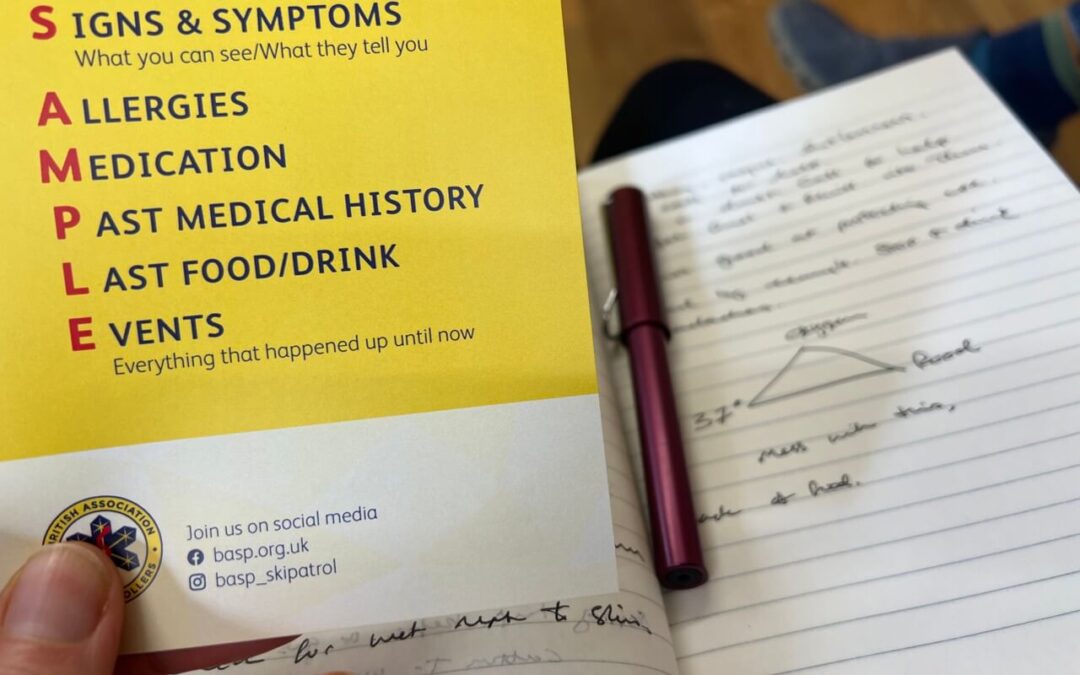
A weekend first aid course for hills offered an unexpected perspective on testing.
It raised a simple question: what kind of learning holds up in real life?
A Day of First Aid Training in the Hills
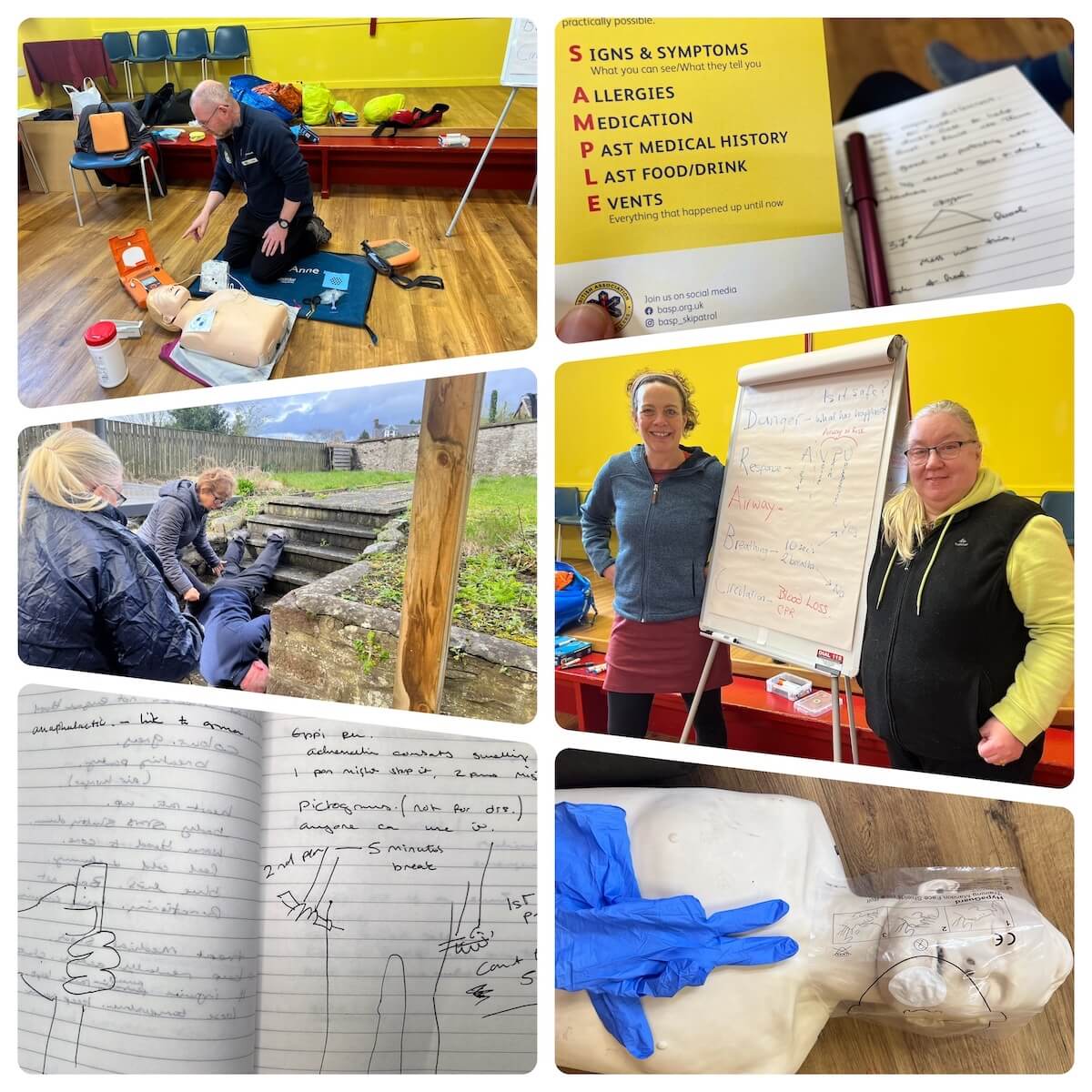
This weekend I joined a first aid course designed for hill environments, run by the British Association of Ski Patrollers.
I joined it to learn skills for being a better and safer hill guide (walking is a big part of how our language holidays share Scotland).
There was a strong focus on what actually happens in real conditions. Not ideal situations, but the kind of decisions you might need to make outside, with changing information and other people involved.
It was a full day, and although there was a lot of information to take in, including some serious and stressful scenarios, the learning felt light.
Thanks to our instructor, it was calm, practical, and well paced.
The trainer moved between explaining, demonstrating, and getting us to practise things ourselves. We worked through situations, repeated key actions, and had time to talk things through as a group.
We covered the essentials thoroughly. Airway management was repeated again and again. We looked at how the body responds to injury and shock, so it wasn’t just about following steps, but understanding why those steps matter.
There was also space for people to share their own experiences, which added another layer to the learning. It wasn’t just information being delivered; it was being worked through.
By the end of the day, people felt more prepared and more capable.
They Removed the Test
One notable part of the course wasn’t something we did. It was something they had decided not to do.
There was no final test. They used to, but no longer do.
Their reasoning was straightforward: when people are stressed, they don’t remember well.
Studying for a test uses a different kind of memory. It encourages you to listen for what might come up, to pick out what feels important for an exam, and to hold onto “right answers”.
That wasn’t the focus here.
Instead, we were given time to imagine scenarios and think through what we would actually do. The training wasn’t trying to fix correct answers in our heads. It was helping us build responses.
That changed the quality of the learning.
Questions came from the situations we could picture, not from trying to predict an exam. At one point, I asked about EpiPens — something I’d been meaning to understand properly. I needed to know whether they were universal, or whether people from different parts of the world might carry different types. (They’re standard.)
There was space for that kind of question.
Without the pressure of a test, the session could adapt to what people actually needed to know. The trainer trusted us to recognise what we were most likely to encounter, rather than working towards a single, fixed assessment.
Testing, they explained, had been getting in the way of that. It encouraged short-term memorisation under artificial conditions, rather than building something that would last.
So they removed it.
Do you want your broken arm to be treated by someone with a certificate, or someone who remembers to check for internal injuries and understands how shock can dangerously lower body temperature on a hillside?
Why I Don’t Offer Certificates
This balance is something I recognise in my own work.
I’m often asked whether we provide a certificate at the end of the course.
We don’t.
For the kind of work we do, it isn’t the focus.
That said, I’m very happy to write letters for employers or HR departments, describing what someone has taken part in and how they’ve engaged during their time here.
But the course itself isn’t designed to produce an academic proof of level, or even to measure progress in that way.
It’s designed to help people succeed in real-world English environments.
To feel more confident speaking.
To lose some of the self-doubt that has built up over time.
To become more curious, more willing to try things, and more able to stay in a conversation even when it’s not perfect.
Those things are harder to measure.
And they don’t come from preparing for a test.
Testing tends to narrow attention. It encourages people to look for correct answers, to avoid mistakes, and to play it safe.
But the kind of language growth most people need is different.
It requires curiosity.
A willingness to take risks.
A bit of playfulness.
Those are exactly the things that tend to disappear when someone feels they are being assessed.
This doesn’t mean progress isn’t observed or measured. It is, but not through formal testing.
What This Changes
Without a test, the focus shifts.
There is less attention on “getting it right” in the moment, and more on understanding, repetition, and practical judgement.
People are encouraged to use their common sense, to adapt to what is in front of them, and to combine what they know with what is actually possible in that situation.
In first aid (like conversation), there isn’t always a single correct answer. But there are ways to respond well initially, and those first steps determine what unfolds.
It is less about proving something and more about building the ability to act.
The British Association of Ski Patrollers know that studying to pass a test doesn’t build the kind of responses you need in real situations.
What Made This Work
Looking back, it wasn’t one thing.
It was the combination.
The physical practice mattered. Moving a body, repeating key actions, feeling what it’s like to actually do it.
There was a clear focus on real situations. We weren’t working through ideal scenarios, but the kind of things you might genuinely come across.
The critical information was drilled. Airway management came up again and again, until it felt familiar rather than theoretical.
But there was also space.
Space to ask questions as they came up, not at the end. Space to follow something you realised you didn’t understand properly. Space for the discussion to shift slightly, depending on who was in the room.
That made it more personal.
People shared their own experiences of being first responders. Small moments, unexpected situations, things that had stayed with them. It wasn’t abstract. It was close to real life.
It reinforced that it could be one of us.
That combination — practical, repeated, grounded in real situations, and open enough to adapt to the people there — is what made the learning stick.
Real World English Holidays
In my work, I often meet people who have learned English well in a classroom. They’ve studied it, practised it, and often been tested on it many times.
But that kind of learning doesn’t always hold up in real situations.
What I do is help people convert that knowledge into something usable. Through conversation, through art, through poetry, through time spent actually using the language.
Those things aren’t easily testable. But without them, language can feel thin. Something you put on, rather than something that belongs to you.
That’s the difference.
If This Holiday Feels Like What You’ve Been Looking For
If this way of experiencing English feels like something you’ve been looking for, you can explore how a full week is shaped here:
→ Blue Noun English Language Holidays in Scotland
Or, if you’d prefer to talk it through, you’re very welcome to get in touch and ask questions.
Further Proof from the Outdoors
In another post, I described taking part in a simulated canoe rescue. The difference between practising in a swimming pool and working in a real river was obvious. It’s the same here. Learning that stays with you is learning that has been used, tested, and experienced in conditions that feel real.
Further Information
Real World English
How You Can Get Language Growth Through Experiences, Not Classrooms
Walking Guides
Walking on our English language holidays
Walking is a central part of our English language holidays in Scotland, creating space for conversation, reflection, and shared experience.
If you’d like to understand how walking fits into our approach — from mixed abilities and local knowledge to why movement supports confident, real-world English — you can explore it in more detail here:
→ Walking in Scotland on our English language holidays