If you are looking for things to do near Stirling, a walk up Dumyat offers one of the most rewarding views in central Scotland without requiring advanced hiking experience.

This hill is one we often share with guests during our English holidays and coaching experiences because it captures something important about how we work at Blue Noun.

Dumyat feels achievable, but expansive.

The paths are clear, the climb is manageable for many visitors, and the views open dramatically across Stirling, the River Forth and the Highlands beyond. By the time people reach the summit, something has usually shifted.

Conversation becomes easier.

People stop focusing so heavily on their English and become absorbed in the landscape, the movement, the weather and the shared experience of reaching the top together.

That matters more than most people realise.

At Blue Noun, we believe experiences shape language. A meaningful day out in Scotland often does more for someone’s confidence and connection to English than hours spent trying to “perform” the language correctly.

That is why walking, music, conversation, food and culture are all woven into the experiences we create.

We want people to leave experiences like this feeling the same way about their English: energised, capable and inspired.

Book Your English Coaching Experience in Stirling

→ A Different View Of Stirling — And Your English


Explore Scotland with our language school - Dumyat hillside - easy Scottish mountain to climb

Why We Often Take Guests Up Dumyat

Dumyat is one of the most approachable and rewarding hill walks near Stirling, which makes it ideal for many of our guests.

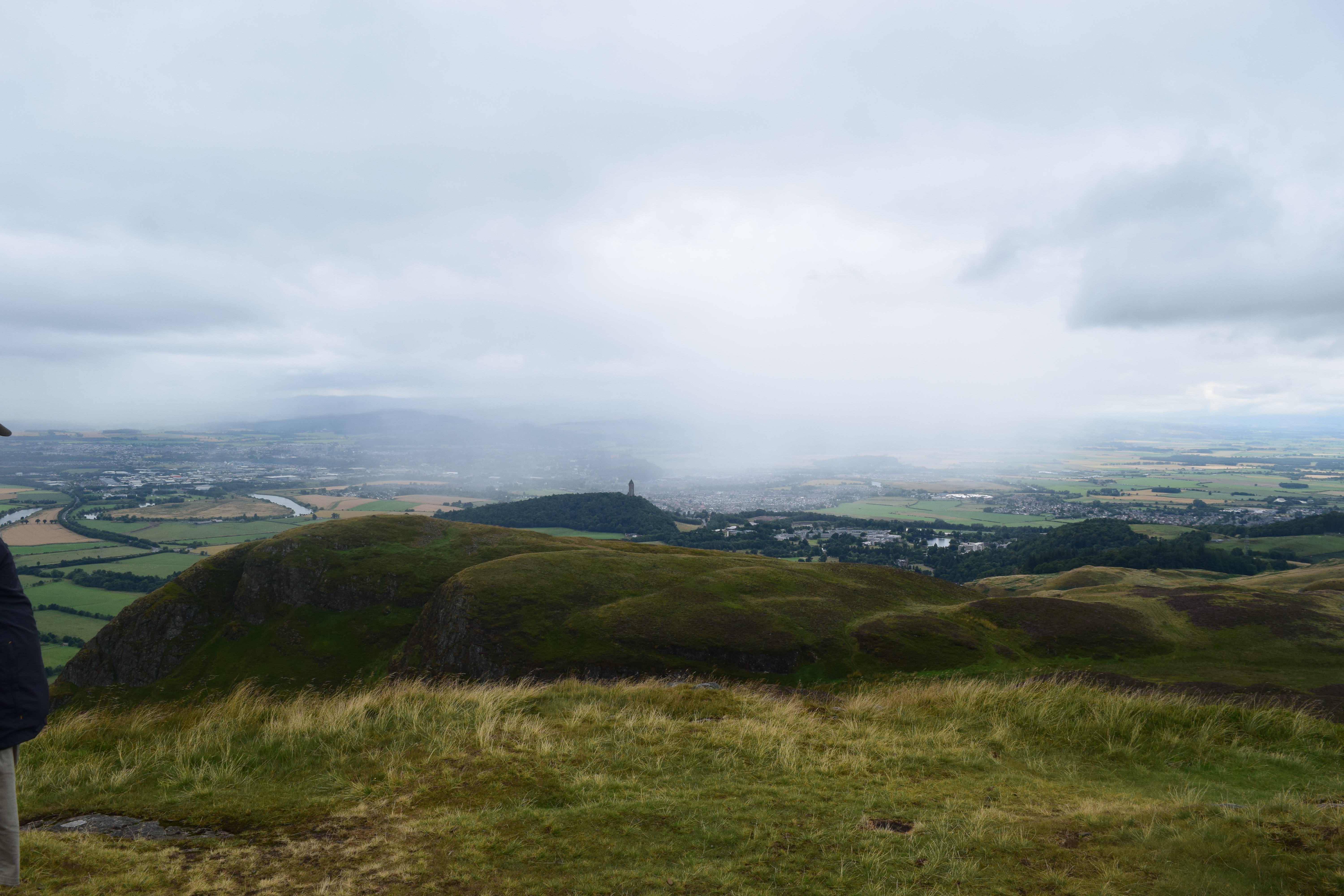
Part of the Ochil Hills range, it rises above the Carse of Stirling with wide-open views across central Scotland. On a clear day, you can see the Wallace Monument, Stirling Castle, winding rivers, distant Highland peaks and the changing light moving across the valley below.

What makes Dumyat special for us, though, is not just the view.

It is the feeling people have when they reach the top.

Many visitors arrive slightly unsure of themselves — not only about walking, but sometimes about their English too. But Dumyat has a gentle sense of progression to it. The climb feels achievable. The path is clear. The landscape steadily unfolds around you.

And somewhere along the way, people begin relaxing into conversation.

Walking side-by-side changes the rhythm of communication. There is less pressure than sitting face-to-face across a table. The landscape gives people something shared to notice, respond to and reflect on naturally.

By the summit, people are often speaking more freely without consciously trying to “practise English” at all.

That is one of the reasons experiences like this are such an important part of Blue Noun holidays.

We are not trying to isolate English from life.

We want people to experience English while fully engaged in Scotland itself — through movement, conversation, weather, music, food, culture and shared moments that feel real and memorable.

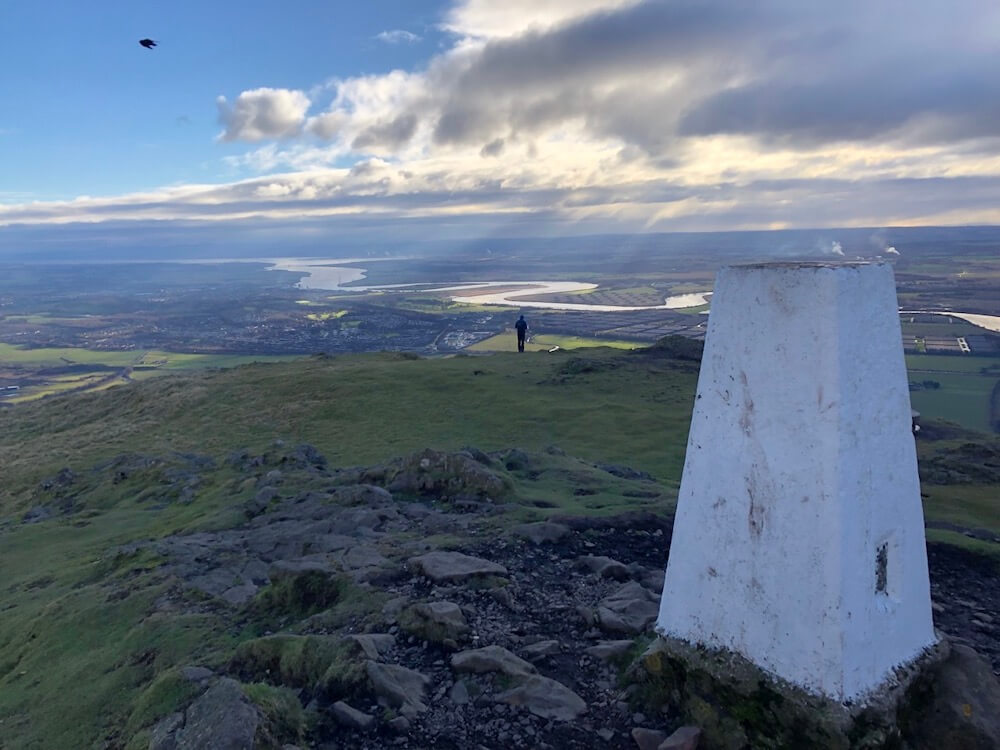
Trig point at the top of Dumyat

A View From The Top

From the summit of Dumyat, the landscape opens out in every direction.

To the south, the River Forth winds through the Carse of Stirling like a silver ribbon. The Wallace Monument rises above the valley, with Stirling Castle visible in the distance. To the north, the land gradually folds upwards towards higher hills and the Highlands beyond. You can see that the River Forth is an industrial river. 

But what I love most about this part of Scotland is the light.

The Ochil Hills never seem to look quite the same twice. Clouds move quickly across the landscape, casting shadows that drift over villages, fields and woodland. Mist rolls through the valley unexpectedly. One moment the hills feel soft and calm; the next, dramatic and immense.

When guests stand at the top, there is often a quiet pause.

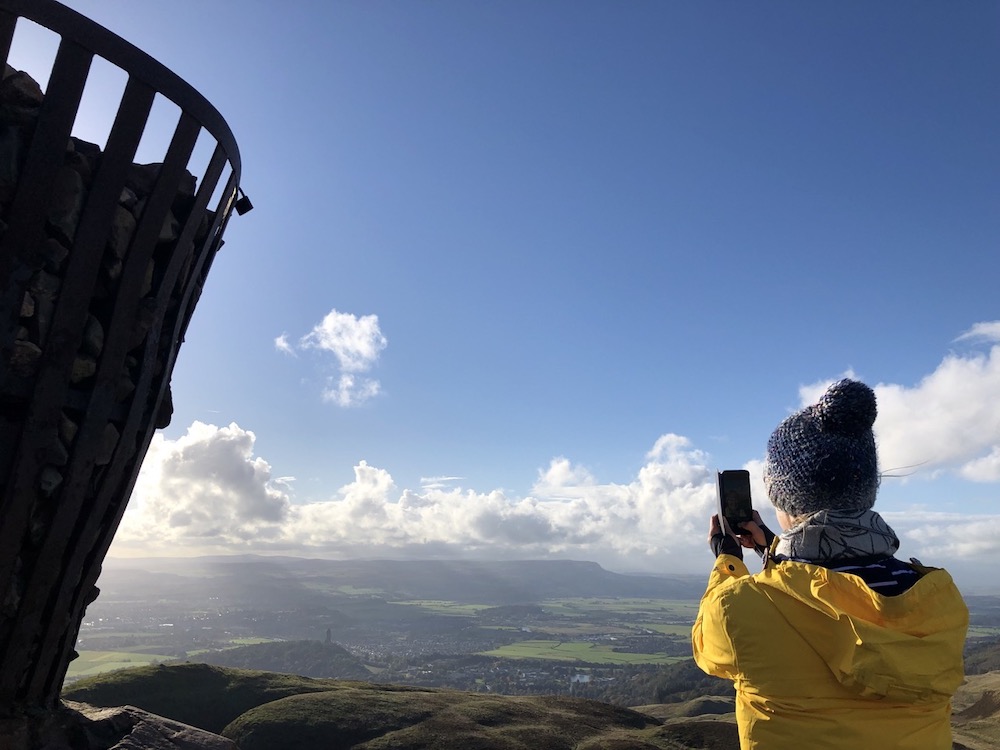
People take photographs. They look out across the landscape. They breathe differently.

And afterwards, conversation often changes too.

There is something about sharing a physical experience like this that creates a connection naturally that classrooms can never get close to.  The simple feeling of having experienced something real together.

That emotional shift matters.

At Blue Noun, we often see that people speak more openly and confidently after moments like these — not because they have “studied harder,” but because English has become attached to enjoyment, curiosity, movement and memory.

When English becomes connected to experiences that feel exciting, memorable and uplifting, people often begin using it more freely.

Don’t Just See Scotland, Be Scotland
One of the reasons we include experiences like this in our holidays is because Scotland changes when you move through it slowly and personally.

Not through a bus window.

Not through a rushed checklist of attractions.

But through shared experiences that allow you to notice things properly: changing weather, local stories, unexpected conversations, the shape of the landscape, the atmosphere in a music venue after a day outdoors.

→ Experience Scotland without Feeling Like a Tourist

We often combine walks, cafés, cultural visits, conversation and live music because each experience changes the emotional texture of the day.

A hill walk opens people up differently from an evening concert in Stirling.

A relaxed conversation over coffee feels different after standing together on a summit looking across the Highlands.

That mix matters.

At Blue Noun, we are interested in how experiences connect together — and how those experiences shape confidence, memory and communication.

For many guests, it is not one “lesson” they remember afterwards.

It is the feeling of the whole experience.

The walk.
The light across the hills.
The conversation on the drive back.
The music later that evening.
The moment English stopped feeling like a performance and started feeling connected to real life.

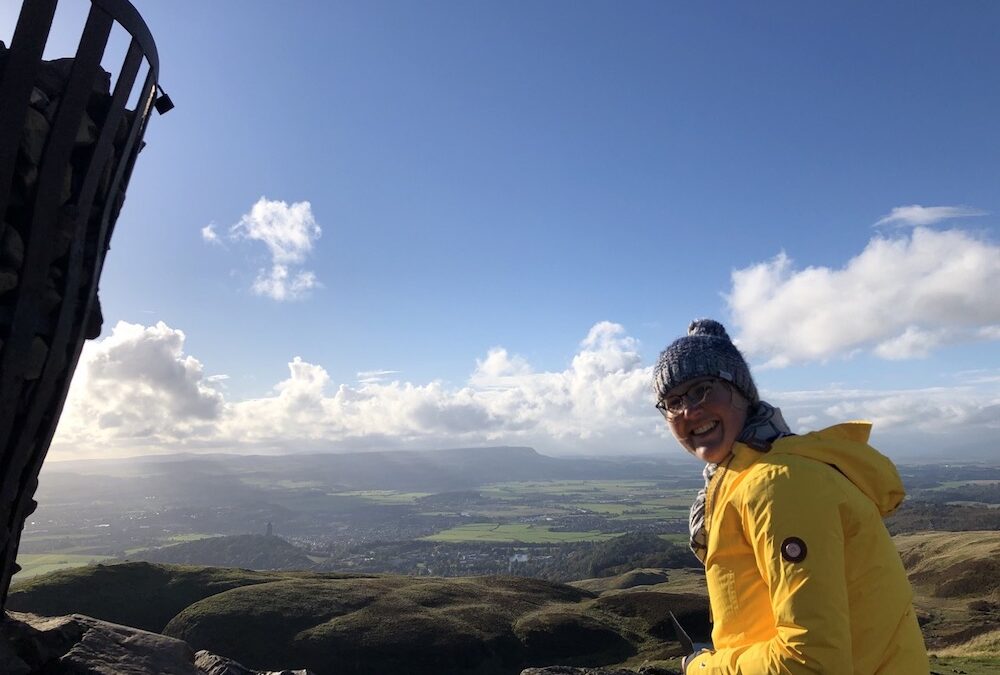
Girl on top of Dumyat hill overlooking Stirling and surrounding landscape takiing photo

A Family Activity 

We also sometimes include Dumyat in our family holidays because it offers a real sense of adventure without needing technical climbing experience.

Every guest’s fitness and confidence level is different, and hillwalking in Scotland should always be approached with preparation and care. But for families who already enjoy walking together, Dumyat can feel surprisingly achievable.

It is not unusual to see young children proudly reaching the summit under their own steam — sometimes in wellies, sometimes in superhero capes.

That feeling of achievement becomes part of the experience too.

Shared climbs often create some of the most memorable conversations of a holiday, especially for families experiencing Scotland together for the first time.
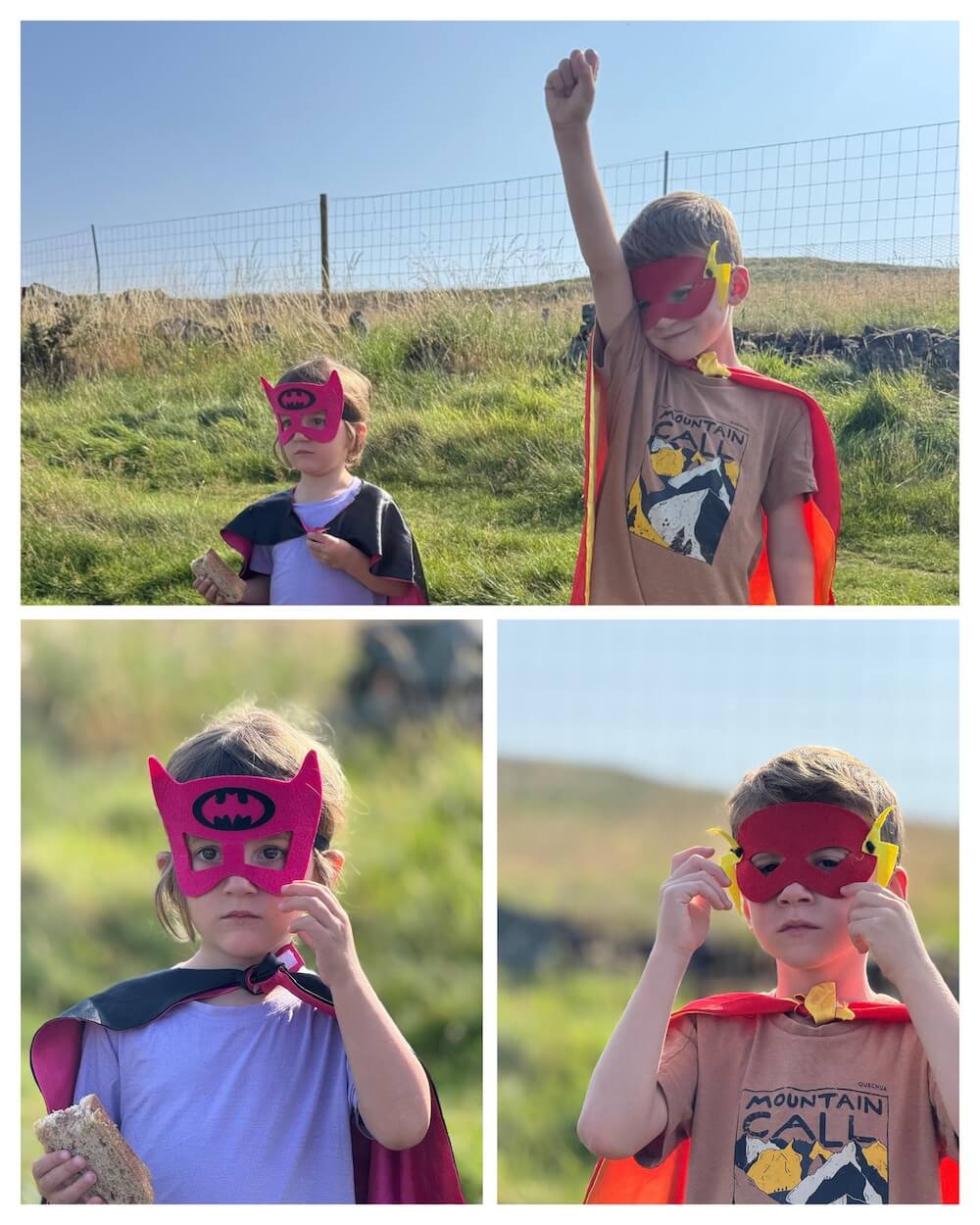
Family English Holiday climbing Dumyat as superheroes

A View Like No Other

What I love most about this region is the light. If you live near or beside the Ochils you will know they have different moods and they never quite look the same twice.

From high up, you can see the shadows of clouds staining villages and land as they pass overhead. You can watch mist and even clouds roll into the valley and obscure the town below.

There’s nothing quite like the light in this part of Scotland.
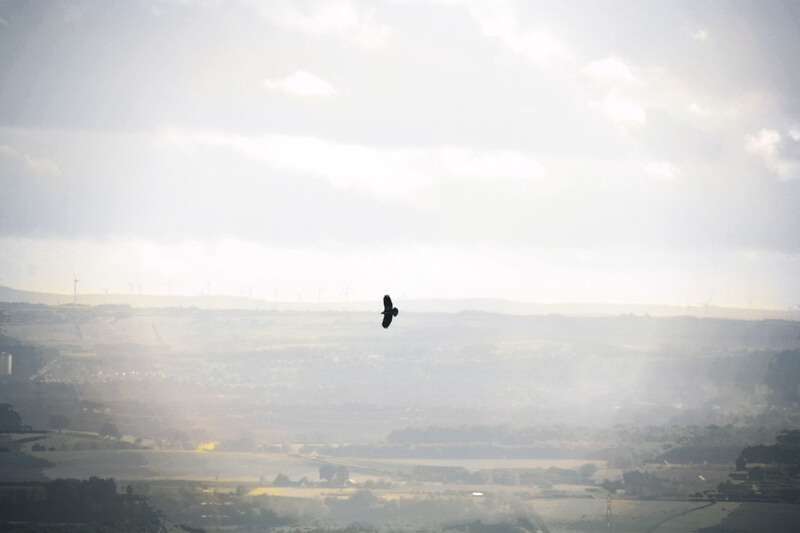
A bird of prey riding the thermals, in the background the city of Stirling - seen from Dumyat.

Don’t Just See Scotland, Be Scotland
One of the reasons we include experiences like this in our holidays is because Scotland changes when you move through it slowly and personally.

Not through a bus window.

Not through a rushed checklist of attractions.

But through shared experiences that allow you to notice things properly: changing weather, local stories, unexpected conversations, the shape of the landscape, the atmosphere in a music venue after a day outdoors.

→ Experience Scotland without Feeling Like a Tourist

We often combine walks, cafés, cultural visits, conversation and live music because each experience changes the emotional texture of the day.

A hill walk opens people up differently from an evening concert in Stirling.

A relaxed conversation over coffee feels different after standing together on a summit looking across the Highlands.

That mix matters.

At Blue Noun, we are interested in how experiences connect together — and how those experiences shape confidence, memory and communication.

For many guests, it is not one “lesson” they remember afterwards.

It is the feeling of the whole experience.

The walk.
The light across the hills.
The conversation on the drive back.
The music later that evening.
The moment English stopped feeling like a performance and started feeling connected to real life.

Explore Scotland with our language school - Dumyat hillside - view of Wallace Monument

A Book Recommendation For English Learners Visiting Scotland

One thing we often encourage guests to do after travelling is continue connecting English to places and experiences they genuinely enjoyed.

Reading a story set somewhere you have actually visited can make English feel much more alive and memorable. You are no longer learning abstract vocabulary — you already carry images, atmosphere and emotions connected to the place.

For visitors who have enjoyed Dumyat and the Stirling area, there is a wonderful classic children’s adventure story called Light on Dumyat by Rennie McOwan.

The story follows Gavin, a boy visiting relatives near Stirling, who becomes fascinated by a mysterious blinking light on the slopes of Dumyat. The book gradually pulls him deeper into the landscape, local culture and adventure.

I sometimes hesitate before recommending children’s fiction to adult English learners because people understandably worry it might feel childish. But many classic children’s books are simply excellent adventure stories written in more accessible language.

This one reads like a genuine Scottish adventure story rather than a simplified learner text.

For intermediate English learners and above, it can be a lovely way to continue engaging with English after a trip to Scotland — especially because the landscape already feels familiar.

You are not just reading words.

You are revisiting places you have stood in yourself.


“I recommend this for any ESL English learner with an English level lower-intermediate and above, who has an interest in Scotland and a love of adventure stories. I’ve reread it as an adult and I still get goosebumps”

Ruth, 2021
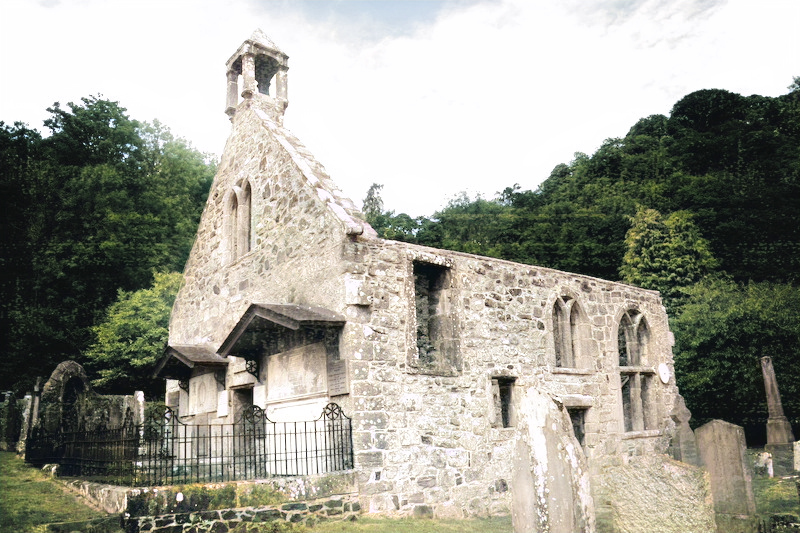
 

A Quiet Stop After The Walk: Logie Kirk

For anyone with a bit of time after the walk, a visit to Logie Kirk and its graveyard is one of the most peaceful and atmospheric historic sites in the region.

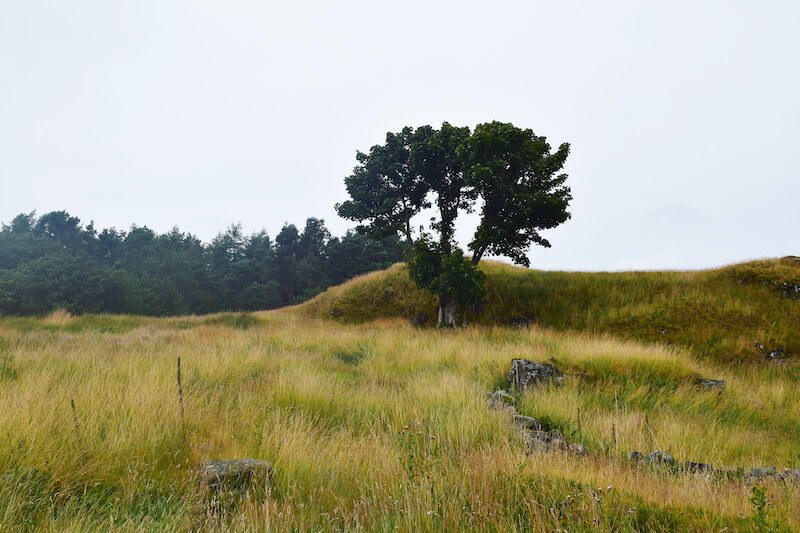
Set quietly beneath the hills, the old kirk is surrounded by gravestones, trees and wide views back towards Dumyat itself. There is a stillness to the place that makes people naturally slow down and linger for a while.

The church ruins, nearby new kirk and surrounding graveyard give a small glimpse into the deep layers of history woven through this landscape.

It is the kind of place many visitors would never discover through a rushed itinerary — but often becomes one of the moments people remember afterwards.

Too Swift

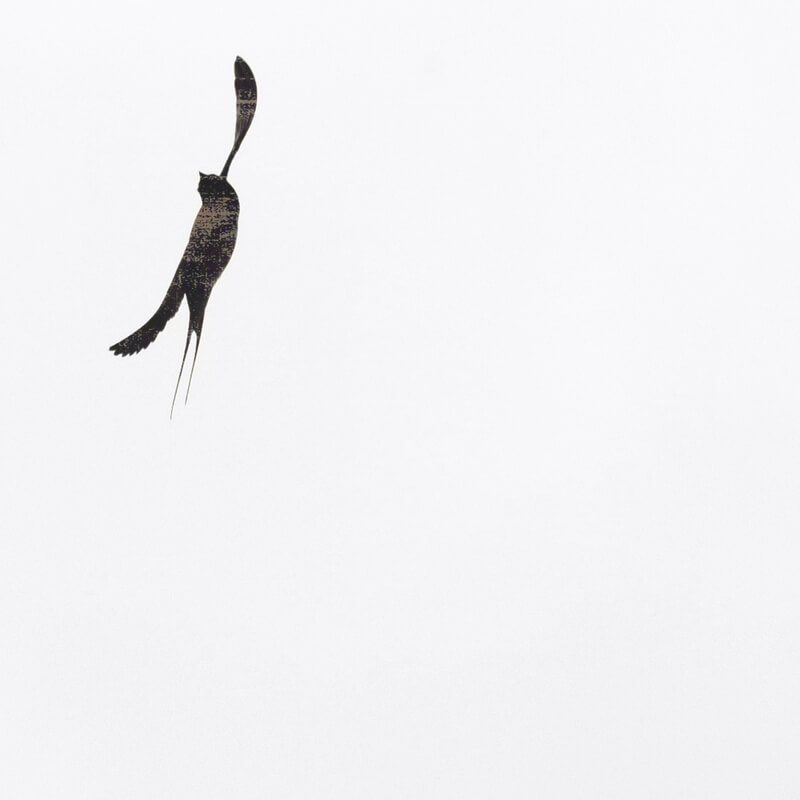
Dumyat and the surrounding area are wonderful places for birdwatching, particularly in the warmer months when swifts and birds of prey fill the skies above the hills and woodland.

On one visit to nearby Logie Kirk, swifts were swooping low over the graveyard catching insects at incredible speed. I spent far too long trying to photograph one properly — ideally with the kirk in the foreground and Dumyat rising behind it.

The swifts, unsurprisingly, had other plans.

Every time I pressed the shutter, they had already disappeared from the frame.

Only later, zooming into one of the photographs at home, did I realise I had accidentally captured the beautiful curve of a swift changing direction mid-flight.

Not through skill — mostly through luck and far too many photographs.

When I share this walk with guests, I usually bring binoculars for everyone so we can properly enjoy the landscape and wildlife around us.
swift in flight Logie Kirk by Blue Noun English language school

Hills, Music And The Shape Of A Day

I often combine walks like this with carefully chosen evening events at places like the MacRobert Arts Centre or Stirling Tolbooth. After a day outdoors, there is something special about resting tired legs while listening to live Scottish music in an intimate venue.

I do not choose events randomly.

Part of what I enjoy sharing with guests is the wider emotional landscape of Scotland — not just hills and scenery, but storytelling, humour, poetry and music too. A good concert after a walk can completely change the feeling of a day and often becomes one of the moments people remember most strongly afterwards.

The landscape and the culture begin connecting together.

A Scottish song feels different after you have spent the afternoon looking across the hills, changing weather and wide open skies that shaped it. Stories land differently when people already feel physically immersed in the place around them.

That is one of the reasons we build experiences this way at Blue Noun.

We are interested in how experiences influence each other.

A walk changes the tone of a conversation. Shared achievement creates openness. Music shifts the emotional atmosphere again afterwards. Good food, landscape, conversation and culture begin layering together into something much more memorable than isolated activities.

Over time, those experiences start snowballing.

People often become more relaxed, more connected and more confident in their English without forcing it. The language becomes attached to meaningful experiences, emotions and memories instead of pressure or performance.

See an Example: Dumyat & Karine Polwart Experience

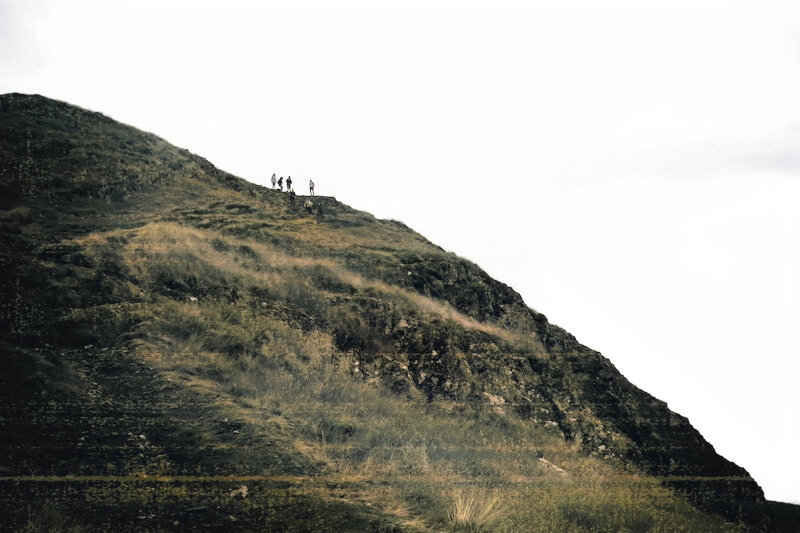
Explore Scotland with our language school - Dumyat hillside

What Kind Of English Emerges During A Walk Like This?

People are sometimes surprised by how much natural conversation emerges during a shared experience like a hill walk.

The English rarely feels forced or performative. Instead, conversation grows naturally out of the landscape, the movement and the atmosphere around us.

We might talk about changing weather, Scottish wildlife, music, family memories, travel experiences or how different places make us feel.

Sometimes the simplest questions create the richest conversations.

One question I often ask guests on the walk back down is:

“Where do you find peace?”

The answers are rarely simple.

People begin talking about forests, kitchens, painting, running, grandparents, oceans, music, silence, childhood places or moments in life when they felt most themselves.

That is the kind of English we are interested in at Blue Noun.

Not perfect performance.
Real connection.

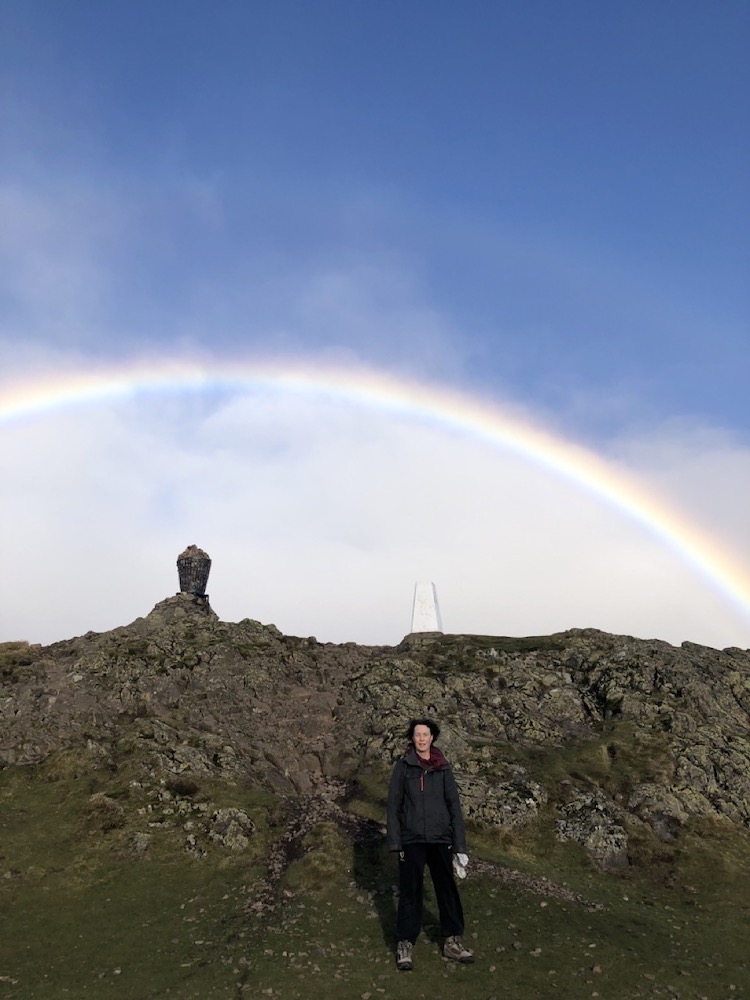
Ruth on top of Dumyat hill with rainbow

Your safety matters to us on walks like these

I hold an outdoor first aid certificate and always approach hill experiences with care, preparation and attention to the needs of the group. Routes, pace and weather conditions are considered carefully, and I only share walks that I feel are appropriate for the people joining me.

Part of helping people relax into conversation and enjoy the experience is helping them feel safe and well-supported throughout the day.

How graphic for Christmas English challenge

A Note About English Coaching

English coaching is not about criticism.

It is not about being told how you should sound, constantly corrected or made to feel that your English is “wrong”.

In many ways, it is the opposite of traditional classroom learning.

English coaching is about support, confidence and expression. It is about helping you feel brave enough to try ideas, explore conversations and use English as a real part of yourself and your life.

For me, good English coaching means helping people feel heard, understood and genuinely listened to while they speak.

It means helping you realise that the person you are in English is already interesting, thoughtful and worth listening to.

The goal is not perfection.

The goal is helping you communicate more naturally, powerfully and confidently — not by focusing on what is wrong, but by helping you discover what is already working.

→ Why More English Lessons May Not Be the Answer

→ What Does Language Coaching Feel Like?

Further Information

If you are planning a walk in the Scottish hills, it is always important to prepare properly and check weather conditions, routes and equipment in advance. Even approachable hills like Dumyat require sensible footwear, awareness of changing weather and respect for the landscape.

Walking Highlands is an excellent resource for route information, maps and hillwalking advice across Scotland.

what is language immersion sharing Stirling

Use your English in Stirling

If you’re visiting Stirling and would like to improve your English while you’re here, you can add short, focused private coaching sessions to your existing holiday.

→ Discover More Conversation Options for Your Holiday in Stirling