
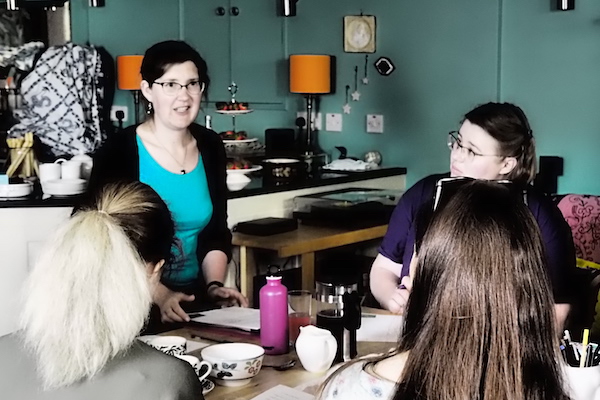
Pronunciation Workshop with Guest Expert Jennie Reed
This workshop took place at Blue Noun’s hub in Crieff as part of our in-person programme.
No two workshops are the same, but I’ll share the choices I made for this one — and why they matter.
This is a short video from the day.
The Setup
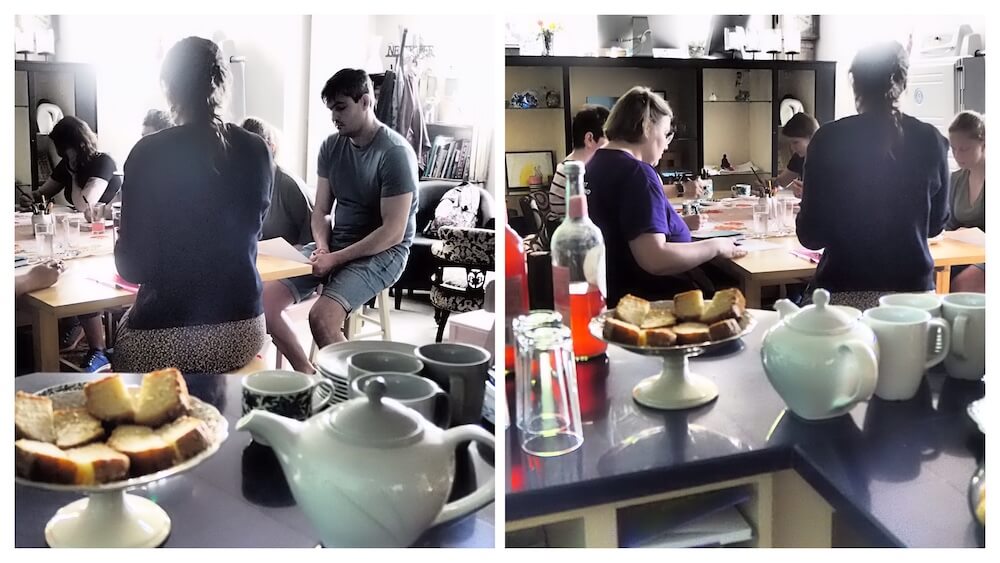
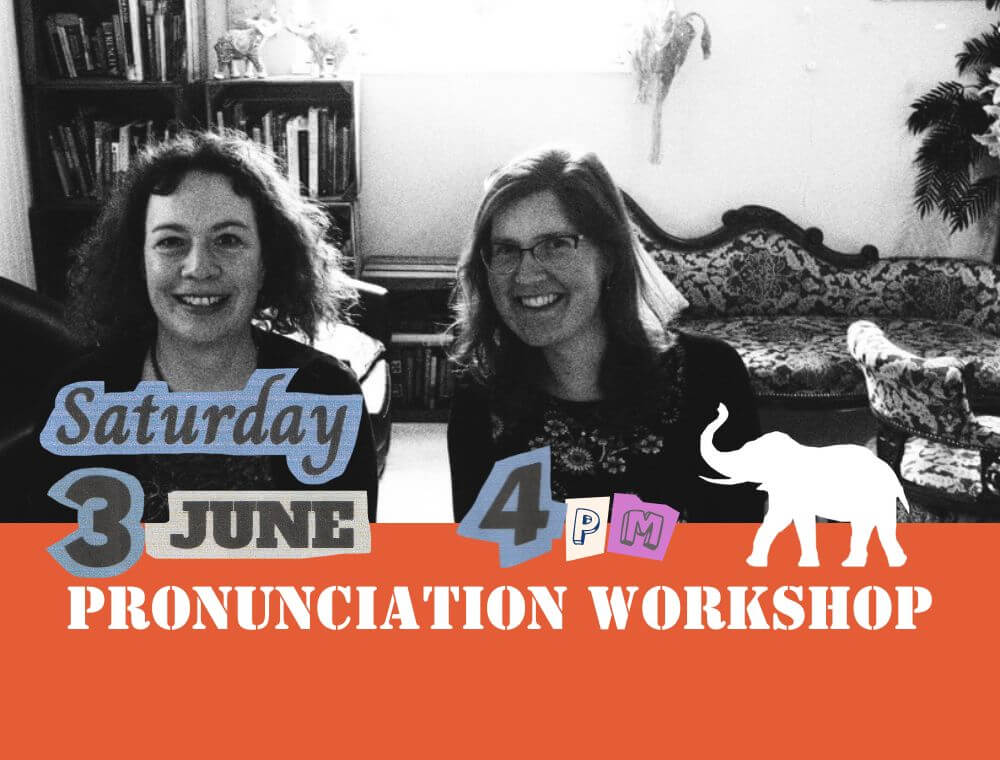
A small group gathered in the hub — a mix of language holiday guests and a couple of local participants.
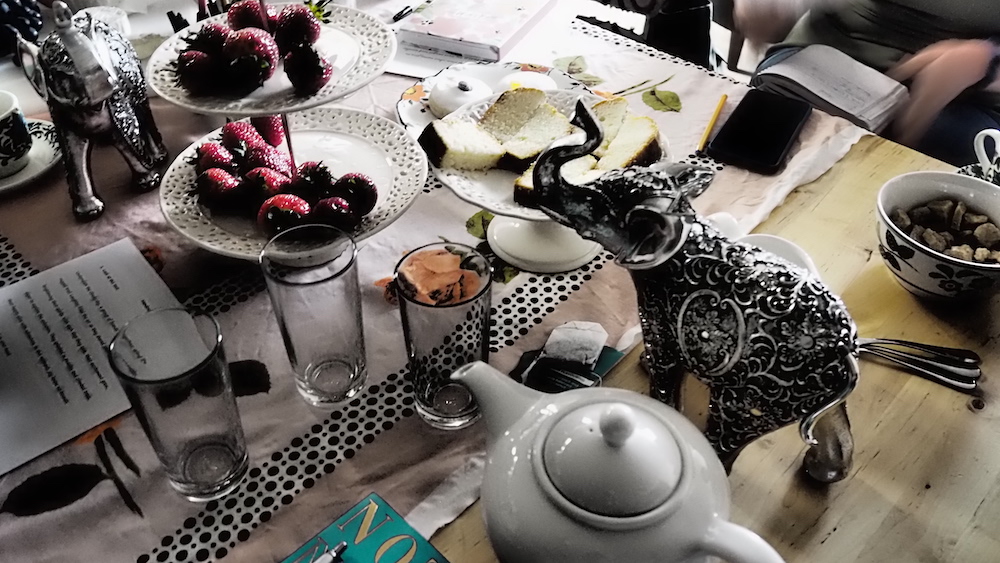
People arrived, settled, had a cup of tea and cakes – then the session began from there.

Who Was in the Room
I invited a group of non-native English speakers into the room — friends and former students.
The mix gave my guests the chance to meet other learners, to talk about their accents openly, and to feel part of something shared rather than something individual.
Pronunciation can feel surprisingly vulnerable. You’re making unfamiliar sounds, noticing things you’ve never been shown before.
Working alongside other learners changes that. It becomes shared, lighter, more human — and far less lonely.
Contrary to what some people believe, working alongside non-native speakers doesn’t “pollute” your experience. It strengthens it.
Redesigning English Learning
There’s a persistent idea that learners need to be surrounded by native speakers to improve.
I don’t build my work around that assumption.
Much of traditional English language teaching still carries ideas that serve the structure of language schools more than the needs of learners.
So I keep what works — and I let the rest go.
Why Focus on Pronunciation?
Many people think working on pronunciation means accent erasure. It doesn’t.
Accented English is part of who you are as a speaker. (The days of everyone aiming to sound like a BBC presenter are over.)
At Blue Noun, the focus is on clarity.
Being understood easily matters far more than sounding “native”.
Most learners recognise this feeling: you think you’re saying something clearly, but it still gets misunderstood.
It’s one of the most frustrating parts of using English — and one of the quickest ways to lose confidence in a conversation.
About Teaching Pronunciation
Many English teachers don’t feel confident teaching pronunciation.
I didn’t for years.
I’ve got better over time, but I’ve also taken part in three of Jennie’s workshops — and while I picked up techniques, I also recognised something important:
She’s the specialist.
That’s exactly why I bring her in.
We aim to include a pronunciation workshop with Jennie on each of our holidays, because this is one of those areas where the right input, at the right moment, can change everything.
What I Didn’t Realise (At First)
I didn’t always understand how powerful pronunciation work could be.
I thought it was an add-on. Something secondary.
I didn’t realise it could unlock someone’s confidence so quickly.
But I’ve seen it happen — again and again.
Small shifts in sound, rhythm, and clarity can remove blocks that have been there for years.
And when that happens, everything else in someone’s English starts to move more easily.
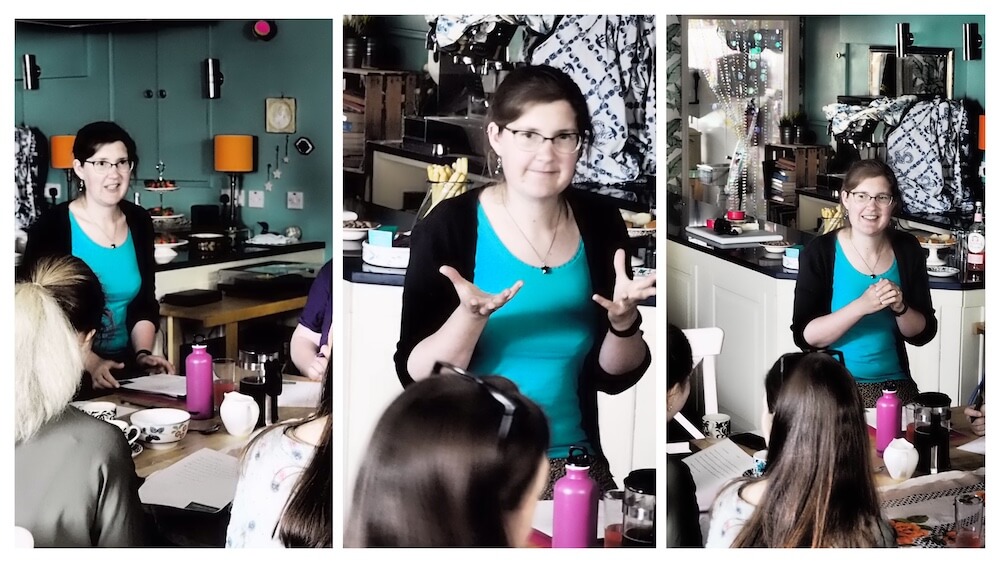
About Jennie Reed
Jennie Reed is a pronunciation specialist and English coach who helps adult learners speak with clarity, confidence, and authenticity.
With a background in neurolanguage coaching, she focuses on how the brain processes sound, rhythm, and meaning — supporting learners to move beyond hesitation and into natural, spontaneous communication.
Jennie’s work challenges traditional ideas about “perfect” English. Rather than aiming for native-like accents, she helps learners develop intelligible, expressive speech that reflects who they are.
Her approach combines technical expertise with a strong emphasis on confidence, identity, and real-life use.
I work with Jennie through our True Voice English collaboration, and we also co-host the Alone with English podcast.

“ In her [Jennie’s) lessons you will find a safe, nice and fun environment where you are allowed to experiment with the language, make mistakes and constantly learn from them. Each lesson is built around a topic – and it is undeniably engaging.
I would recommend starting your English lessons with Jennie as soon as possible“
Francesca Mortara, Linkedin Review, 2022
Language, Community, and Something Bigger
I’m also careful about how culture shows up in my work.
You’ll often see English programmes claim to “teach culture”, but I don’t think culture is something you can deliver from the front of a classroom. It’s something you share, discover, and respond to.
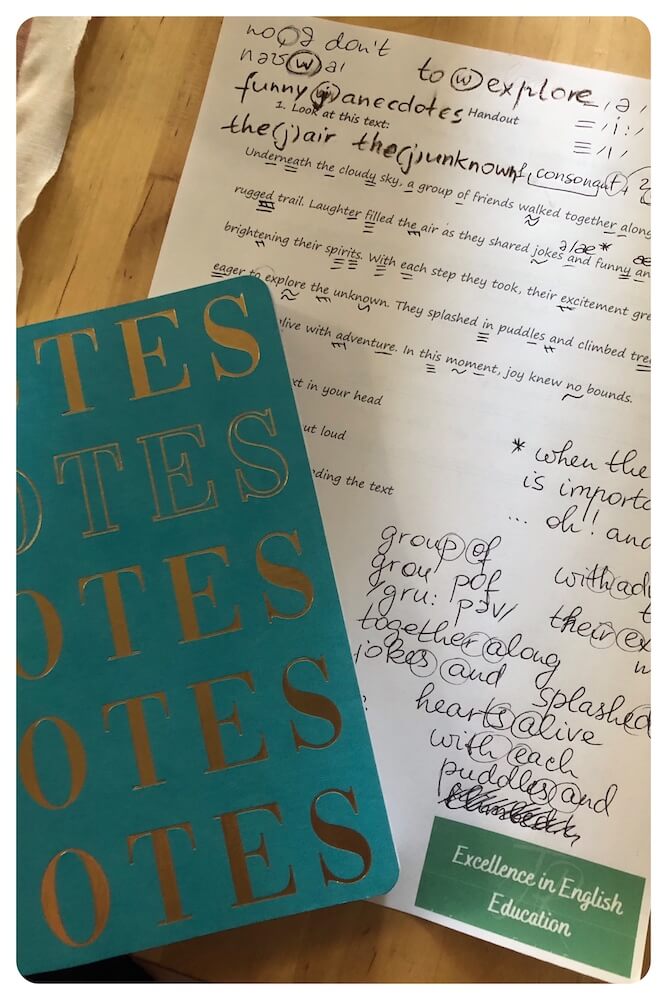
In this workshop, we connected our work on pronunciation to World Female Ranger Week — learning about and supporting women working in conservation across Africa.
These are not my stories to “teach”, but they are powerful to encounter.
The women behind this work are strong, skilled, and deeply committed. Bringing their stories into the room added something real.
People weren’t just working on their English. They were connecting with something meaningful — and for many, genuinely inspiring.
→ Culture-Led English Learning: Best Practice for a Language Holiday
This isn’t the only time we’ve done this. Supporting World Female Ranger Week has become a small but consistent part of how we work.


Where This Fits at Blue Noun
Pronunciation workshops at Blue Noun don’t happen in one single format. (Most pronunciation work on our holidays is more contained, often in smaller or more private sessions.
But this is a good example of how I design the week.
You don’t just work with one teacher.
You experience a mix of people, inputs, and moments — each unlocking a different part of your English.
Find out how our mix gets you language results.
Looking for our current approach?
Since this workshop was first delivered, we’ve continued developing how we teach pronunciation at Blue Noun.
Discover our latest thinking and the new Pronunciation Gold workshop here.
If This Holiday Feels Like What You’ve Been Looking For
If this way of experiencing English feels like something you’ve been looking for, you can explore how a full week is shaped here:
→ Blue Noun English Language Holidays in Scotland
Or, if you’d prefer to talk it through, you’re very welcome to get in touch and ask questions.
Further Information
Jennie Reed and Excellence in English
English teaches, we have an English lesson plan on World Female Ranger Day
Our Guides to Find Your Next Step
What's the Next for My English?
A supportive space to find your next step
Help Choosing a Language Holiday
Choosing the right English language holiday can be confusing.
Check out our guides to help you ask better questions and invest well.
