
Why We Use Conversation Cards in Our English Coaching
If you have spent any time in the Blue Noun hub, you’ll know that one thing we use often is a pack of well-designed conversation cards.
They’re not used as a game, or an activity to “get people talking”.
They’re used because they give agency.
The power of conversation cards isn’t only in what people say in response to them, but in what happens before anyone speaks. Choosing a card. Sitting with it. Letting a word or an image land without explanation.
That moment matters.
In our work, conversation cards support English learning in a very particular way. Not by adding more language, but by changing the conditions in which language appears.
Below is a short conversation between Claire H and Ruth, reflecting on a moment when conversation cards were introduced during a Blue Noun nature immersion day.
But first:

Why conversation cards work so well in English coaching
We use conversation cards because they support things that are often difficult for adult English learners to access in more traditional settings.
They remove pressure to perform
When a card is placed in front of someone, there is no “correct” response.
There is no expected answer.
People don’t need to impress anyone or prove anything. They are invited to notice what the card brings up for them and respond in their own way.
That shift alone changes how English feels in the body.
They slow the pace of conversation
Cards introduce a natural pause.
Instead of quick exchanges or turn-taking, there is time to look, think, and feel. Silence becomes part of the process, not something to avoid.
For many learners, this is the first time English isn’t rushed.
They invite deep listening, not just speaking
In group settings especially, cards change how people listen.
Rather than waiting for their turn to speak, people listen because what others say helps them understand their own card more fully. Meaning builds collectively.
This kind of listening creates connection quickly, even between people who have only just met.
They allow language to emerge naturally
We don’t explain the card before people respond to it.
That absence of explanation is intentional.
When people have to work something out for themselves, language settles more deeply. It’s not memorised or translated quickly and forgotten. It becomes associated with a feeling, a moment, a place.
That has long-lasting effects on confidence and comfort in English that go far beyond a single word.
They create memories that last
A well-held card session doesn’t disappear once it’s over.
People often remember “their” card months later, along with where they were, who they were with, and how they felt. That kind of memory is not about vocabulary. It’s about meaning.
They create memories that last
A well-held card session doesn’t disappear once it’s over.
People often remember “their” card months later, along with where they were, who they were with, and how they felt. That kind of memory is not about vocabulary. It’s about meaning.
They don’t force engagement
A good conversation card doesn’t tell people what to say.
It creates a space where people can decide what they want to talk about.
There is no forced participation, no required outcome, and no expectation that everyone will respond in the same way. People make what they need from the card in that moment.
This is very different from much traditional ELT material, where engagement is often structured, prompted, or directed towards a specific language aim.
Here, the card elicits what matters to the person holding it.
Language follows interest, not instruction.
That freedom is one of the reasons conversations feel more natural, more personal, and easier to sustain.
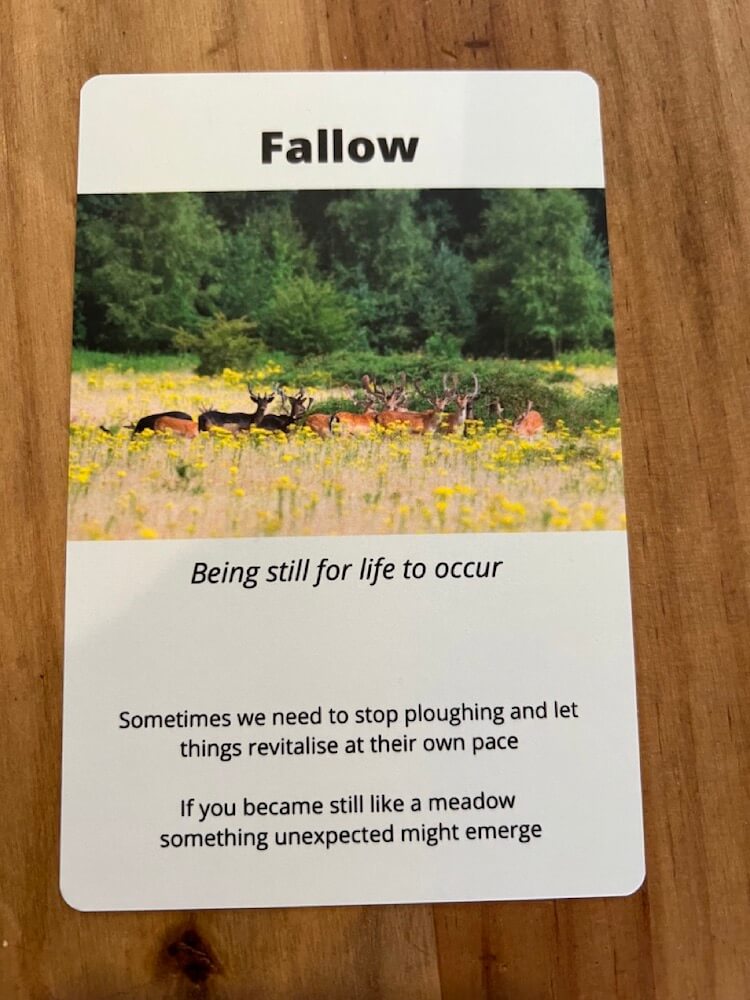
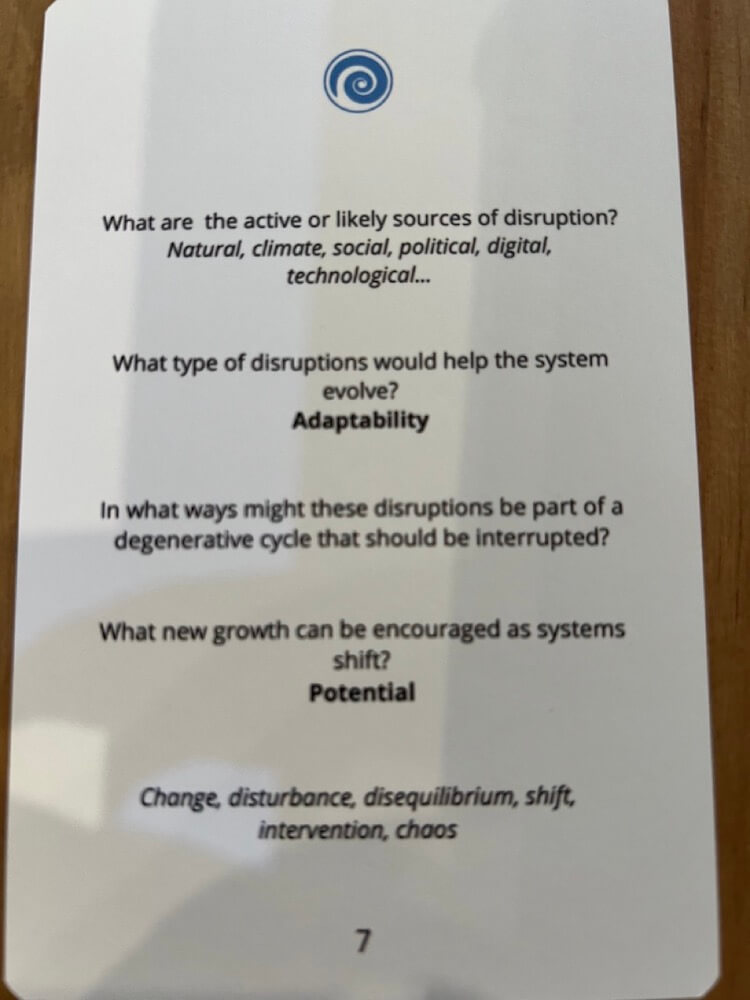
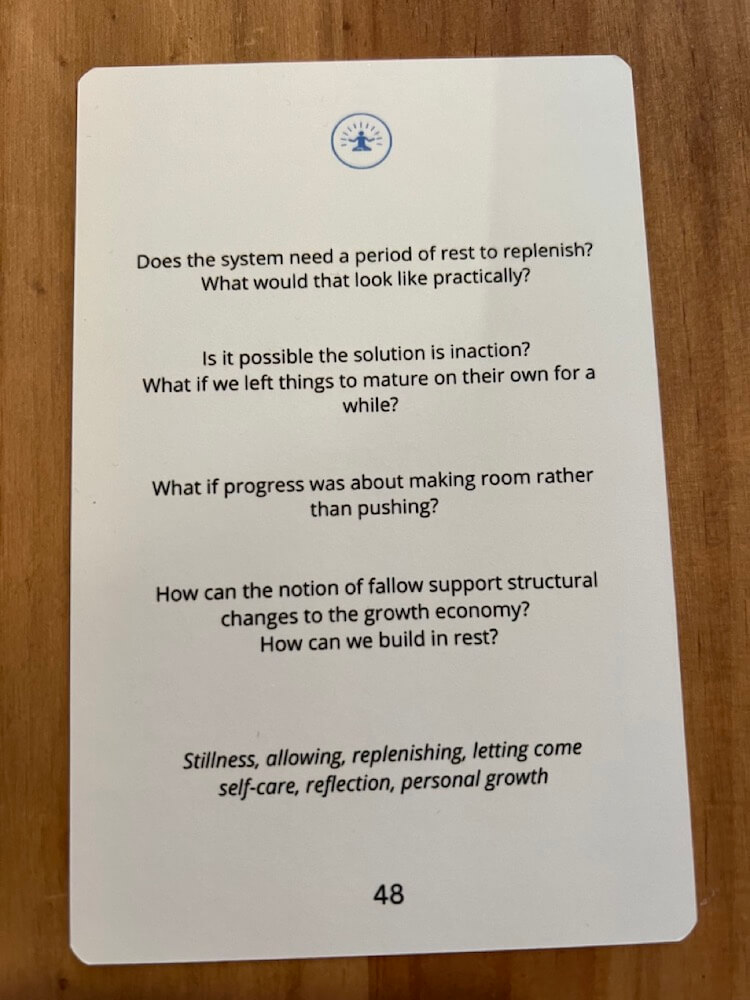
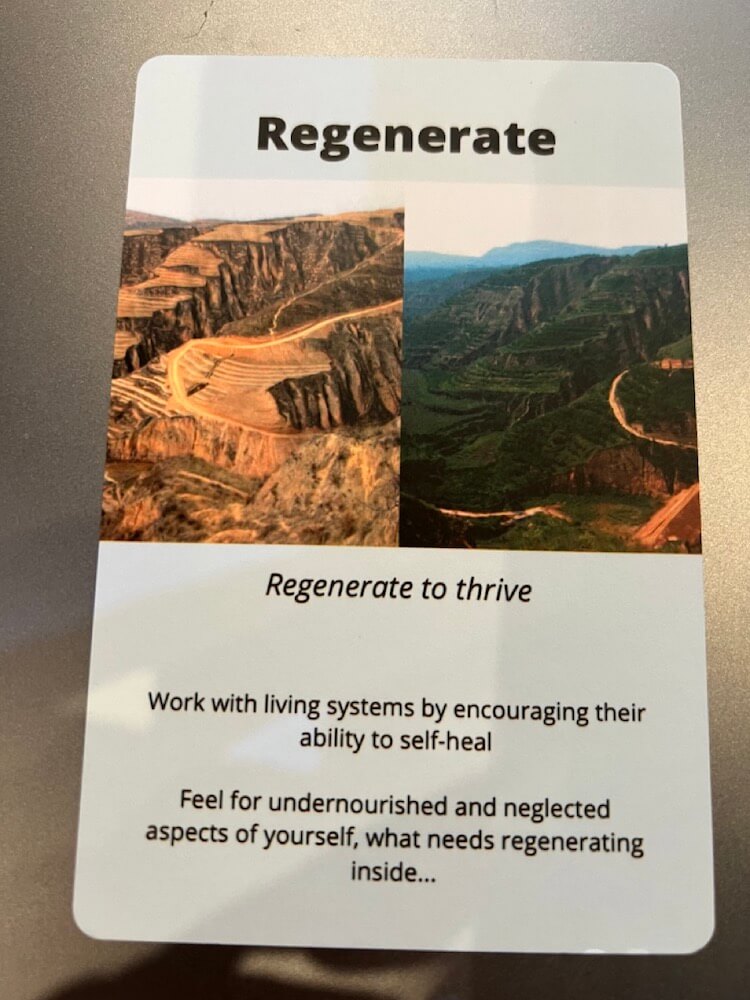
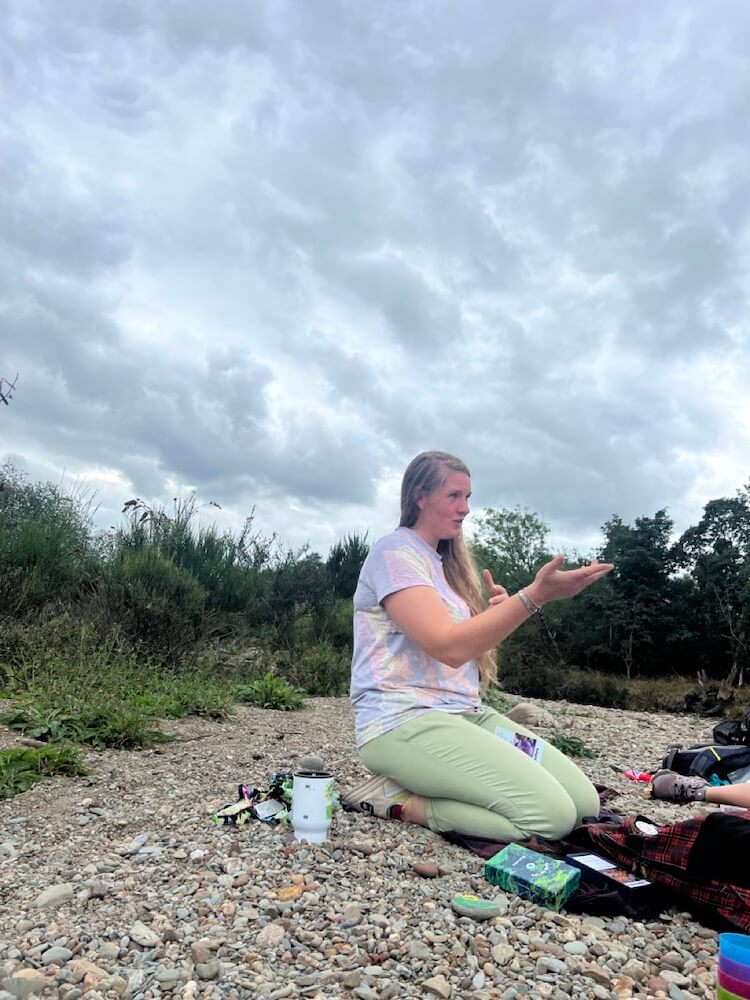
I’m going to describe a session that took place during a family holiday day on the banks of a river, where Jen wove storytelling about the landscape into outdoor activities and informal language sessions for parents.
A conversation about cards, nature, and a moment that stayed
Claire H interviews Ruth about a card-based reflection introduced by Jen during a Blue Noun nature day.
Claire H:
Ruth, can you talk about the day when Jen brought her conversation cards on the walk?
Ruth:
Yes. It’s important to say first that I didn’t bring the cards. Jen did. She leads guided walks for Blue Noun, and her work isn’t just about sharing nature. She’s very skilled at helping people slow down inside nature, using things like rivers, stones, and walking pace to help people arrive fully.
By the time she introduced the cards, we had already unwound. We’d walked quietly, swum in the river, stacked stones for a long time. People were calm, relaxed, and present.
Claire H:
So the cards came after that slowing down?
Ruth:
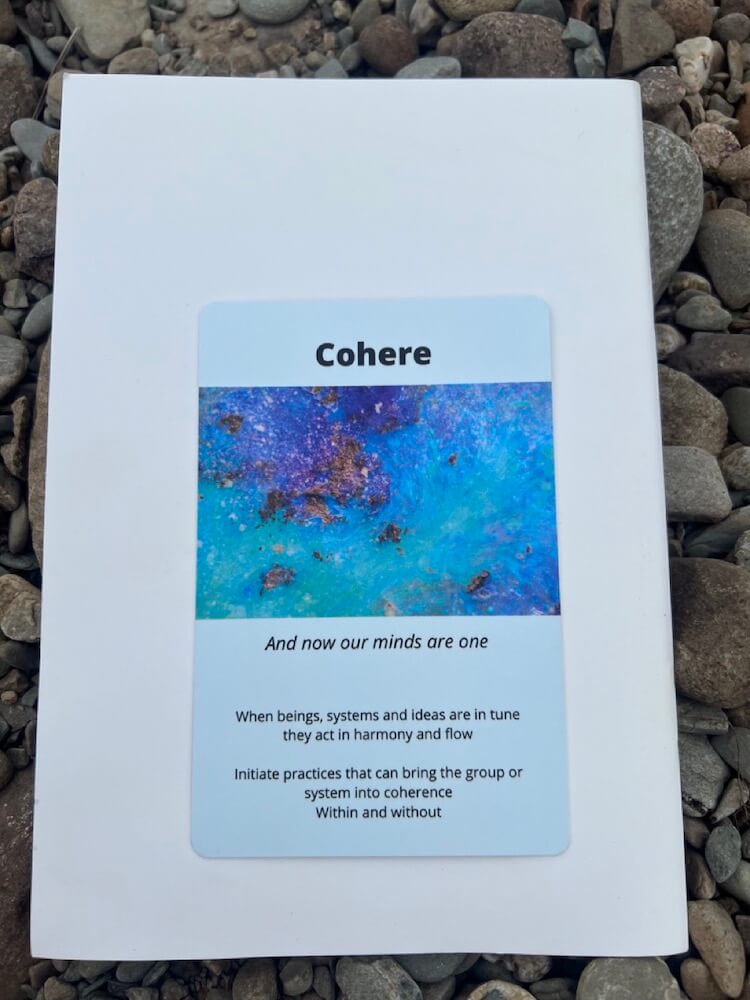
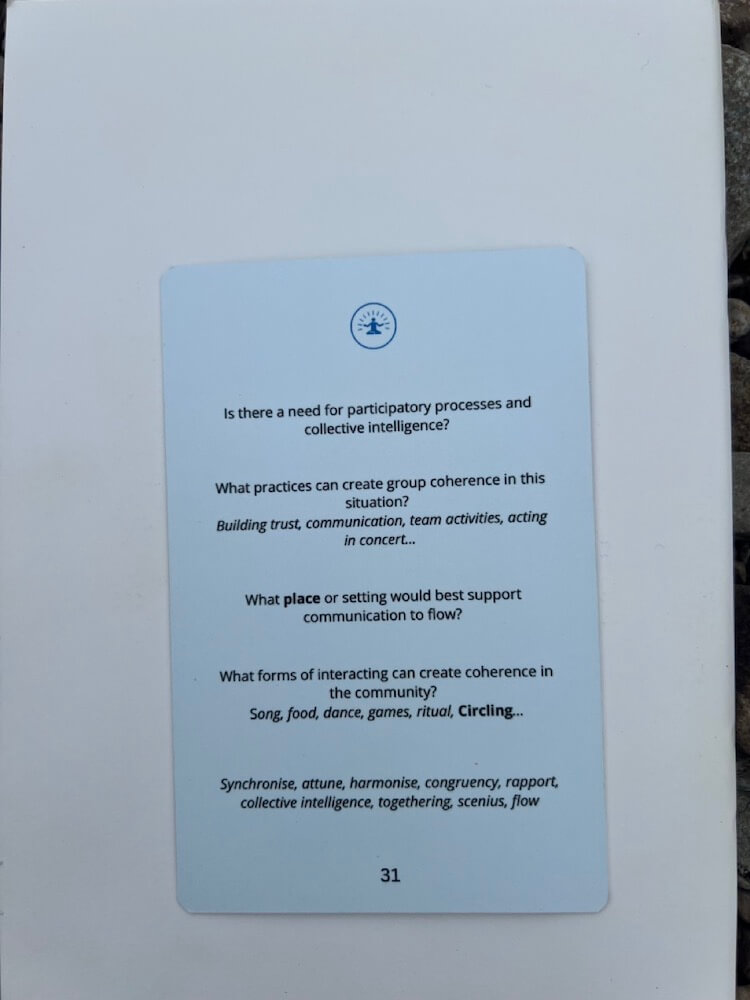
Exactly. She didn’t explain them much at all. She simply invited us to choose one of her CArds for Life and sit with it. We shared silence with the card first, and then took turns speaking about how it landed for us.
Sometimes it was the word that stayed with someone. Other times it was the image. It could feel almost like a message from the universe, but in reality every word and image is very carefully designed to expand self-reflection.
Claire H:
What did that silence create in the group?
Ruth:
If it had been one-to-one, it might have felt intense. But as a group, it created curiosity and very deep listening. People weren’t waiting for their turn to speak, which is what often happens in language classes. They were really listening.
What was interesting was that other people’s reflections helped you understand your own card more clearly.
Claire H:
Was there a particular moment that stayed with you?
Ruth:
Yes. I chose a card with the word cohere. At first, I struggled with it. I was trying to read it as advice, like it was telling me what to do next. But through the group discussion, and with Jen’s gentle facilitation, I realised something else.
At a very deep level, creating coherence is already what I do when I bring people and groups together. The card shifted from feeling like a clue I needed to solve to an affirmation of something that was already true.
Claire H:
And that stayed with you?
Ruth:
Very much so. Eight months later, I still remember that word. I remember the card, the feeling of swimming in the river, the stones we stacked, the quiet of the group. It wasn’t the word itself that mattered. It was the invitation to meditate on it, in that moment, in that place.
If someone had simply told me the word, or asked me to reflect on coherence in conversation, it would have been completely unmemorable.
Claire H:
Why do you think it lasted?
Ruth:
Because there was no explanation. Having to work something out for yourself is powerful. The absence of explanation deepened how the language sat inside me and stayed with me.
That has long-lasting implications for how comfortable people feel with language, beyond any single word.
Claire H:
You’ve also used this approach on family holidays, haven’t you?
Ruth:
Yes. We did this exercise on a family holiday with parents taking part. Afterwards, I thanked one father for engaging so openly. I mentioned that the day had carried quite a feminine, reflective energy. He agreed, and he was pleased that had been noticed.
What mattered to him was that it hadn’t been uncomfortable. It was simply a very different way of thinking, and he said he gained a lot from it, held within the calm, careful context that Jen creates.
English Coaching for Adults: Further Resources
If you’re an ESOL teacher reading this, we share a mix of resources on our Teachers’ pages. These include practical exercises you can use with students, purpose-written reading texts, and video-based activities that can be assigned as homework.
In each case, they add a touch of our unique, conversation-led coaching to your lessons.
They’re offered as support for thoughtful, creative teaching, not as a fixed method to follow.
Further Information
Card Packs Mentioned:
The Marina Abramović Method: Instruction Cards to Reboot Your Life
Cards for Life by Tom Mansfield
Holidays Mentioned
→ Explore Family English Holidays
Good to Know:
→ How we Balance Learning, Wellbeing and Responsibility
ELT Lesson Plans
Lesson Plans and Class Ideas
If you are searching for alternative resources to bring into your classroom, we have a few that target authentic English.
They’re a by-product of our own teaching work, which we post on our site for free, as we are: anti-waste, pro-independent teachers & collaboration pro-making English learning interesting for all.
→ FREE ELT Resources for English Teachers
