
This blog shares three small cultural moments that we offer travellers visiting Scotland — moments designed to deepen the impact of our English coaching through artist expression, creativity, and place.

It explores not only what we love about these artists’ work, but why we choose to share these particular pieces at these particular moments in the journey.

We love lots of art, but these are three specific Scottish artists whose work we place into specific moments of the Scotland experience because their artistic philosophy supports the emotional shifts we want people to experience in English.


Hannah Longmuir notebook for journalling

Celebrating Scottish Wildlife Moments

Blue Noun hosts a weekly travel workshop for travellers passing through Perthshire.

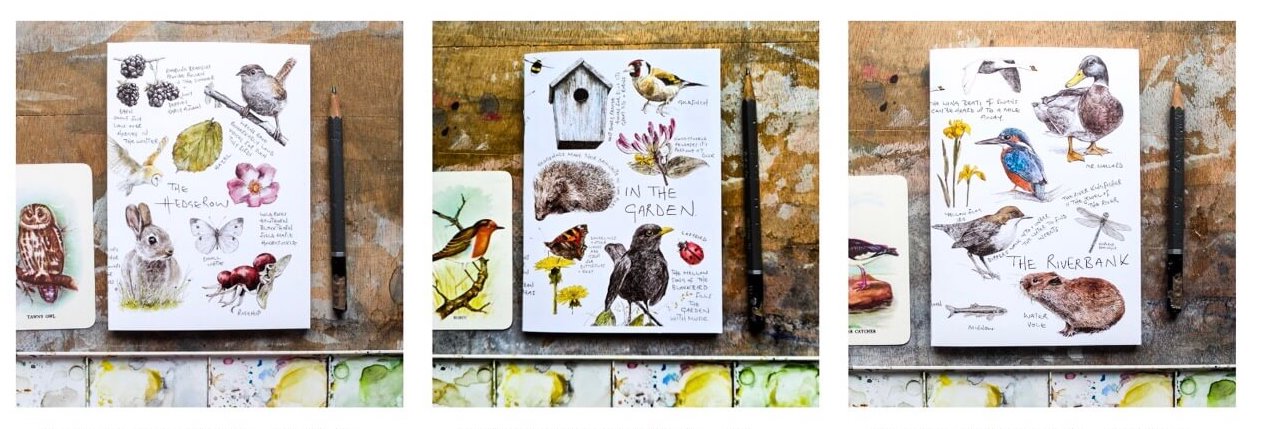
Because starting can often be the hardest part, each guest receives a beautifully illustrated artist notebook by Scottish wildlife artist Hannah Longmuir to work into during the evening.

The workshop notebooks are created by Borders wildlife artist Hannah Longmuir, whose detailed illustrations are inspired by the birds, animals, and changing seasons of the countryside around her.

Her work celebrates close observation, quiet beauty, and the small details people often miss — making the notebooks a natural fit for a workshop centred around slow travel, reflection, conversation, and noticing Scotland more deeply.

At least one of my journal prompts is about Scottish wildlife.

Don’t expect to work slowly — over two hours, we’ll fill this little notebook using a variety of art materials, prompts, reflections, conversations, and creative techniques.

People are often surprised by how quickly they create something thoughtful, expressive, and visually rich once the process begins.

Our workshop is designed to help you leave with something that feels genuinely worth keeping — not just notes from a class, but a personal record of your experience of Scotland, your conversations, your observations, and your English.

Having such a lovely booklet to work inside gives inspiration in the moment – and a lasting memento.


→ Mid Journey | A Creative Workshop for Travellers in Scotland


Grpahics for Mid-Journey travel workshop in Crieff, Scotland
Ceri White ceramic pot, drawing workshop

Bold Impact

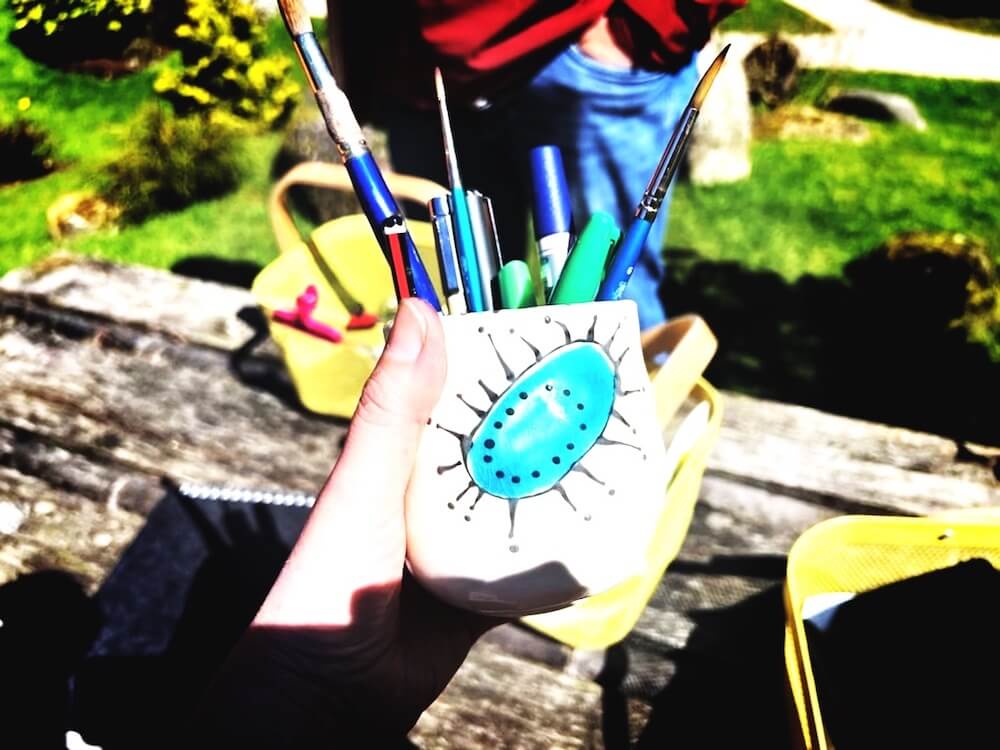
The ceramic pots by Scottish artist Ceri White are part of the field materials that I take to drawing workshops.

I use them in place of a pencil case or simple jam jar that you might expect because, time after time, people who don’t draw regularly often have a little inhibition about working fast or working boldly.

People like to start with pencil. They like to start with light marks and colouring pencil rather than diving straight in with highlighter pens — which is, of course, 100% reasonable. But the fear of making a mistake or doing something wrong is something I want people to lose in art-making just as much as I want to loosen within my English language coaching.

Because within art — and sometimes arguably within language as well — expression matters more than accuracy. Communication matters more than perfection. I want people to feel able to make a bold impact with their words and marks rather than constantly shrinking them down out of fear of getting something wrong.

Personally, I love Ceri’s pots. They fill me with joy whenever I hold them. There’s something playful, freeing, and alive about them — and I want to pass that feeling on too.

Ceri White’s pots are beautifully rule-breaking, so instead of simply showing people a couple of slides of artists who work in a freer way, I give them this lovely little pot to carry around with them.

Every time they change pencil or reach for their watercolours, they glance at the pot and are reminded of this idea of pure, uninhibited expression.

You can learn more about our drawing workshops here:

→  What a Drawing Day Feels like – and How English Unfolds

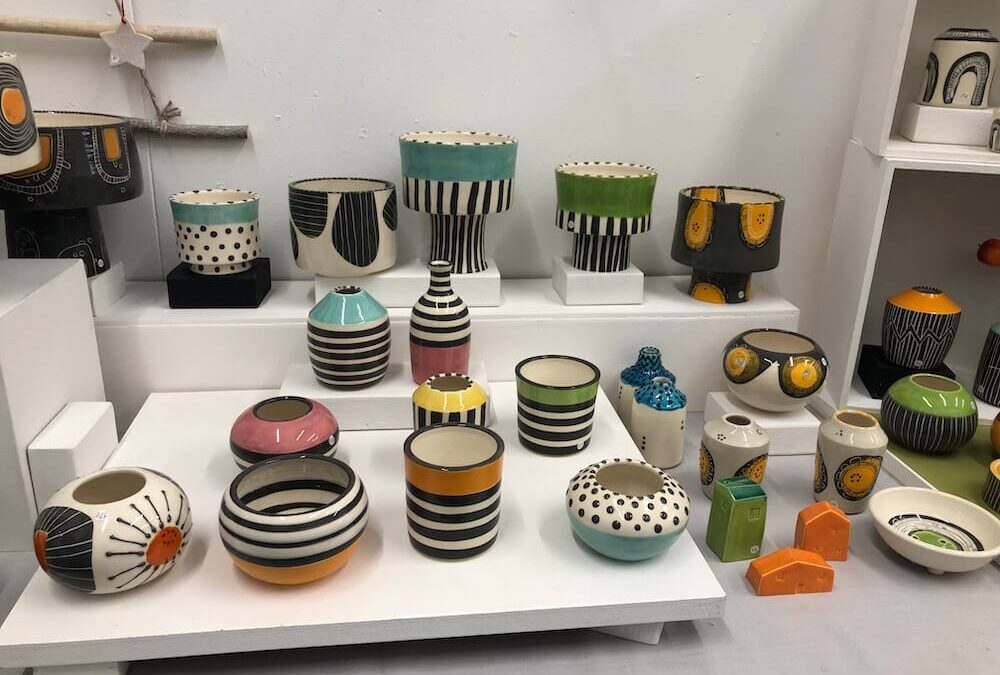
ceramic artist John Maguire cup and sauser for

Wonky English

The third artist collaboration that sits quietly inside Blue Noun is with ceramic artist John Maguire.

John makes these beautifully near-perfect ceramics — imagine Japanese aesthetics, but with slight wobbles, like a vinyl record that’s been left in the sunshine. His work is lovely because of the imperfections. Otherwise, it would just be an IKEA cup.

I use the wonky cups as a metaphor for language, particularly accents, which people so often think of as wrong or ugly — when outsiders can often hear them as beautiful.

So many people have been taught to experience the irregularities in their English as evidence of failure. But those tiny “wobbles” are often the very thing that gives somebody’s English warmth, texture, identity, and humanity.

This became part of our Wonky English download — a small piece of Blue Noun philosophy that helps people rethink perfection, correctness, and what communication is actually for.

Because at Blue Noun, I’m not trying to turn people into perfect speakers.

I’m trying to help people recover and use the English they already worked incredibly hard to build.

The goal is not to sand away every wobble.

The goal is to help people take their English out of the shame box and use it proudly again.

Get Your Free Wonky English Download

Learning English with Culture

At Blue Noun, culture is not an “extra activity” added onto an English holiday. These encounters help shape attention, memory, reflection, and conversation. They create the kinds of emotional and sensory experiences that make language feel more personal, more connected, and more alive.
Culture-Led English Learning: What It Is — And Isn’t.

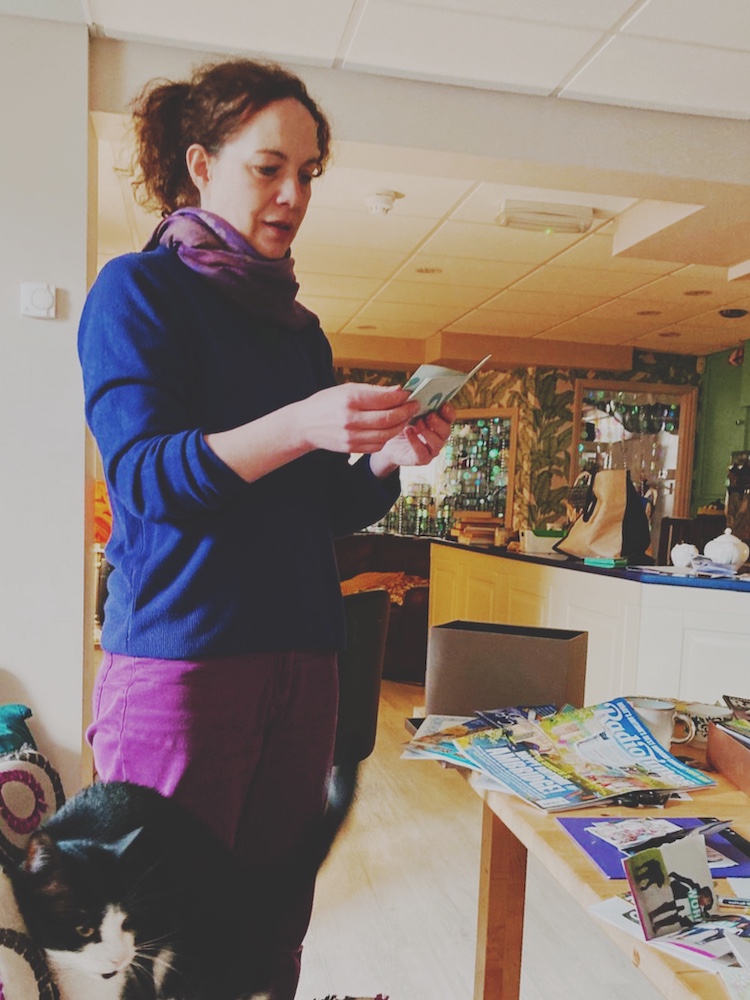
English coach Ruth Pringle at Zine workshop at Blue Noun

A Creative English Coach

Lead coach Ruth Pringle has an artistic background and a deep knowledge of contemporary Scottish arts and crafts — not only what is beautiful or interesting, but what feels meaningful to share, when to introduce it, and why certain creative encounters stay with people long after a journey ends.

At Blue Noun, these artistic collaborations are carefully woven into the rhythm of the experience to support reflection, conversation, attention, and memory.

You can find out more about Ruth’s background and training here:

Learn more about my art and ELT English training