

Field Notes | How the Language Work Happens
A Blue Noun Field Note
My Blue Noun Field Notes make visible some of the thinking and decision-making that happens during a Blue Noun language holiday.
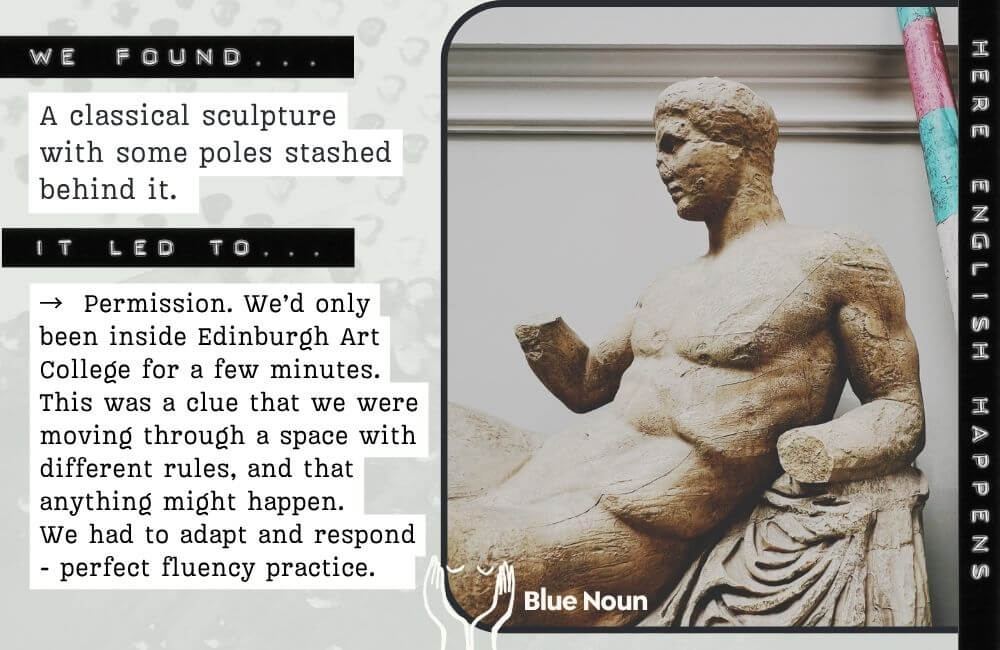
This one comes from an earlier visit to an art school. Within minutes of arriving, we found a classical sculpture with a collection of colourful poles stashed behind it — a small clue that we’d entered a space with different rules.
For me, immersion happens anywhere we don’t automatically belong. We have to pay closer attention, work out what’s happening and respond. Art spaces heighten that awareness of our environment: they ask us to notice, interpret, question and adapt. Our language has to react too.
That slight uncertainty creates permission — we don’t already know what is going to happen or what we’re supposed to say. And that makes these environments particularly rich places for practising the responsive, adaptable English that real fluency requires.
My Field Notes capture moments like this. But they’re only glimpses of a much bigger process of setting language goals, making teaching decisions and recognising progress.
Learning English with Culture
At Blue Noun, culture is not an “extra activity” added onto an English holiday. These encounters help shape attention, memory, reflection, and conversation. They create the kinds of emotional and sensory experiences that make language feel more personal, more connected, and more alive.
A Creative English Coach
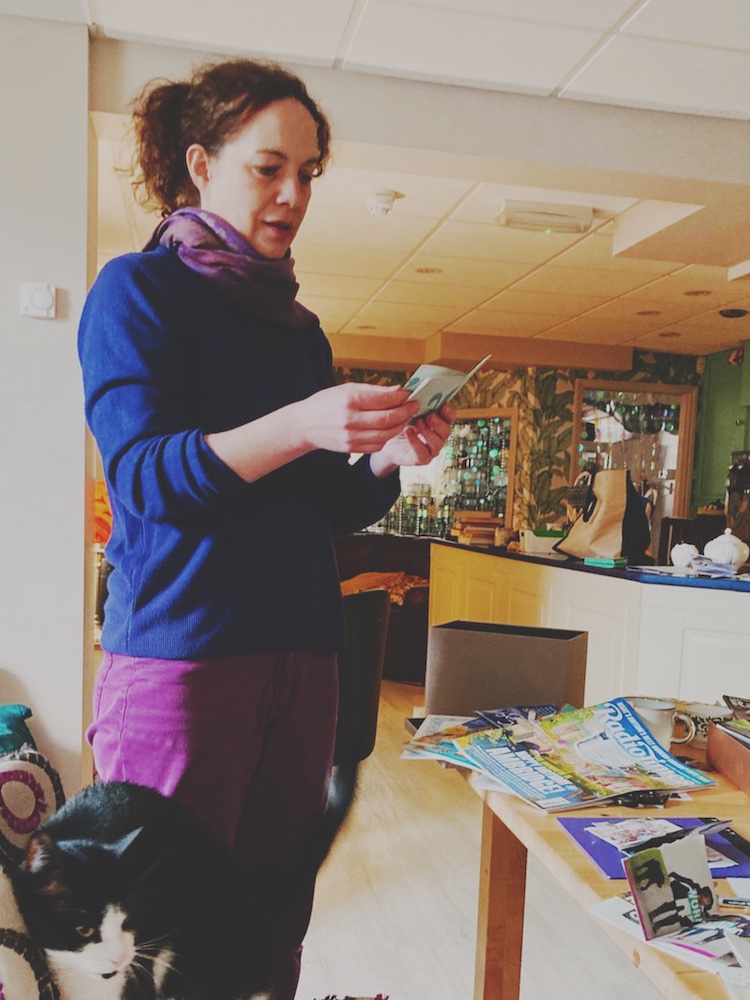
Lead coach Ruth Pringle has an artistic background and a deep knowledge of contemporary Scottish arts and crafts — not only what is beautiful or interesting, but what feels meaningful to share, when to introduce it, and why certain creative encounters stay with people long after a journey ends.
At Blue Noun, these artistic collaborations are carefully woven into the rhythm of the experience to support reflection, conversation, attention, and memory.
You can find out more about Ruth’s background and training here: