
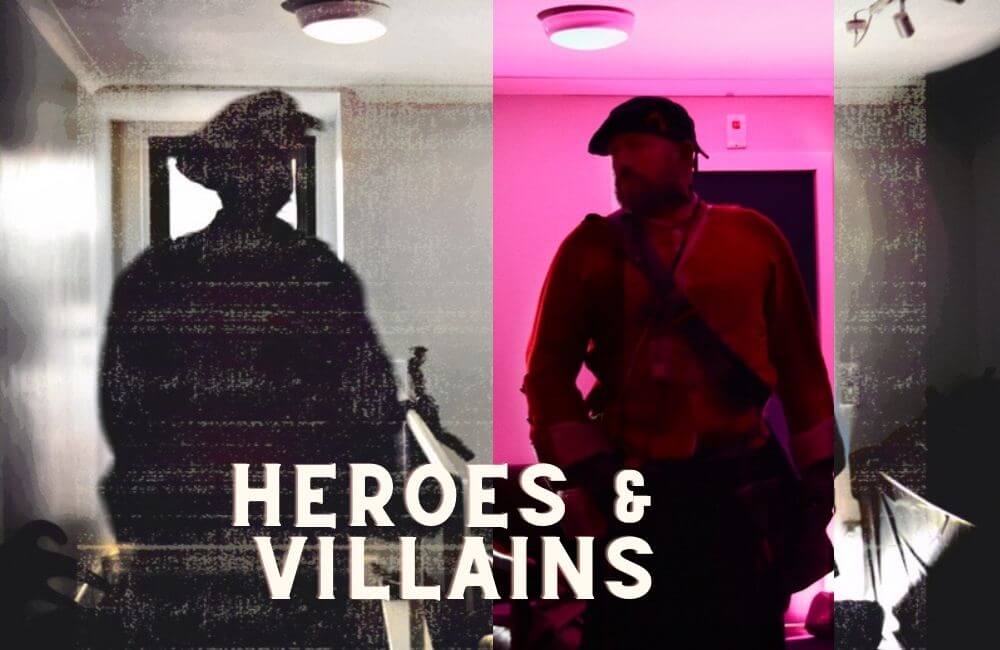
Fire & Folklore: Crieff Slips Back in Time
For a few cold evenings, Crieff stepped out of the present and into its past.
The town centre became a moving stage for Fire, Folklore, Heroes and Villains — a four-day historical re-enactment that traced Crieff’s role as a key market town for 18th-century cattle drovers. Scenes from the past were projected directly onto modern buildings, folding centuries together in a way that felt immediate and unsettling.
The Whole of Crieff Is a Stage
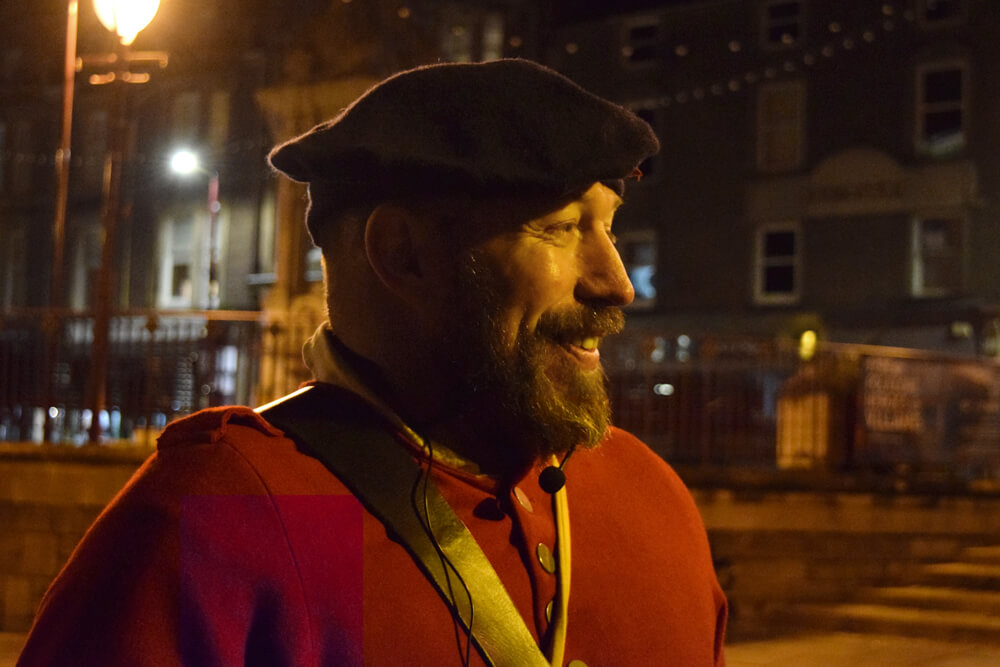
Audiences were led through the town by a conspiratorial Highlander — a paid guardsman in a red coat, kilt and cockade. His loyalties, he told us early on, depended entirely on who was asking… and who was paying.
At each stop, costumed performers emerged into pools of light. Arguments flared. Alliances shifted. Stories of tension, survival and betrayal played out against towering projections on stone walls that have watched centuries pass.
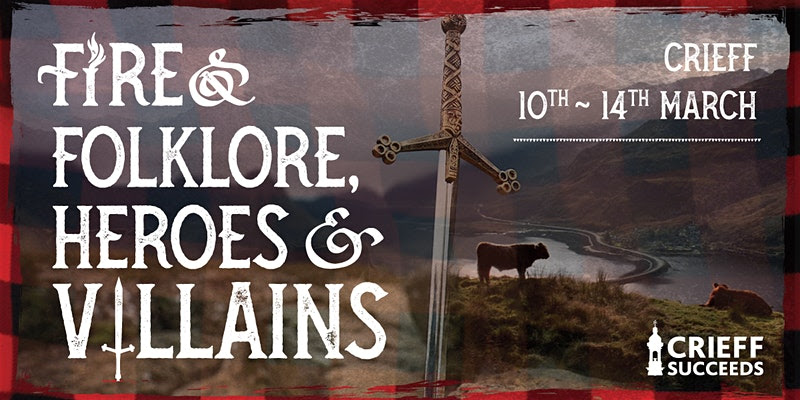
Flyer, Fire, Folklore, Heroes and Villians performance in Crieff town centre.
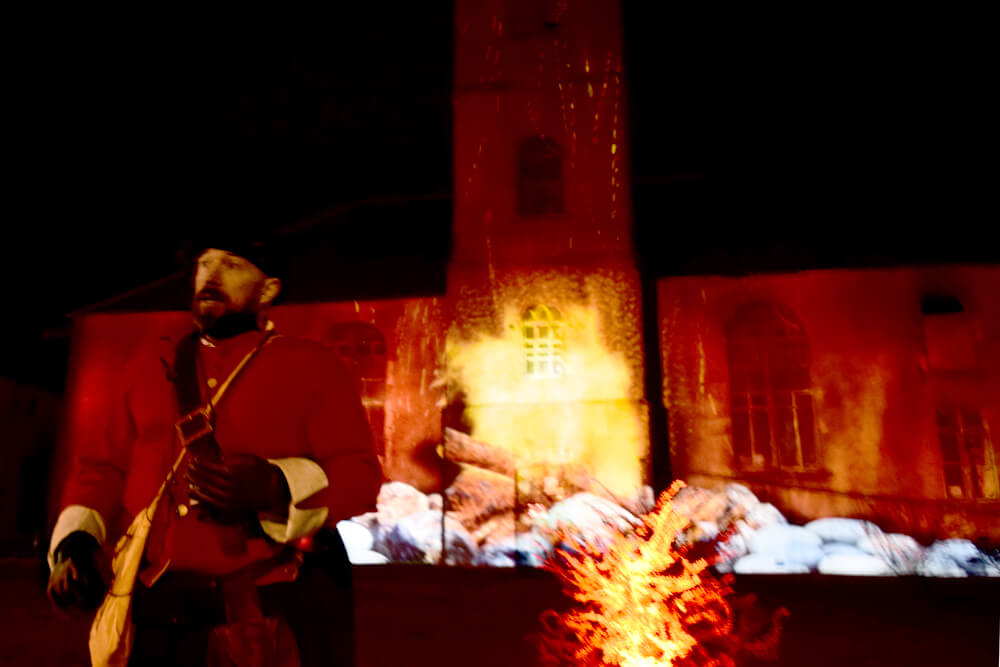
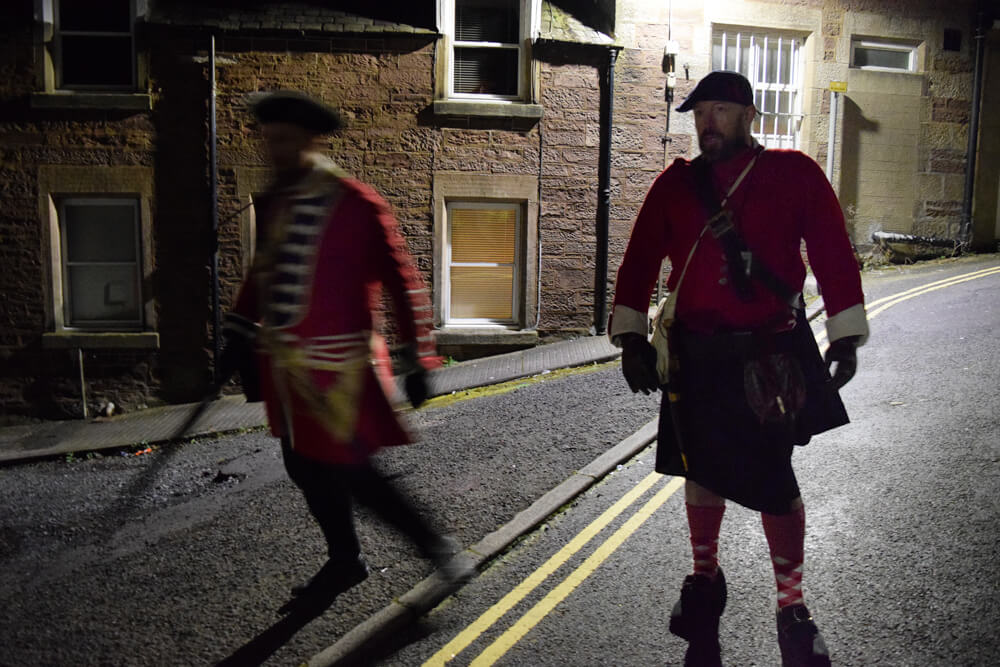
Heroes and Villains performance in Crieff town centre
“Arguments about prices, treachery and double-crossing were rife as poor and volatile men managed cattle herds worth hundreds of pounds.”
Rob Roy Appears — and Vanishes
Throughout the evening, Rob Roy McGregor made sudden, confrontational appearances, challenging authority before melting back into the shadows whenever the King’s soldiers drew near.
Hero or villain — the production never settled the question.
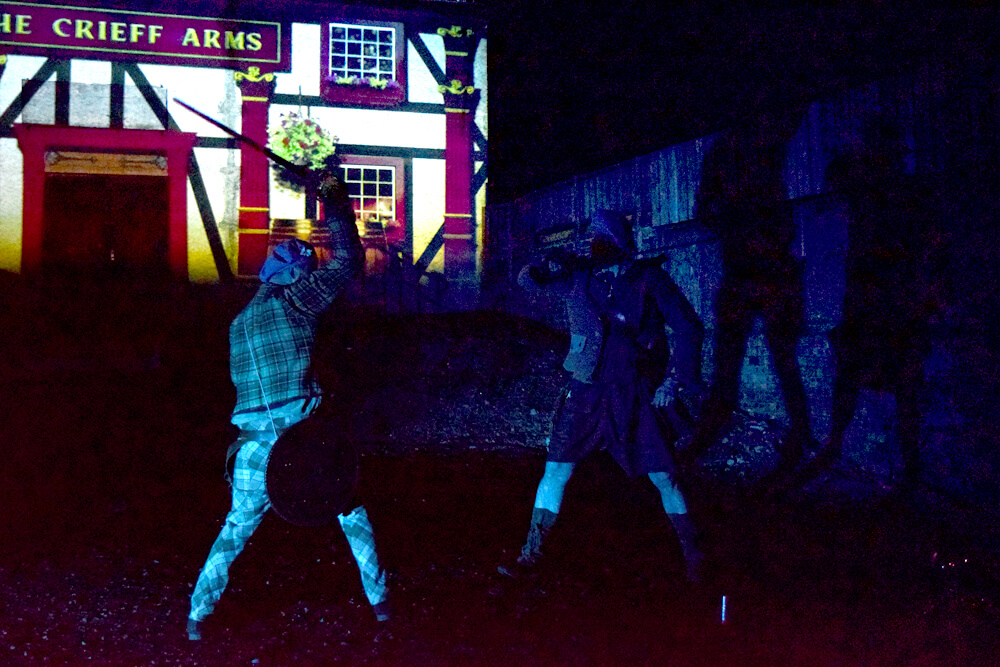
Heroes and Villains performance in Crieff town centre.
Imagine the Cattle Coming
Crieff was not an easy place in those days.
Highland drovers arrived in vast numbers, each bringing hundreds of cattle. They gathered in the surrounding hills before descending into town for the trysts — market meetings where fortunes were made and lost.
Arguments over prices were common. Treachery and double-crossing followed close behind. Poor and volatile men found themselves responsible for herds worth hundreds of pounds.
A Sinister Warning
Did they notice the bodies swinging on Gallow’s Hill?
The executed were left there as a warning — a message from authority to behave. It’s said Highlanders would doff their bonnets to the corpses as they passed, a gesture of respect. Whether it changed anyone’s behaviour is another question.
Not Popular Visitors
Crieff’s own residents were not innocent observers.
We learn that pieces of the gallows scaffold were sold off as souvenirs by the blacksmith on King Street. Even punishment became commerce.
Rebel Songs in the Square
Rob Roy himself was a frequent visitor to Crieff. His son was pursued through the streets and killed here.
In this re-enactment, Rob Roy is angry and fearful. But history shows another side.
In October 1714, Rob Roy and his men marched into Crieff Town Square, rang the town bell, and sang Jacobite songs in full view of the crowd — openly toasting the uncrowned King James VIII.
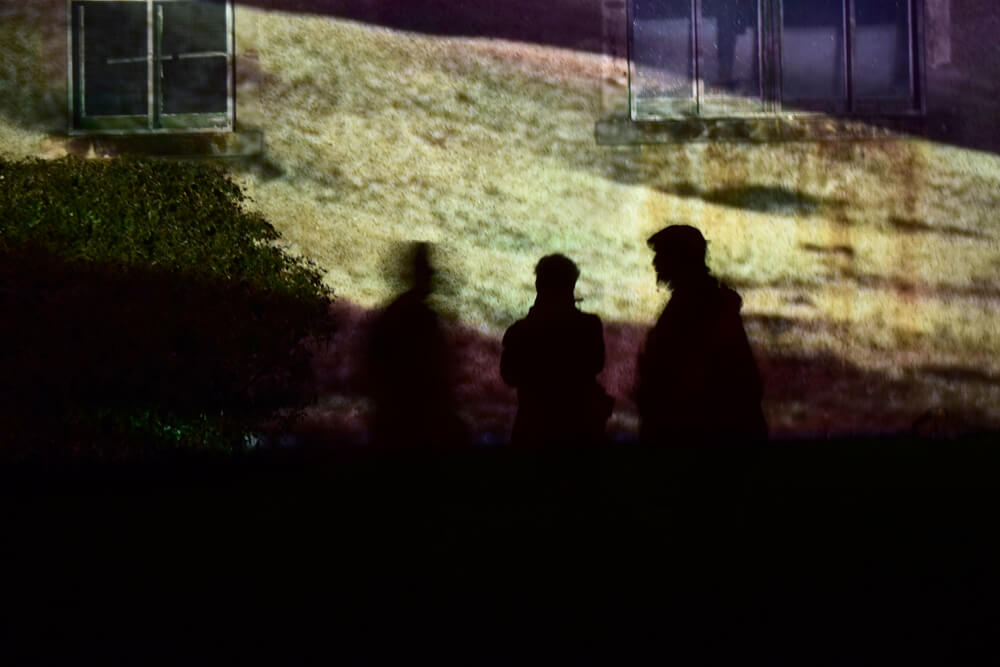
Heroes and Villains performance in Crieff town centre
“Torch This Place”
One of the most chilling moments came in the square itself.
A year after Sheriffmuir, Jacobite Highlanders passed through Crieff seeking food and shelter. Later, at a pre-arranged signal, Captain Cameron gave the order: “Torch this place.”
The town was burned to the ground.
Many fled. Some did not survive the cold that followed.
→ Learn More About the Burning of Strathearn Through Illustrator Laura Darling’s Artwork
“The above-named Rebells (with whom also Lodovick Drummond above designed was in company), who (as by the sequel of the story, you may readily conjecture, was privy to all their hellish plots) solemnly swore that they had no orders fur burning of Crieff; and, sayes Lodovick Drummond—yea, swore by all that’s sacred, were there any such thing in design he would certainly give premonition.”
Annals of Auchterarder, 1715-16
A Remarkable Piece of Street Theatre
The production was bold, atmospheric and unafraid of darkness. The actors carried deep knowledge of the history they were portraying, and the town itself did much of the work — stone, shadow and silence filling the gaps between scenes.
Thanks are due to everyone involved, including the local Co-op staff who acted as stewards throughout those chilly evenings.
Crieff wears its history well.
And for a few nights, it let us walk straight through it.
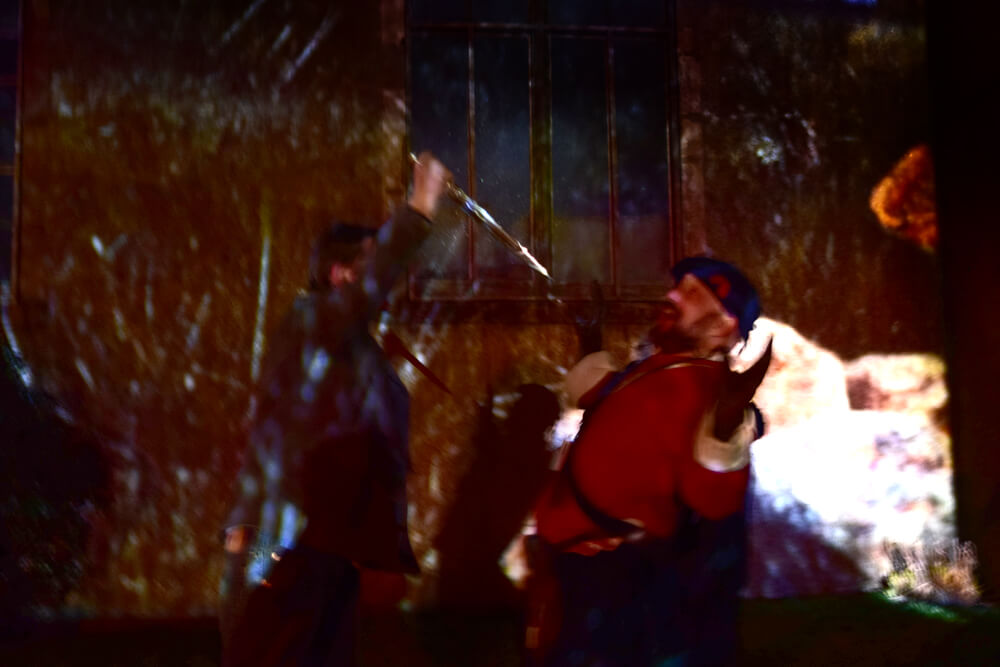
Blue Noun’s Kenny getting a shot of the sword.
Context (March 2020)
This performance took place in the uneasy days between most people realising we shouldn’t be mixing, and the UK government formally taking action. As a result, it was poorly attended — a real shame, given how heavily Crieff had invested in the event as part of a wider effort to future-proof the town’s tourism.
Unknowingly, Crieff was about to add a global pandemic to its own long and turbulent story.
At the time of publication (31 March 2020), the first UK lockdown had just begun on 23 March. Little were we to know that our school would remain closed for the next two years.
We continue to share Crieff’s drovers’ history during our walking holidays, including through the town’s walking festival, which traces old routes, markets and stories on foot.
→ Walking in Scotland, English Holiday with Local Hiking Festival
History Guides
Further ways Blue Noun language hub shares history and historic culture
Discover how we use Scottish history to unlock your English.