
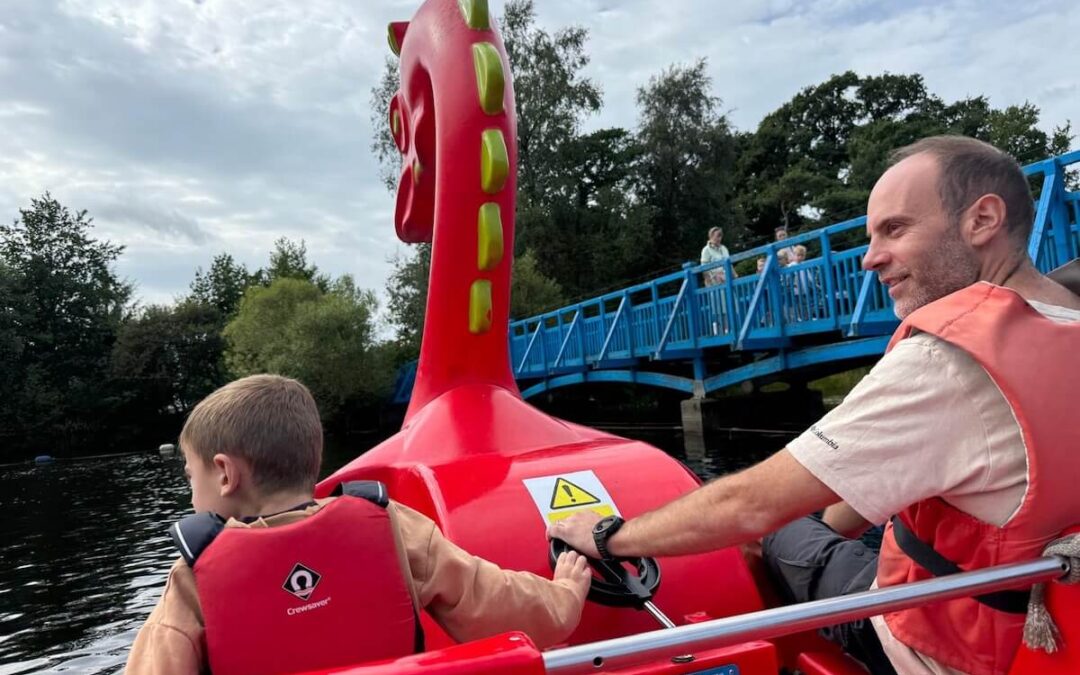
Last year, we hosted our first family English holiday at Blue Noun — a single two-week stay with one family of four.
The idea didn’t come from a business plan. It came from a conversation with my sister, who was looking for a Spanish language holiday for her children — something immersive, playful, and genuinely enjoyable. She couldn’t find anything that sounded like fun rather than school.
That question stayed with me.
We’d often heard from professionals who wanted to give English some proper space, but didn’t want that to mean stepping away from family life. So we tried something small and deliberate: bringing our real-world English holidays into a family setting, and holding a week for adults and children together.
This post looks back at that first family holiday — what we noticed, how it felt, and how it shaped the family weeks we now offer.
So, How did it go?
brilliantly!
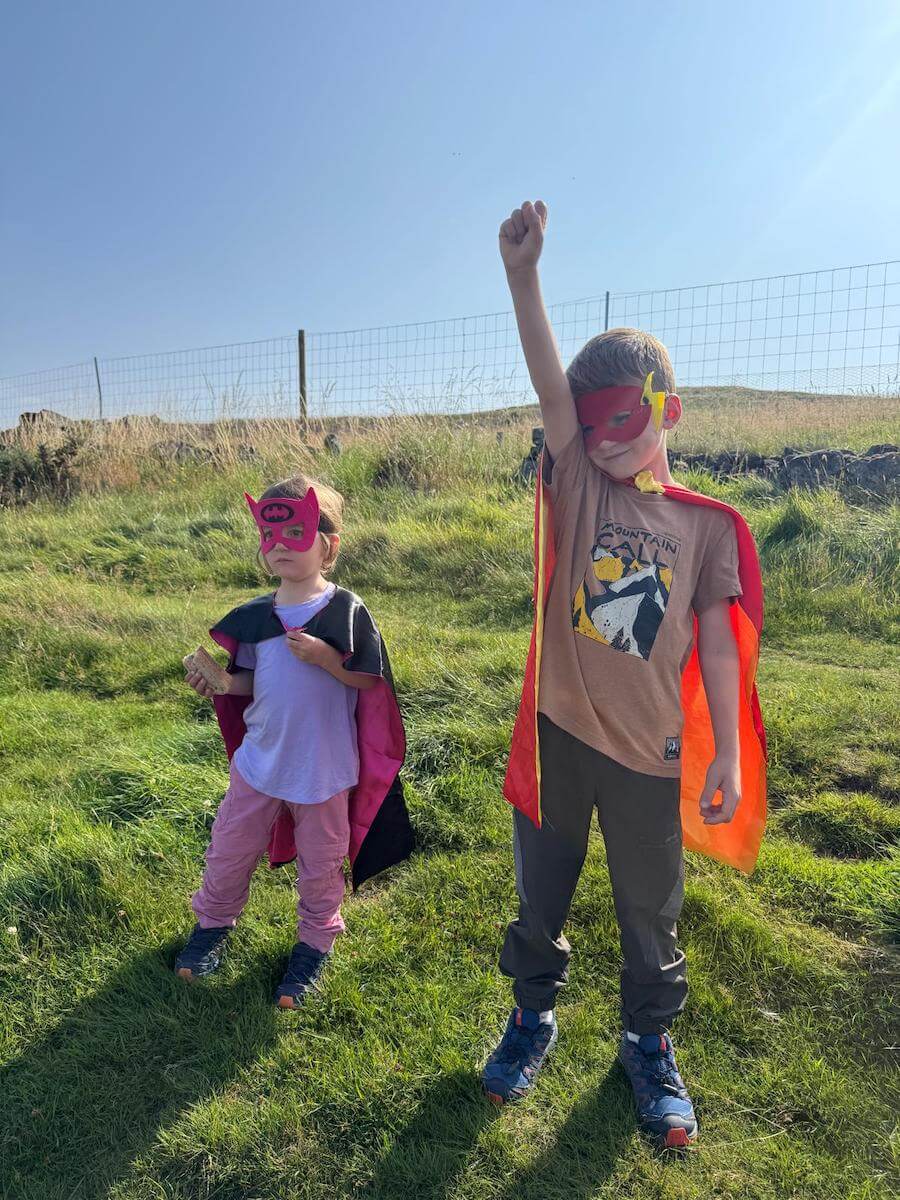
This was one of my favourite moments. The children were both keen hill climbers, so we decided to try a mini mountain — Dumyat, a real challenge for little legs. I brought superhero masks and capes to help them on the way up.
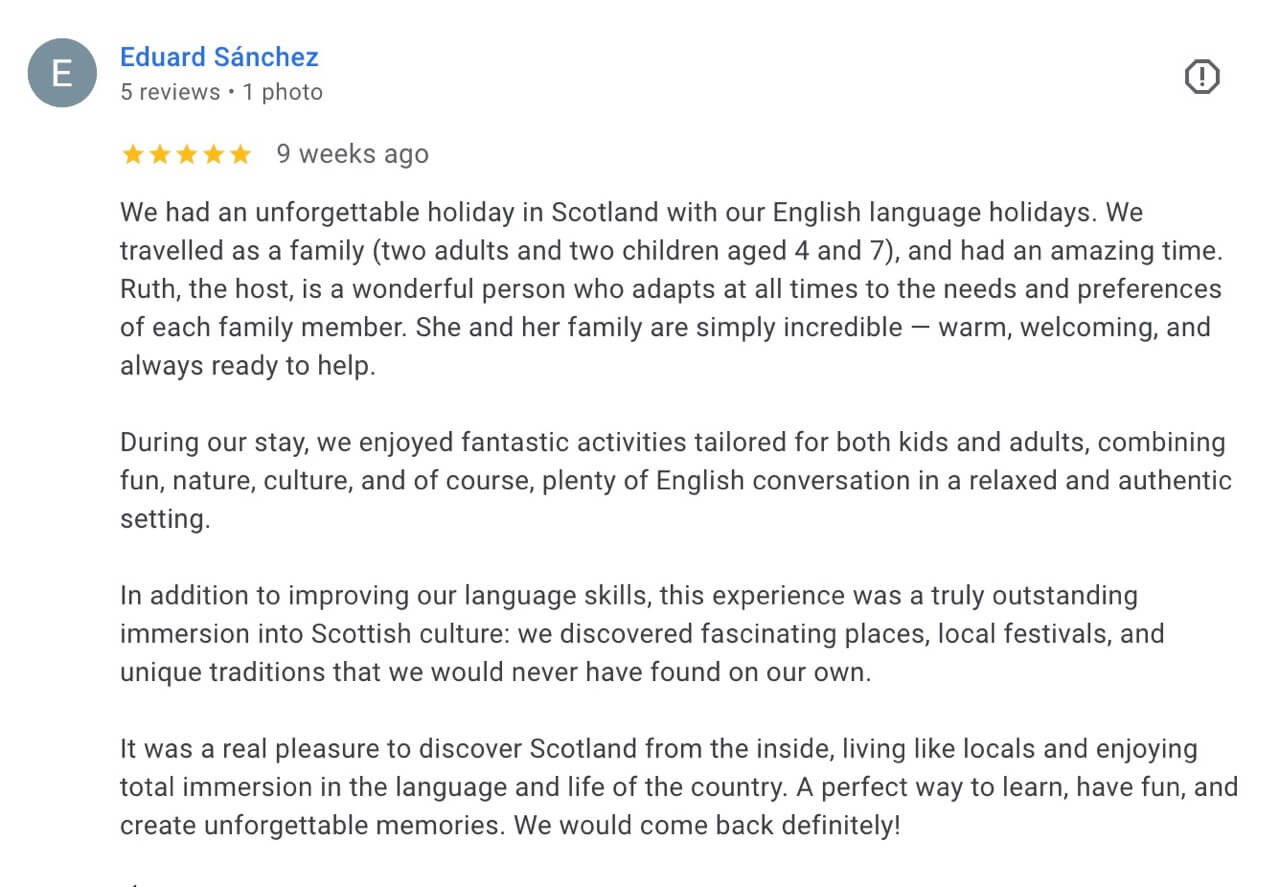
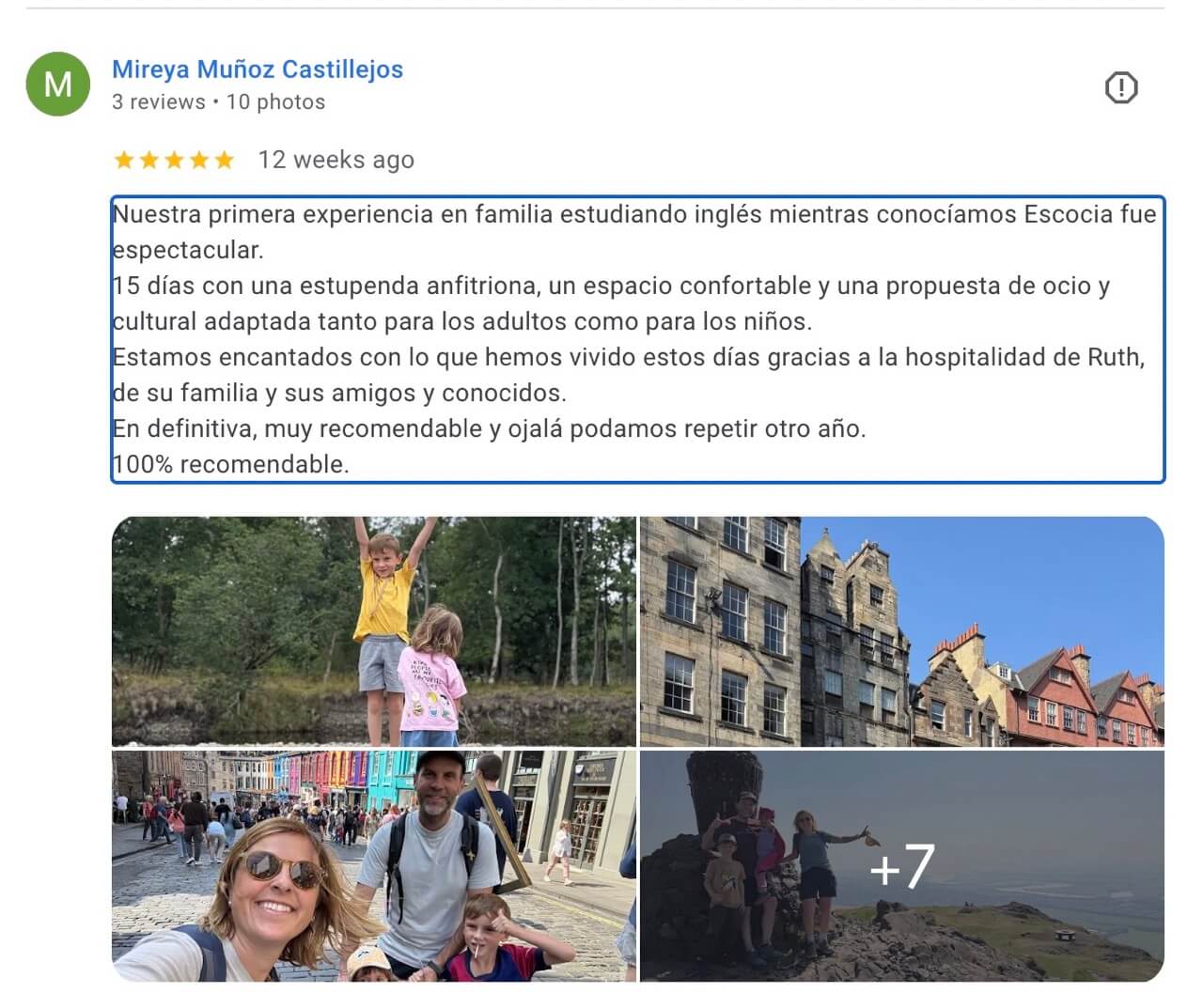
We’re Learning as You are Learning
That first family holiday gave us a clearer sense of what matters when English and family life come together.
What helped everyone relax.
What supported children without pushing them.
What allowed adults to use English more freely.
Those insights now guide how we shape family holidays at Blue Noun.
Summer didn’t feel divided.
English had space, but not at the expense of being together. No one felt they were missing out on family time to “work on” language.
Children benefited in their own way.
At the start of the stay, the youngest child was quiet and observant. He loved sitting with picture books, pointing out the English words he already recognised.
Over the two weeks, that familiarity began to stretch.
“Dog” became “brown and white dog.”
Words were noticed, tried out, repeated.
By the end of the stay, every dog we passed on the street came with a grin — and a high five.
English didn’t feel like work.
Playing cricket.
Swimming.
Making jelly into moulds.
Sharing oh-my-god-this-is-lovely meals together.
Lingering over coffee while conversations stretched on.
Nothing was announced as “English time”.
It was simply the language people needed for what they were already doing — and enjoying — together.
The week felt physically and mentally healthy.
The family had a fierce energy for seeing, trying, and tasting everything — and an equally strong sense of when to slow down. Days were full, but not frantic.
The children grabbed naps in the back of the car, too curious to rest at any other time. Even rest happened naturally, folded into the rhythm of being out in the world together.
Relaxed, meaning-filled English stayed with people.
After the holiday, the older child went straight into a more traditional, school-style English class for the rest of his trip. This time, it landed differently.
Having tasted English as something lived — used in real places, with real people — he could see where the classroom language belonged. What had previously felt abstract now had weight and purpose.
He’d always enjoyed learning English.
This holiday helped him recognise the power of what he was learning.
Speaking English alongside the people you love can soften self-consciousness.
In this case, something different stood out.
The adults arrived with very little baggage around English at all. They already used it for work and were ambitious professionally, both looking to move into management roles. Their jobs were demanding, but English itself wasn’t a source of anxiety.
What they wanted was a genuinely good fun family holiday.
That ease changed the tone of English from the start. Conversation was expressive, playful, and relaxed. Humour surfaced quickly. English became a way of sharing the week, not something to manage or improve.

Preset Language Goals
Alongside the practicalities of the week, we also set a few quiet language goals — not targets to hit, but intentions that helped guide how we held the time together.
-
To make speaking English together feel normal, not marked out or strange
Using it for everyday things — chatting, laughing, playing games, making plans. -
To give children a positive starting point with English
Helping them feel at home using the language through real moments, not instruction. -
To let English stretch across the day
Finding practical ways to explore, play, and live in English without separating it from everything else. -
To grow informal, everyday English as a family
The kind used around meals, in shops, while socialising — language that belongs to real life. -
To support natural conversations with new people
Sharing routines, humour, and values in ways that feel human rather than rehearsed. -
To talk about real life
Work, hobbies, family plans — conversations where people feel heard and understood. -
To stay engaged when words don’t come easily
Finding simple ways to keep going, support each other, and stay present. -
To remain calm and flexible when things didn’t go to plan
Letting mistakes become part of the experience, not something to fear. -
To allow personality and humour to come through
Creating stories together — some of which will be retold long after the holiday. -
To leave with a shared relationship to English
Not as something studied, but as something the family uses.
Fitting in Some Targeted Career Skills
One other moment stood out.
During the stay, one of the parents had an upcoming job interview. We deliberately carved out time to switch gears and focus on professional English.
While the children were happily occupied elsewhere, we ran a short, focused interview-skills workshop. This included a practice interview with a small panel of three questioners, giving space to work on clarity, confidence, and professional presence in English.
It sat alongside the rest of the week rather than disrupting it — a reminder that family holidays don’t have to pause professional life entirely. With the right holding, there can be room for both.