A look at what a drawing-based English session can feel like while travelling in Scotland, using place, conversation, and observation to build confidence in real-world English.
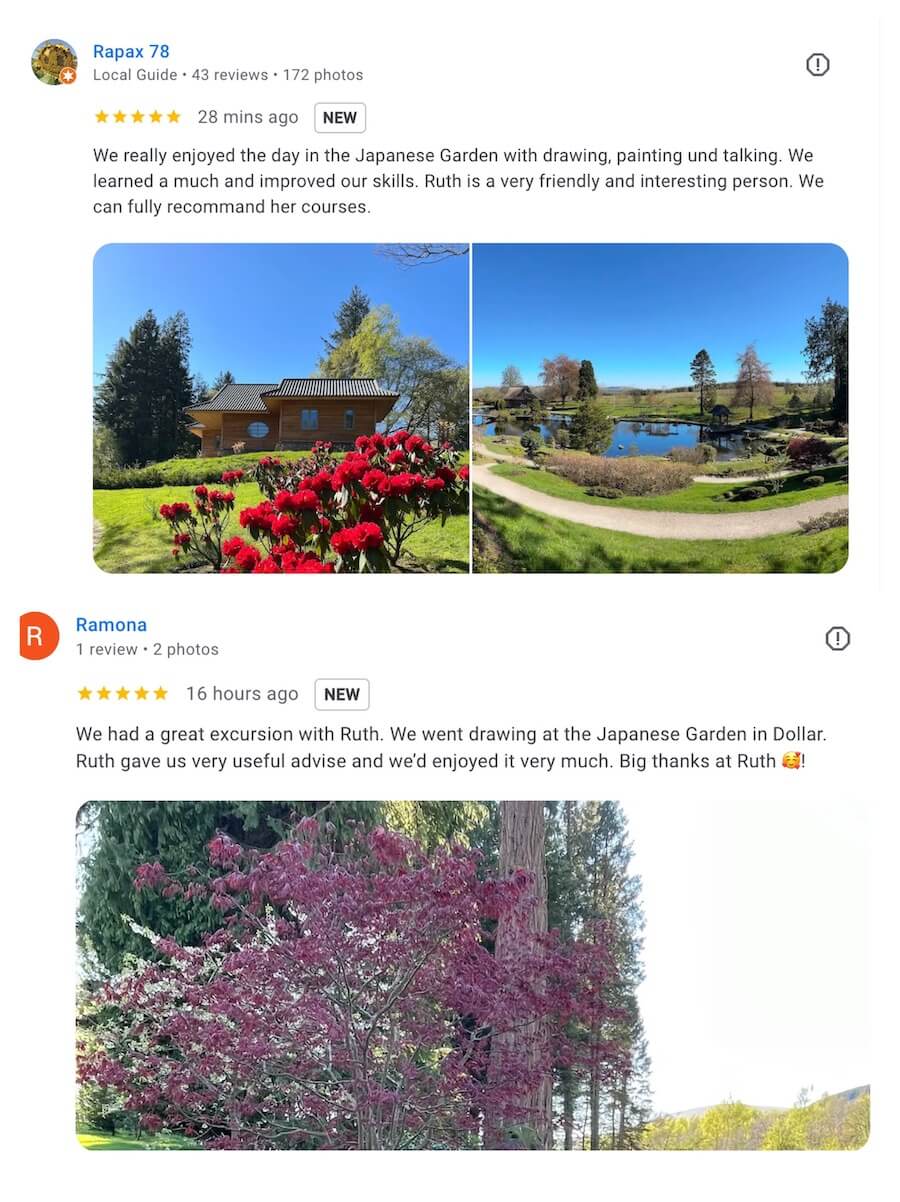
Yesterday I spent four hours with two German-speaking guests at the Japanese Garden Cowden, running a drawing-based English session.
They had already travelled across Scotland, seeing and doing a lot, so this wasn’t another activity to fit in, but the offer to slow down and enjoy spending time using their English.
A Reflective Start
Instead of starting straight away, we walked first. We talked about the layout of the garden, the way it had been lost and then recreated, and how remarkable it is to have a Japanese garden in the Scottish hillfoots.
We frequently stopped to notice what was around us, tadpoles in the water, the way the light caught the bark on a tree and turned it the same colour as an orange highlighter.
There was no need to fill space or “keep the conversation going”.
Looking was part of the process.
The Setup
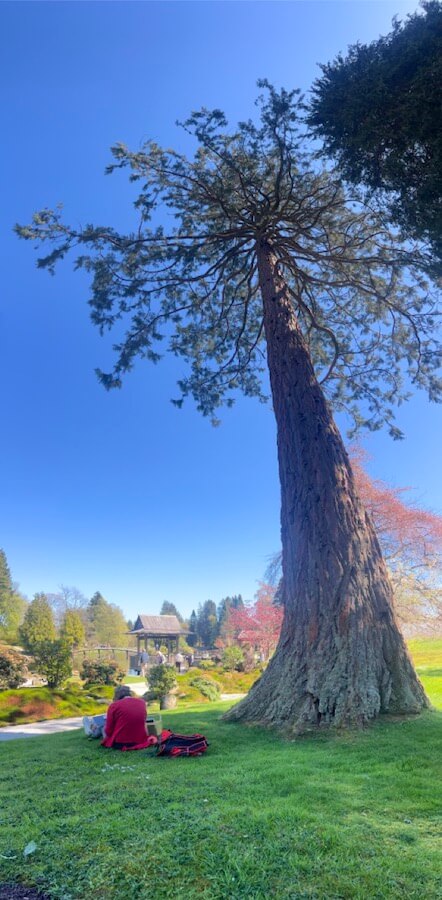
When we came back for the drawing materials, they each chose a spot in the garden and settled in. I asked them to draw for about 25 minutes, then said I would come back with a few suggestions.
When I returned, I gave them small, focused challenges based on what they were already doing, ways to simplify what they were seeing, or to try a different approach.
They both took these on straight away, and we continued for another half hour.
A Gentle Review
When we came back together, we shared what we had drawn and why. Not finished pieces, but choices. What had caught our attention, what we wanted to hold onto, and what we had left out. We talked about the pressure to draw everything, every leaf on a tree, every petal on a flower, and the relief of realising you don’t have to. You’re not a camera. You can edit, simplify, and choose what matters.
About Using Real-World English
The conversation moved easily across the afternoon. There were pauses, but not awkward ones, just time spent looking, thinking, noticing. They spoke about their trip, where they had been and what they had enjoyed, their work and creative projects at home, and how they build an audience. We talked about previous experiences learning English, how they feel when they speak it, and their curiosity about Scots. We moved into accents, identity, and how language carries a sense of who you are. They weren’t looking for a lesson. They were using their English.
Sharing Powerful Moments
At one point, we all said the same thing, how lucky we were to be doing this. There was a real sense of enjoyment in the space. I shared my own sketchbook too, which isn’t always comfortable. Not finished drawings, just marks, lines, colour, things that don’t fully explain the scene but respond to it. That felt important. It kept the space shared, not performative.
Sharing Good Food
We ended with a slow lunch and coffee, continuing the conversation. We talked about how food options have improved in Scotland since their early visits. How drawing and creativity might fit into their daily lives, not as a task, but as something that supports attention and enjoyment.
At the end, they said they felt rested and recharged.
That’s not something people usually say after an English lesson.
Sharing Great Scottish Art
The Middle Way
You don’t need a full course to make progress with your English.
Many travellers choose a middle way — adding a small number of well-placed experiences into their trip, so their English develops naturally alongside it.
No Classroom English
This is the difference. In a classroom, conversation often has to be created and sustained deliberately. It works, but it takes effort. Here, the environment carries some of that weight. You follow what you’re seeing, and the conversation builds from that. Silence isn’t something to fix. It’s part of the process. It gives space to look, to think, and then to speak in a way that feels more natural, more personal, and more specific.
This kind of session depends on the place. The garden isn’t just a backdrop. It shapes what we notice, how we move, and what we talk about. The pace, the detail, the way your attention shifts, all of that feeds directly into the language. In a setting like this, the environment does part of the work.
→ See The Places at the Heart of Our English Language Tuition in Scotland
An Informal Review and Revive Session
Alongside the drawing and conversation, there were moments where we stepped back and talked more directly about their English, how they’ve learned, what’s worked for them, and what hasn’t.
That kind of reflection is a key part of how I work.
I call them Review & Revive sessions. It’s a dedicated time to step back fully, make sense of your English, understand how to optimise your learning (for you), and decide what your next steps could be.
You can book an online Review and Revive session – or integrate it into your holiday travelling in Scotland.
Language Coaching Support for Confident English
Throughout the session, I offered light language support alongside the drawing and conversation, so you don’t just leave with a notebook or a calm afternoon. You leave having used your English in a calm, connected way.
That’s what builds confidence when you come to use your English next.
It’s often the only part of your language training that is missing.
The Japanese Garden at Cowden
Thank you to the staff at the Japanese Garden at Cowden for creating and maintaining such a special place. It’s a beautiful part of any trip to Scotland, whether you come to sketch or simply to spend time there. A genuinely refreshing place to slow down and recharge.
Drawing in Scotland: Options for Travellers
If you’re travelling in Scotland and want to use your English while you’re here, sessions like this can be added to your trip.
I run one-day English experiences like this in gardens around Stirling and Perthshire, designed to fit language progress into your holiday without turning it into a course.
→ Add English Lessons to Your Holiday in Stirling
→ Add English Lessons to Your Perthshire Holiday
This is also the approach behind my Sketch Scotland holiday, where drawing and inspirational conversations with artists unfold across a full week.
This couple joined me for a day.
Imagine, over a week, this kind of work has time to really build.

Further Information