
Feeling Natural Speaking English
Many people come to us looking for authentic English practice.
What they usually mean is something quite specific — even if they don’t say it that way.
They’ve already learned English.
They know the grammar.
They can follow conversations.
But something still feels off.
The language doesn’t quite respond to them.
It doesn’t fully represent who they are.
And when they speak, it can feel like they’re performing — rather than simply being themselves.
They don’t need more English. They need to recognise themselves in the English they already have.
What they’re looking for isn’t more input.
It’s an experience where English becomes part of real life again — something they can use naturally, respond with, and feel at home in.
This is what that looks like in practice.

No-Classroom Language Learning
On a Blue Noun holiday, English doesn’t start in a classroom.
It starts straight away — often before you’ve had time to think about it.
At the airport.
In the car.
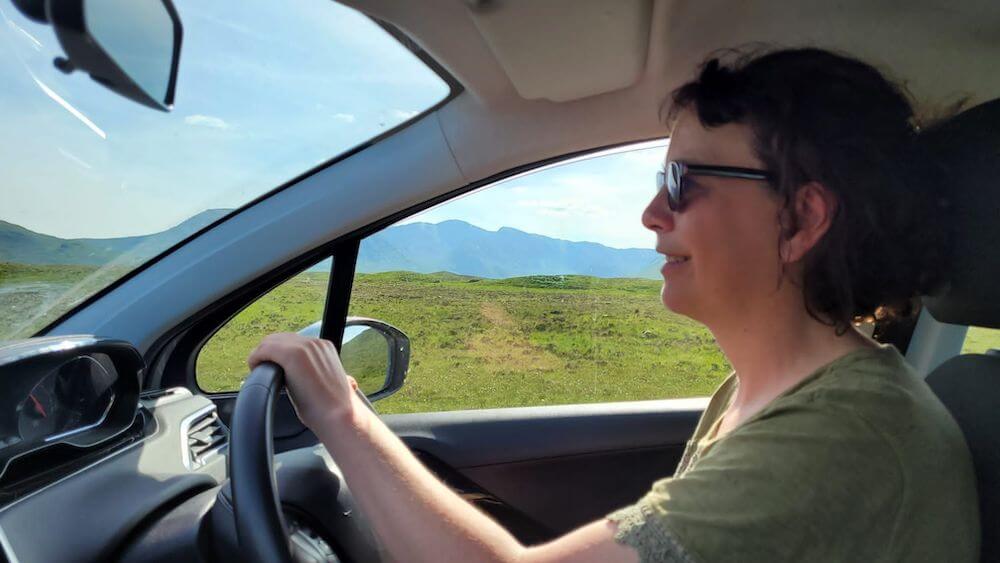
Conversations begin in fragments, the landscape prompting questions and comments. Small observations about the journey, the weather, how you’re feeling after the flight.
No one is waiting for you to be ready.
No one is assessing what you say.
You’re just responding — as you would in any other part of life.
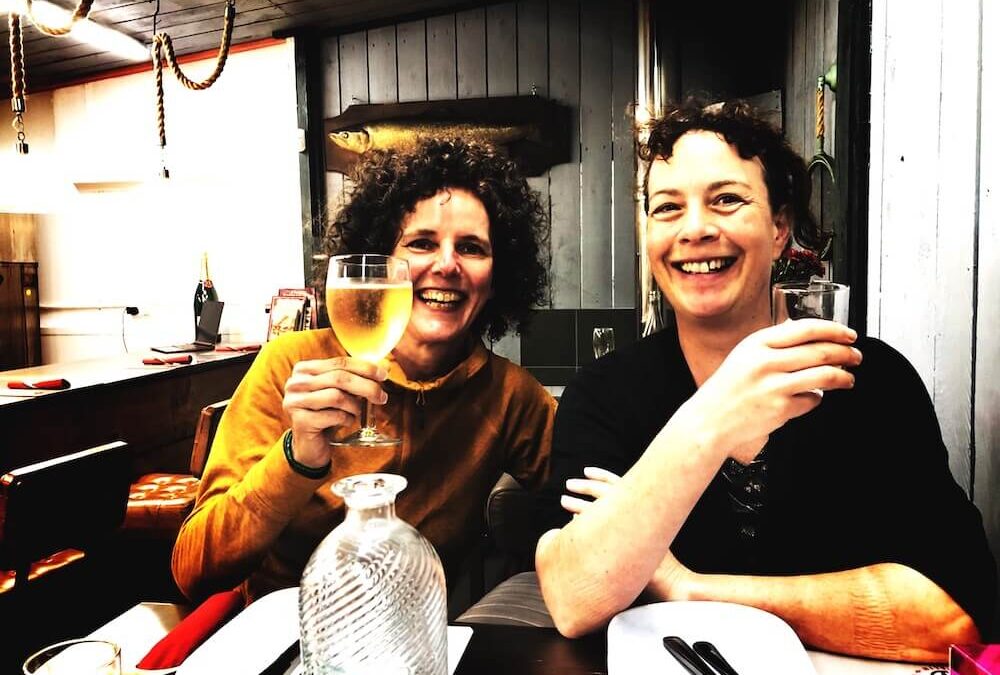
Later, over dinner, the conversation shifts again.
Someone tells a story that doesn’t come out perfectly — and it doesn’t matter.
People listen. They respond. They ask questions.
The laughter is with you, not against you.
Conversations open up — what you hope for this week, what you might do, what’s worth seeing at this time of year.
The focus isn’t on the language.
It’s on the moment.
And something important starts to happen.
English stops being something you are trying to get right —
and starts becoming something you are using to connect, react, and take part.
Not perfectly.
But naturally.
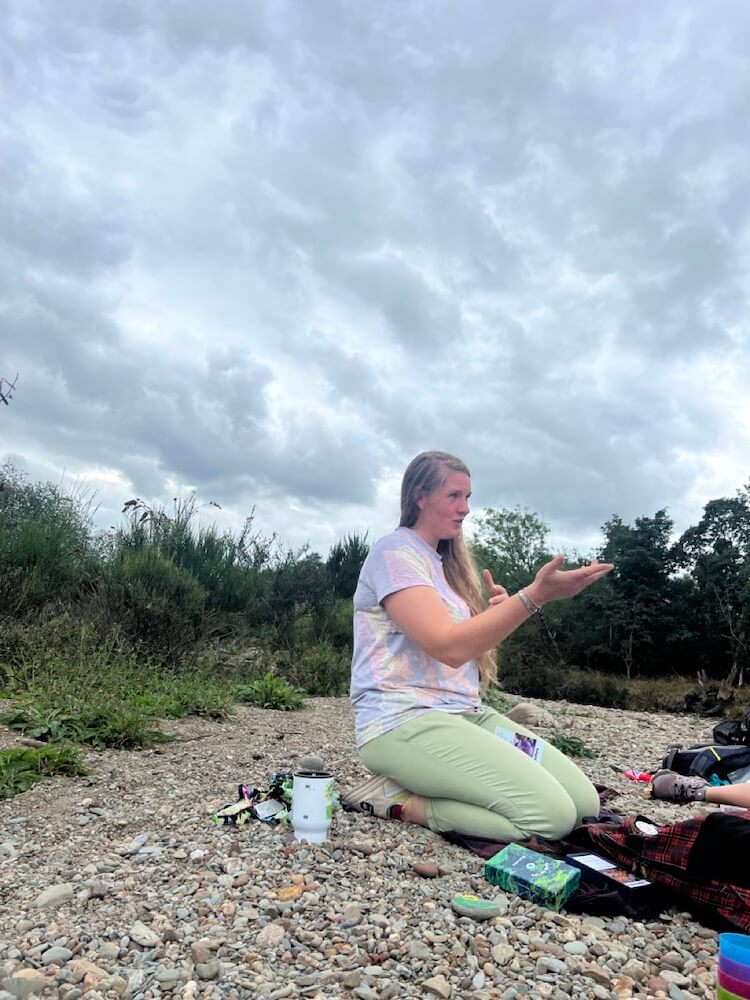
“We take people into spaces where they wouldn’t normally feel they belong — and support them to exist there in English..
Ruth, 2026

The Moment Something Changes
There’s a moment, usually early in the week, where something shifts.
It’s not dramatic.
It often goes unnoticed at first.
Someone says something imperfect — and nothing happens.
No correction.
No pause.
No embarrassment.
The conversation just continues.
And in that moment, a quiet realisation begins to form.
Maybe this is enough.
For many people, the stress around English hasn’t come from a lack of knowledge.
It comes from a deeper feeling — that they are somehow getting it wrong, or not quite themselves when they speak.
That they are performing.
That someone will notice.
That they will be exposed.
You hear it in small, anxious comments:
“I have to speak English in front of native speakers…”
As if those speakers are there to judge — or to catch them out.
But in a space like this, that fear has nowhere to land.
The conversation moves.
People respond.
You are understood.
And slowly, that sense of being a fraud begins to loosen its grip.
→ Read more about this feeling of anxiety (FLA) and how we help.
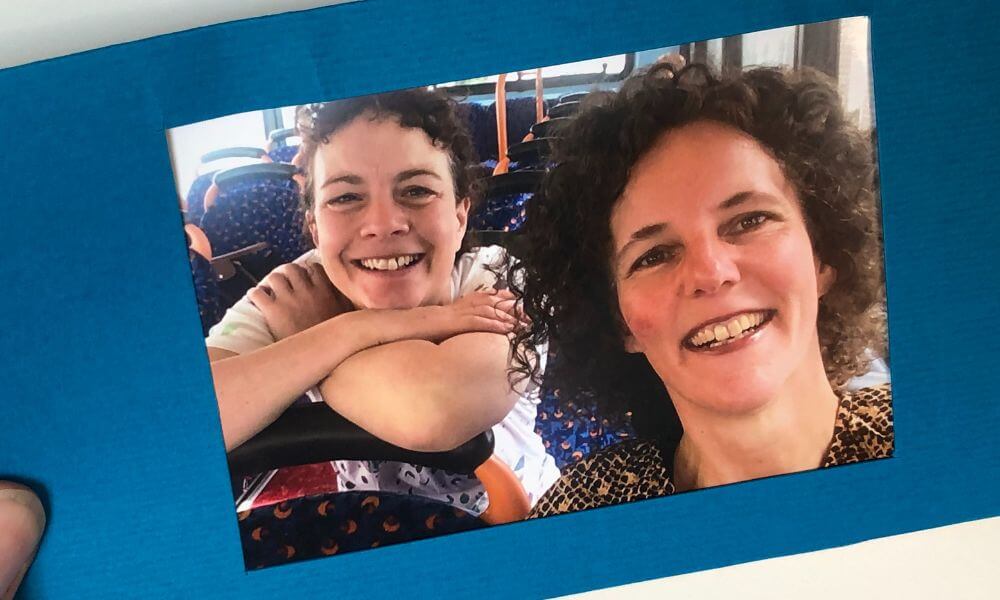
This Isn’t One-Sided
One of the reasons this environment feels different is that you’re not the only one taking a risk.
In many learning spaces, the pressure sits entirely with the learner.
You’re expected to speak.
To get it right.
To expose what you don’t yet know.
But here, that dynamic shifts.
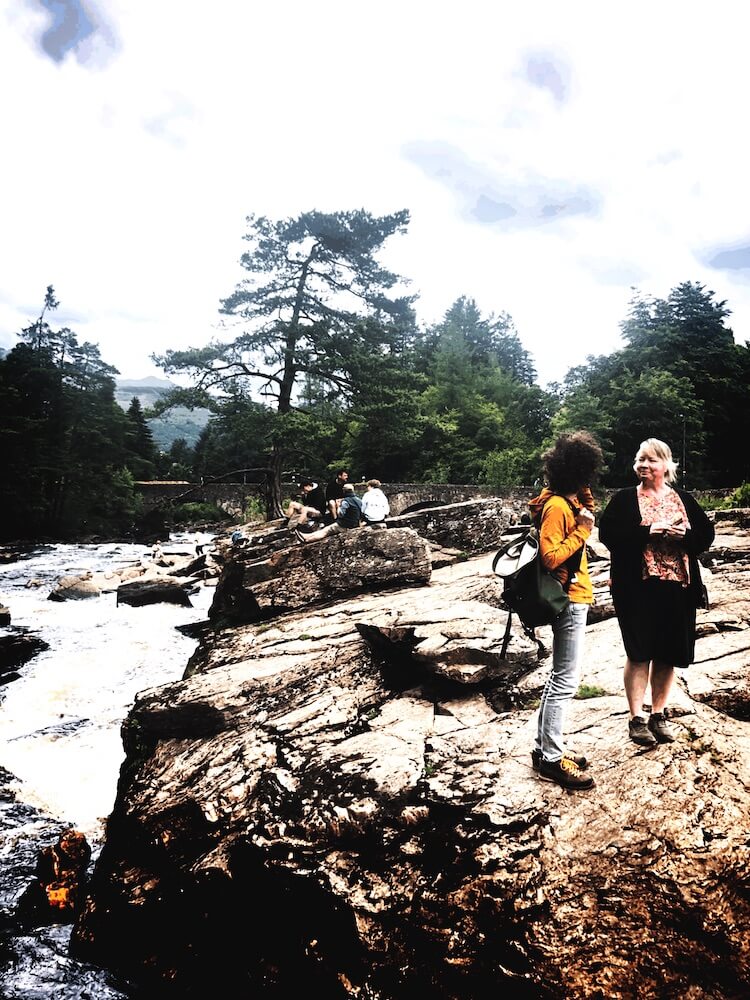
The people around you are also showing up as themselves.
Artists share work that isn’t finished.
Songwriters try out new ideas.
Conversations move into real, sometimes personal territory without preparation.
There’s no performance to match.
No fixed standard to live up to.
Everyone is, in some way, slightly outside their comfort zone.
And that’s what makes it feel safe.
You’re not being asked to perform your English.
You’re being invited to take part — as you are.
Why This Works
What’s happening here isn’t about learning more English.
It’s about something much simpler — and much harder to access in a classroom.
You’re starting to experience yourself using English as you are.
Not a perfect version.
Not a prepared version.
Just you — responding, reacting, taking part.
For many people, that’s unfamiliar territory.
Not because they lack the language —
but because they haven’t yet had enough experiences where this version of themselves feels real.
So they don’t quite trust it.
And when you don’t trust it, you hold back.
You overthink.
You try to get everything right before you speak.
That’s why more lessons don’t solve the problem.
You need to use your English — not keep learning it.
What’s missing isn’t knowledge.
It’s evidence.
Real-world experiences like these give your brain something it can’t get from study alone:
proof that this version of you works.
That you can speak, be understood, respond, and connect —
without needing to be perfect first.
This is how a confident voice in English is built.
Not by adding more language,
but by using what you already have — until it feels like yours.
Where This Happens
These moments don’t happen in controlled environments.
They happen in real places — places you might not normally step into on your own.
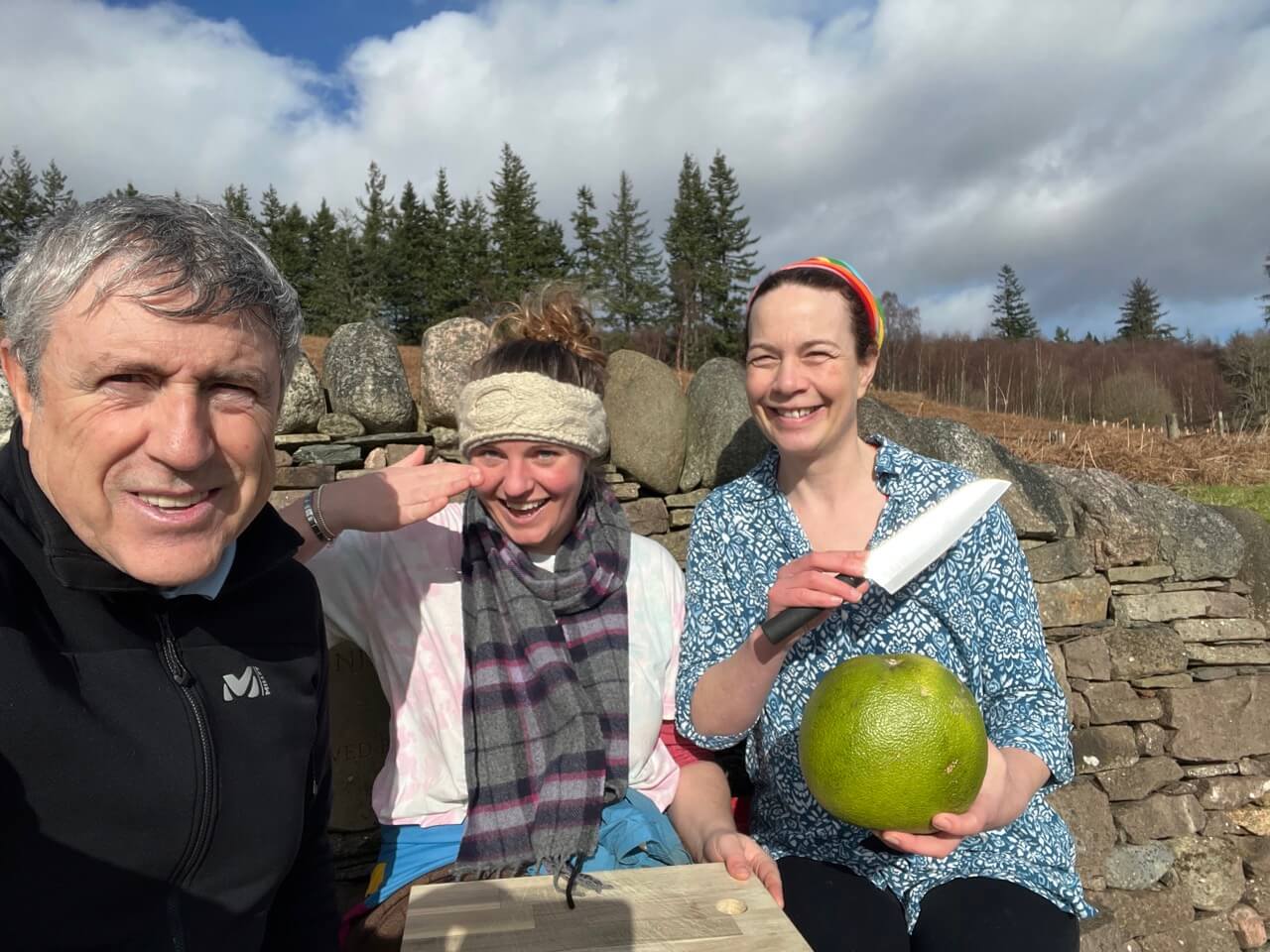
A working farm.
An artist’s studio.
An open mic night in a village hall.
Spaces with their own rhythm, their own people, their own conversations already in motion.
At first, you might feel slightly outside of it.
Not because you don’t understand —
but because you’re not yet sure how you fit.
And that’s part of the point.
You’re not being placed into situations where everything is simplified or designed for you.
You’re stepping into real environments — and learning how to move within them.
To listen.
To respond.
To join in.
Not as a “learner” —
but as yourself. And as our guest.
These are the moments where something deeper begins to form.
Not just confidence,
but identity.
The sense that you can enter a space, take part, and belong there — in English.
And for many people, that’s the real reward of the holiday.
Not what you learned,
but who you were able to be.
→ Discover the Blue Noun Language Hub Learning Space
→ See The Places at the Heart of Our English Language Holiday in Scotland
Why This Matters
This is why more lessons aren’t the answer for many people.
Not because learning English isn’t useful —
but because, at a certain point, the problem isn’t knowledge.
It’s the gap between what you know
and how it feels to use it.
That gap doesn’t close through more input.
It closes through experience —
through moments where you speak, respond, connect, and realise that you are already able to take part.
Not perfectly.
But fully enough.
Over time, those moments build something more lasting than progress.
They build a sense of yourself in English.
And once that begins to feel real,
everything else becomes easier.
If you’ve recognised yourself in this, you might find it helpful to explore why feeling good speaking English matters more than progress — and what happens when that feeling is lost.
→ Confident English: Why Feeling Good Speaking Matters More Than Progress

A Different Kind of Language School
In many language learning environments, there’s a clear divide between teacher and learner.
The teacher leads.
The learner responds.
The relationship is structured, controlled, and often slightly performative.
At Blue Noun, that dynamic is different.
You’re not interacting with a front-facing version of someone whose role is to correct and evaluate.
You’re spending time with people who are present, responsive, and part of the experience themselves.
That might mean sharing a meal, walking together, or being part of a creative workshop where everyone is contributing something real.
The boundaries are still clear — but the interaction is human.
And that changes everything.
It becomes easier to speak, not because the language is simpler,
but because the space feels more natural, more equal, and more real.
On the Fringe
This more human way of learning places Blue Noun on the fringe of traditional language education.
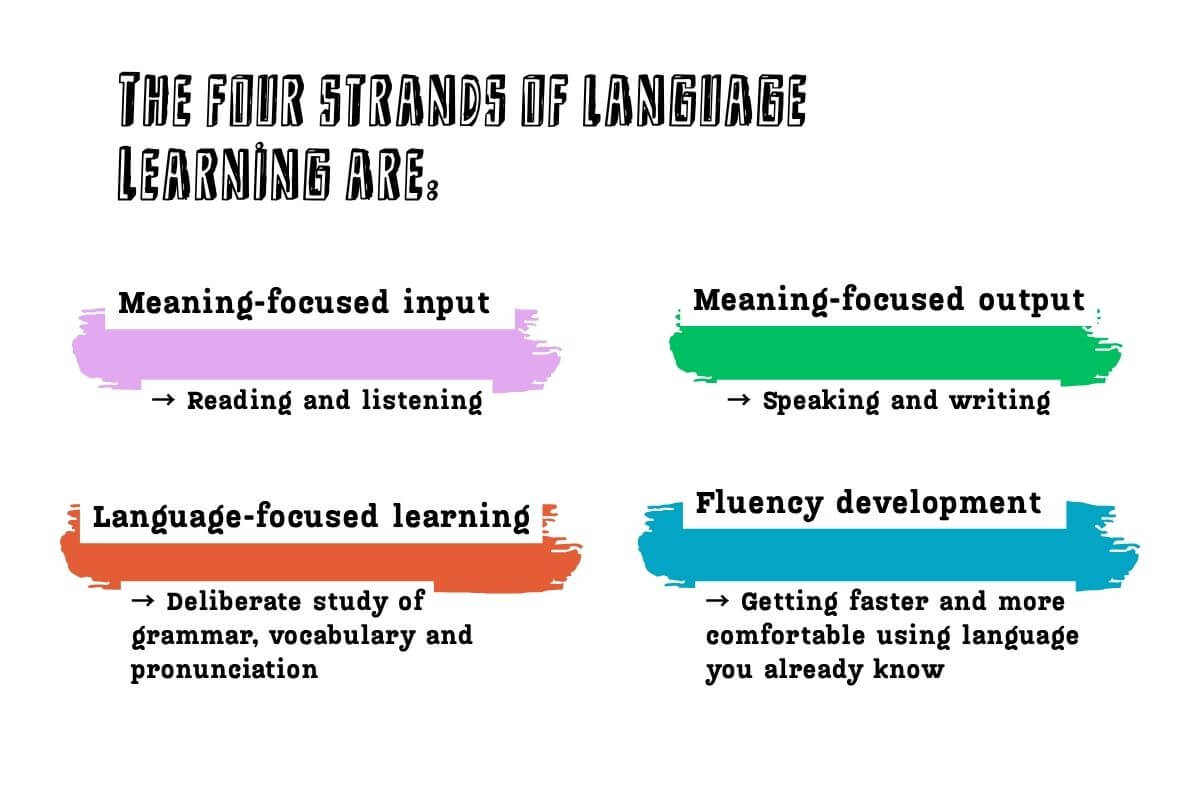
A balanced language-learning mix has four strands: meaning-focused input, meaning-focused output, deliberate language-focused learning and fluency development.
Traditional lessons are particularly good at providing deliberate study;
Blue Noun creates space for the other parts of the mix too.
If you’ve already spent years learning English, changing your learning mix can make a surprising difference to how comfortably you use the language you already have.
Not Just Teachers — Real People
Authentic English Holidays
If you’re ready to experience this for yourself, our English language holidays are designed to create exactly these conditions — not through lessons, but through real life, shared experiences, and meaningful conversation.
The Middle Way
You don’t need a full course to make progress with your English.
Many travellers choose a middle way — adding a small number of well-placed experiences into their trip, so their English develops naturally alongside it.
Further Information
If you’d like to see what this looks like in practice, I’ve put together a page of photos taken by people who’ve joined my holidays and coaching days. They show real moments from the week — including me, as things are actually happening — and give a clear sense of how English develops within them.