This isn’t a tour.
It’s a carefully held day in Scotland — one that brings together landscape, music, and conversation in a way that’s difficult to access on your own.
Beginning with the Land: Dumyat
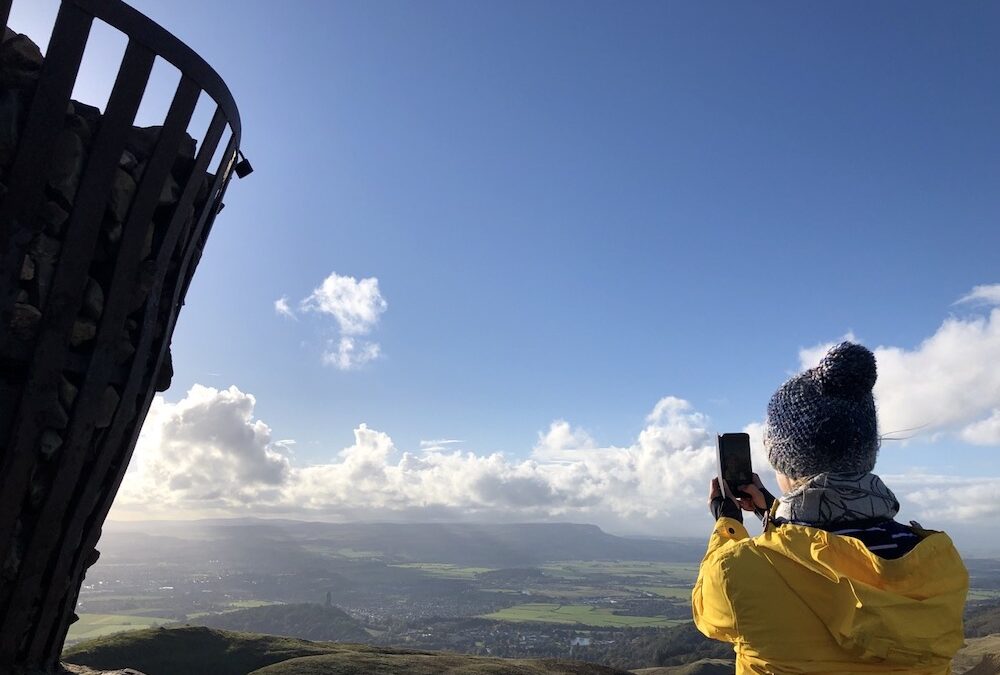
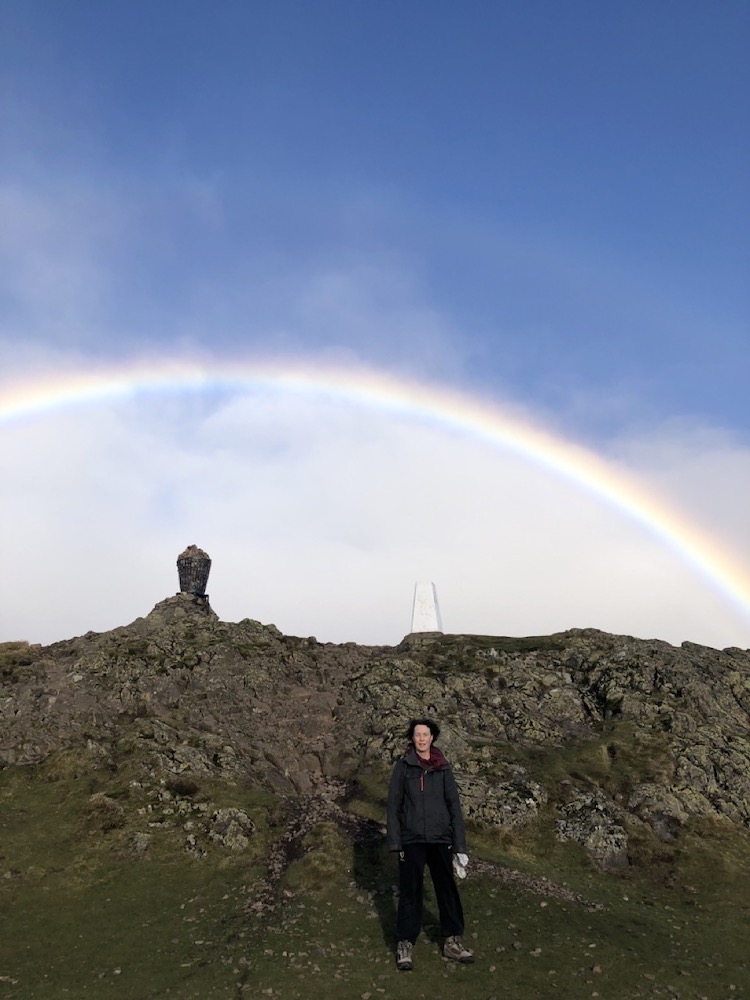
A walk up Dumyat is something I choose for anyone spending time in the Stirling region because it gives you a perspective on the land that you don’t get anywhere else.
You can see great views from Stirling Castle or the Wallace Monument — but from Dumyat, you’re looking down on them.
The landscape opens out in a different way, stretching towards Edinburgh, and you begin to understand how the area fits together.
It makes you feel part of the landscape, not just a visitor to it.
It has the feeling of a hill climb, but it isn’t particularly difficult — which makes it a good choice for people who want that experience, but wouldn’t necessarily set out to hike on their own.
If you’re already thinking this sounds like your kind of day, you can check availability here.
Seeing Differently
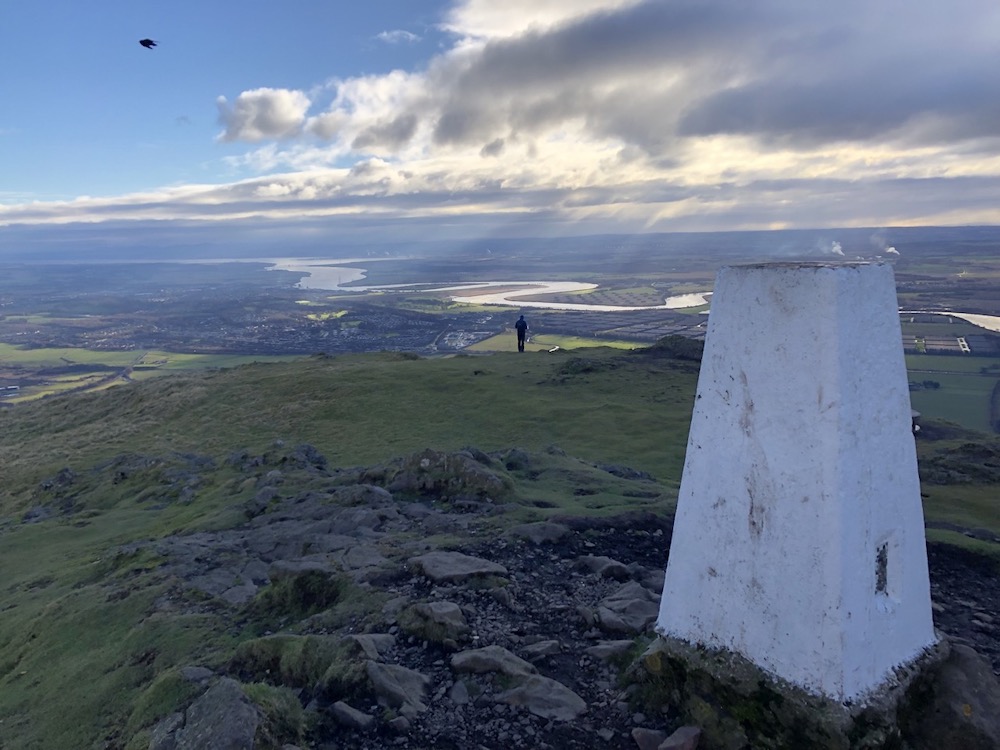
Walking up Dumyat with me isn’t just about reaching the top.
I can share the landscape as a local — not as a set of facts, but as a way into what you’re looking at.
The villages at the foot of the hill, the coal mine stretching out under the Forth, the quieter details most people pass by.
I don’t give history lessons.
I show you how to notice.
The sheds full of whisky.
The movement of wildlife across the hillside.
The way the land is being used now — by the university, for research into rewilding and change.
These things don’t sit on a signpost.
They appear when you know how to look.
What Happens on the Walk
We don’t talk much on the way up.
We need our breath.
And that’s part of it.
The contact with the land, the physical effort, the space to take things in without filling it with words — it makes a Scottish holiday feel more real. More grounded.
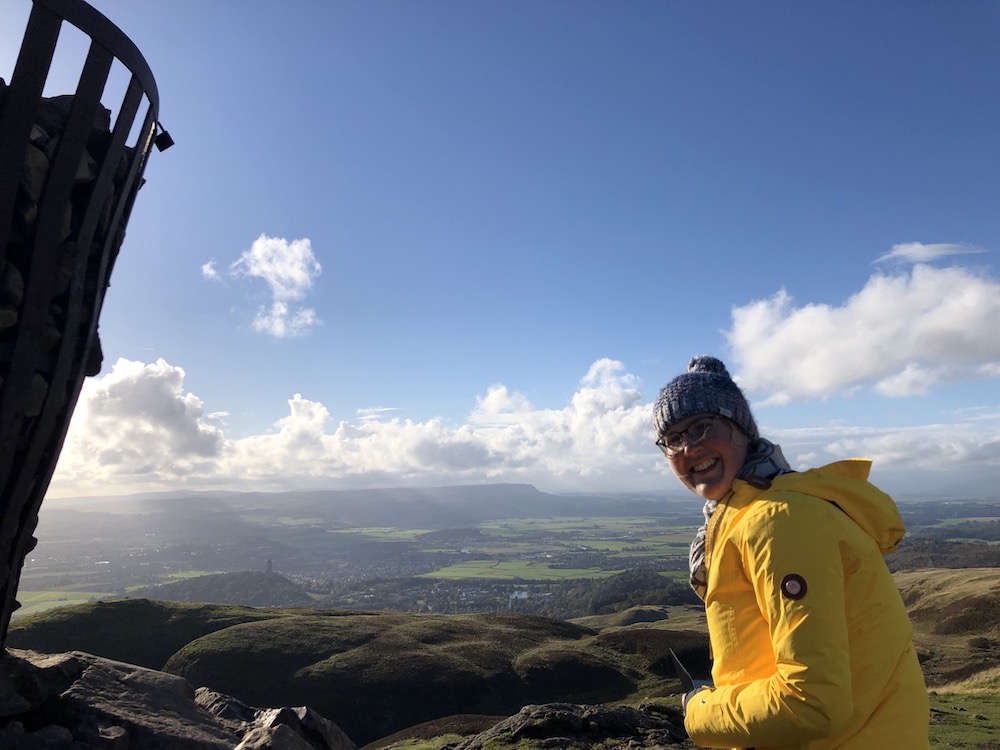
When we reach the top, something shifts.
You’ve climbed it. You’ve seen the landscape open out. You’ve taken it in properly.
That sense of achievement is simple, but it’s powerful — and it carries into everything that follows.
Language, Without Forcing It
The conversation doesn’t start from a plan.
It unfolds naturally as we come down, as we get to know one another, and as the experience begins to settle.
This is what’s often called emergent language — language that comes from real, unscripted conversation.
And the strength of that is simple: it reflects you.
Not a textbook.
Not a model answer.
What you’ve seen, what you’ve noticed, what you want to say.
Height and views do something to people.
You’ve climbed. You’ve reached the top. You’ve seen it for yourself.
That feeling — of having done something, of having taken part in the place rather than just observed it — stays with you.
And it finds its way into your English.
Not as “confidence practice,” but as something deeper.
A sense of achievement that shifts where you’re speaking from.
It feels like a small victory — but it goes further than that.
Moving into the Evening
By the time we arrive in the evening, the day has already settled into you.
You’ve been outside, you’ve seen the landscape properly, you’ve had time for things to land.
Going into a performance like this from that place is different.
You’re not arriving as a spectator.
You’re already part of something.
A Well-Earned Rest
After the walk, we pause to rest, with the option of having something warm to eat locally.
It’s a natural point in the day to slow down and let the conversation continue.
Food isn’t included.

The Music
We go to the Macrobert Arts Centre to hear Karine Polwart live.
Karine’s voice seems to hold something of Scotland in it.
There are notes of the past and the future in her work — she communicates ideas both clearly and indirectly, and her metaphors land in a way that stays with you.
She writes about land and nature, but not as a lecture.
There’s optimism in it. Joy.
And at the same time, a depth that can take you further into Scottish landscape and wildlife in a single song than most people find on their own.
What Happens in the Room
The stage show itself is something I’m curious about.
I’ve heard her sing solo at Birnam Arts, and as part of the Spell Songs Collective — where artists reinterpret one another’s work.
This performance is different.
It’s a collaboration with a pianist, developed over the course of a year.
She hasn’t been touring much while working on it, so there’s a sense of anticipation around it.
People who follow her work have been waiting for this.
What People Experience
I took a Spanish guest to hear her last year, and we both found ourselves quietly moved by one of the songs — Heartwood.
It’s a piece in which a tree invites the woodcutter to rest, leaning against its trunk.
It speaks about the relationship between humans, animals, and the natural world — and how that connection has been lost in modern life.
Spending time in nature begins to restore it.
Listening to music like this does too.
You don’t need to understand every word for that to come through.
What Stays
Like any powerful piece of art, it isn’t only about how you feel in the moment.
You come out of it slightly changed — touched in a way that can stay with you long after the evening ends.
There’s a sense of timelessness to it, something that sits beyond the immediate experience.
Stirling University
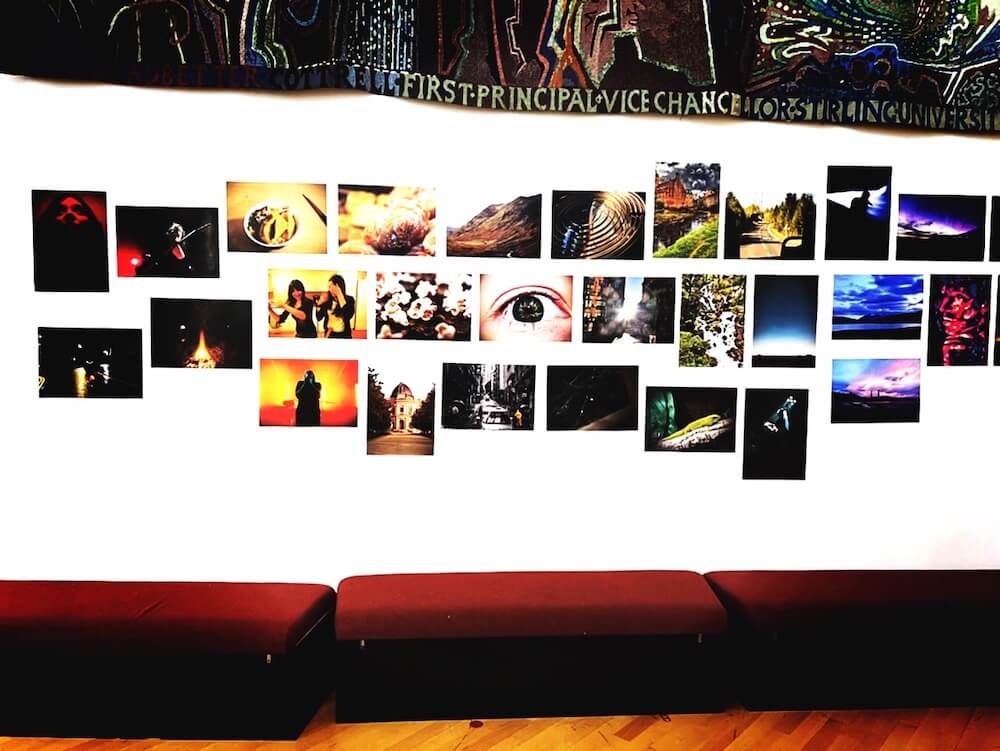
University of Stirling has a strong collection of Scottish art, and we make time to explore some of the displays as part of the day.
One piece I often return to is what I think of as a “conversation wall” — a mix of images that naturally invite response.
Not formal interpretation.
Not analysis.
Just a space where people begin to notice, react, and speak about what they see.
Practical Notes
This is a real walk, so you’ll need:
- good walking shoes
- a waterproof jacket
- layers suitable for changeable weather
- water to drink
- snacks
If the weather is very poor, we adapt the day — usually with a scenic drive through Sheriffmuir towards Loch Earn and the Trossachs, so the experience of landscape and conversation still holds.
I’m used to leading these walks and hold a hill first aid certificate, so the day is well supported throughout.
Days like this sit within a wider way of working that I offer over longer stays.
Across a week, we move between landscape and culture in a similar way — walks, conversations, music, food, and time to take things in properly.
English is part of that, but not as a lesson.
It grows out of what you’re seeing and doing, and from the connections that form over the course of the week.
For some people, a day like this is enough.
For others, it becomes a way into something longer.
Joining the Day
This is a small, hosted experience (maximum 3 people).
If you’re spending time in Scotland and want a day that goes a little deeper — into the landscape, the culture, and your own way of using English — you’re very welcome to join. Transport is included (Stirling).
Price
£225 for the first person
£100 for each additional person (up to three people in total)
Timing
The day runs from early afternoon into the evening, with a natural rhythm:
- Walk up Dumyat: around 1.30–4.30 pm
- Time to rest and eat: around 5–6 pm
- Concert: 7–10 pm
The exact pacing can shift slightly depending on the day and the group, but this gives a clear sense of how it unfolds.
Availability
This guided day is currently running on:
Thursday 14 May
Small group (maximum 3 people)
Message me on WhatsApp to check availability for Thursday 14 May
Discover Karine Polwart
Karine Polwart is a multi-award-winning Scottish songwriter and storyteller.
Her work carries a richness of place — drawing on hidden histories, folklore, and a kind of quiet scientific curiosity about the natural world.
She has a way of noticing things from the corner of her eye, and bringing them into focus with lyricism and care.
There’s beauty in it, but also complexity — and a sense that the landscape is holding more than you first see.