
Why We Don’t Correct Every Mistake
A Different Way to Learn English

Take a Break from Error Correction
Most people assume that correcting every mistake is the fastest way to improve someone’s English.
It makes sense.
If you know the right answer, why wouldn’t you help?
As an English teacher, I correct language too. Sometimes accuracy really matters.
But after years of teaching English, I’ve learnt that indiscriminate error correction is easy.
Good error correction is an art.
Knowing whether to correct, when to correct, what to correct, and whether that correction will help this particular person at this particular moment is one of the most important judgements an English teacher can make.
I’m going to illustrate my viewpoint with a few real examples: situations where correction can be harmful, and others where it is absolutely necessary.
Before I go any further, I should say something important.
I am not against error correction.
But most people who come to Blue Noun have already had years of English lessons. They’ve had plenty of correction.
What I offer is something different.
I offer a break from it.
Not because correction isn’t valuable, but because constantly listening for mistakes gets in the way of the much bigger job of expressing yourself.

Think of Conversations Like Sketchbooks
I was teaching a drawing workshop recently. One participant spent about twenty minutes carefully drawing the view in front of him. When I came back to see how he was getting on, he’d rubbed the whole drawing out.
He had realised there was an error, and he didn’t want a record of it.
But a different way of considering it is the artist’s way. It was twenty minutes of looking carefully, noticing things, making decisions, and a record of what worked and what didn’t.
He had learned what he wanted to do differently. He could have simply turned the page and started again. He eradicated the error, but there were many successes in the drawing he didn’t see because of the error.
I think many English learners do exactly the same thing.
After a conversation, they mentally rub the whole thing out because they remember the mistakes.
But conversations aren’t all final performances.
They can be like sketchbook pages.
Every conversation gives you information.
Every conversation changes the next one.
Sometimes the learning doesn’t happen until hours later, when your brain quietly tells you the word you were searching for.
That’s still learning.
That’s why I don’t want people constantly evaluating every sentence while they’re trying to communicate.
Sometimes the most important thing is to leave the page exactly as it is…
…and turn it.

Blue Noun Exceptions
When we're deliberately working on one language area
If today’s goal is the present perfect, then that’s what I’ll listen for. I won’t let those mistakes slip by because that’s where we’ve agreed to put our attention. Everything else can wait.
During a skills workshop where accuracy is the goal
My Introductions Workshop is a good example. Introductions are one of the few situations where having the language ready really matters. We practise, refine and improve because the aim is to leave with language you can use confidently in the real world.
When something could cause offence, confusion or a genuine problem
Sometimes a mistake needs immediate attention. If a pronunciation, word or phrase is likely to sound rude, give the wrong impression, or cause a misunderstanding, I’ll step in straight away. That’s part of keeping people safe and helping them communicate successfully.
Timing Matters
The point isn’t to avoid error correction.
It’s to use it wisely, and not only in the moment.
Delayed correction can make language look much more controllable than it feels when you’re halfway through telling a story and your brain has 6 other jobs.

Everyone Needs Different Support
Some personalities find error correction endlessly helpful, and some find it shameful and painful.
Most of the people who find Blue Noun have spent years worrying about getting English wrong.
Correcting an Extrovert
A few months ago, I watched the French singer Zaho de Sagazan perform in Manchester.
Between songs, she spoke to the audience in English. Occasionally, she paused to search for a word or used the wrong preposition.
Almost instantly, hundreds of people tried to help by shouting out the missing word.
It was warm. It was funny. she encouraged it, and it became part of the performance.
She was one of the most confident performers I’ve ever seen. She wasn’t embarrassed by her English. She wasn’t apologising for it. She was using it to share herself, and the audience loved her for it.
But I couldn’t stop wondering about something afterwards.
Some of the people I help have experienced 500+ corrections during their language learning lifetime.
Every pause met with a suggestion. Every search interrupted.
Every hesitation completed by somebody else.
You have heard of Death by 1000 Papercuts.
Perhaps this is silence by 500 good intentions.

Pauses Matter
Searching for words is part of speaking. Sometimes the word arrives a few seconds later. Sometimes it arrives hours after the conversation has finished. That’s how language grows.
If someone always steps in before you’ve had time to search, they may solve the immediate problem, but they also interrupt part of the learning process.
Support as a Crutch
Over time, we can become dependent on error correction.
Instead of trusting ourselves to search, experiment and find another way of saying something, we begin to wait for someone else to rescue us.
A language school can rush in and correct and look heroic.
Or a language school can let resilience grow.
The goal of good teaching isn’t to make yourself indispensable.
It’s to make yourself progressively unnecessary.
Transfer the judgment from the teacher to the learner.
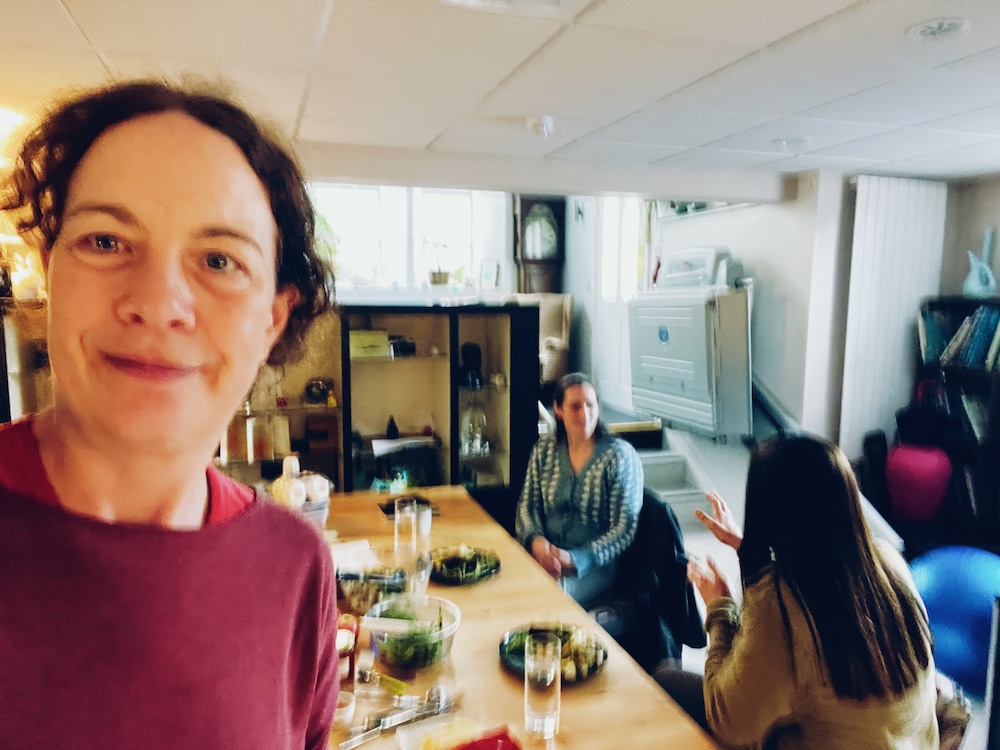
The Art of Error Correction
Choosing not to correct every mistake isn’t the easy option.
In many ways, it’s much harder.
Anyone can interrupt a conversation to point out an error.
The difficult part is deciding whether that correction will help this learner, in this moment, with this goal.
Sometimes the best teaching decision is to let someone finish their thought.
Sometimes it’s to make a note and come back to it later.
Sometimes it’s to stop immediately because accuracy really matters.
That judgement comes from experience, not instinct.
My approach has been shaped by years of teaching English to adults, watching what helps people grow in confidence, and just as importantly, what causes people to withdraw.
If you’d like to know more about my background and experience as an ESOL professional, you can read about it here.
→ Learn More About My ESOL Training and Experience

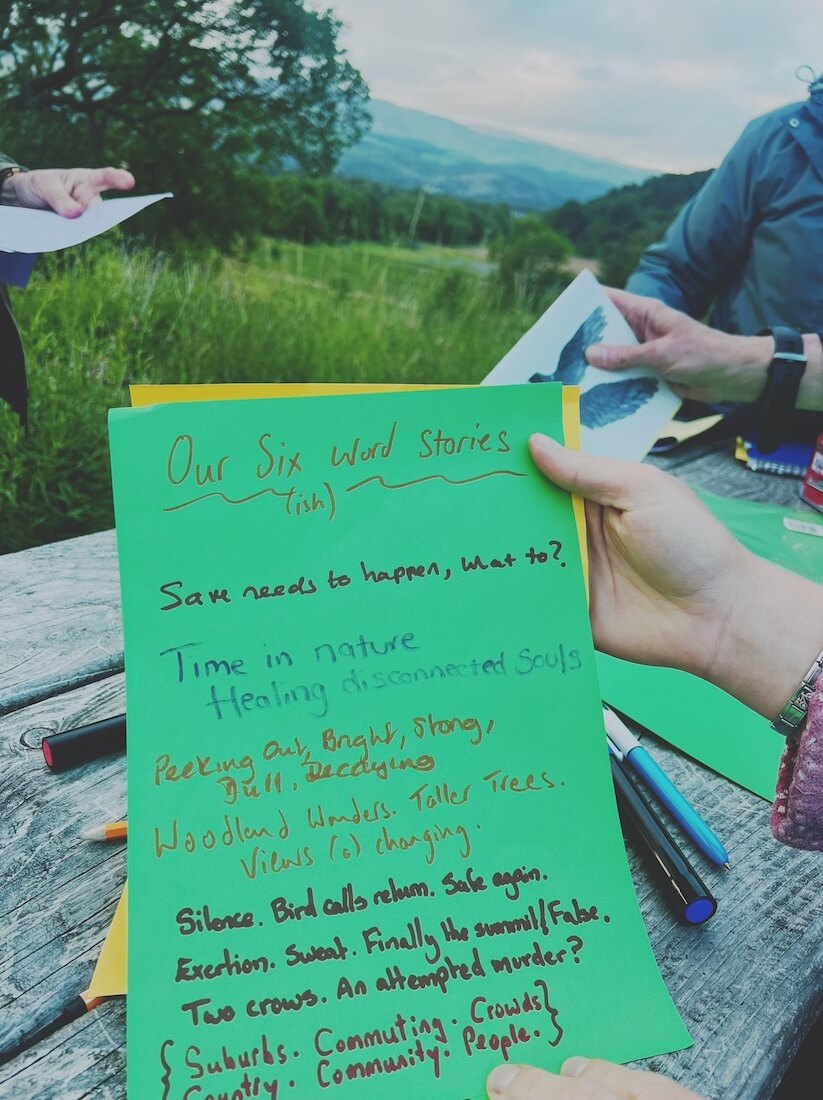
A Story About What Misplaced Error Correction Can Feel Like
Recently, I found myself on the receiving end of an unexpected correction while sharing some creative writing in a woodland poetry workshop. It reminded me, for a moment, what it can feel like when a single correction overshadows courage, creativity and connection.
If you’ve ever wondered why I don’t build my language support around correcting every mistake, this story explains a great deal.

An Invitation to an English Amnesty
This is also why we created our English Amnesty Holiday.
Most people arrive at Blue Noun ready for all the support we can give. They want targeted feedback, specific language work and clear next steps.
But other people need something else first.
They need time away from the feeling that English is a test they are constantly failing.
On our English Amnesty Holiday, we do not begin by correcting every mistake. In fact, we may not correct at all until someone feels ready for that kind of support.
Feeling safe matters most.
For these guests, the most important early work is not fixing the English. It is rebuilding confidence to use it.
A Final Thought
Think of error correction like weedkiller.
Used carefully, it can solve real problems. Used indiscriminately, it doesn’t just remove the weeds; it can damage everything else that was beginning to grow.
Confidence, curiosity and resilience are just as important to spoken English as grammar and vocabulary. If we become so focused on removing every error that we forget to nurture those qualities, we risk solving today’s mistake while making tomorrow’s conversation less likely to happen.
That’s why Blue Noun sometimes feels different from a traditional language classroom.
We still correct. We still care about accuracy. But we recognise that not every moment of communication is the right moment for correction.
My role isn’t to point out everything that could be improved. It’s to decide what will help you most, at this stage of your learning, with the confidence you have today and the goals you want to achieve tomorrow.
Sometimes that means correcting immediately. Sometimes it means making a note and returning to it later. Sometimes it means simply letting you finish your thought.
Error correction isn’t progress, even if it is measurable.
Helping you become someone who is willing and able to use English in the real world is.

Further Information
This page explains one small part of the way we teach. If you’re interested in the thinking behind Blue Noun as a whole, you can explore our wider teaching philosophy on the Blue Noun Pedagogy page.
Useful pages