
Local Events as Language Experiences
Visit as a guest, not a tourist
Some of the richest English experiences on a Blue Noun holiday happen at small, local events.
A harvest festival. An exhibition. A village celebration. A food event. Something interesting happening in Perthshire that week.
These events aren’t created for tourists or language learners. They would be happening whether Blue Noun existed or not.
My invitation is simply to come with me as my guest.
We might meet local people, taste something, discover a tradition, ask questions, hear unfamiliar English or find ourselves in conversations we couldn’t possibly have planned.
For someone learning English, these small encounters can be extraordinary. They offer a chance not simply to visit Scotland, but to use your English while taking part in everyday Scottish life.
And because we are joining something that belongs to the community, how we take part matters too.
Blue Noun works with very small numbers of guests. We arrive lightly, spend locally, show interest, talk to people and support what is already happening.
The aim isn’t to extract an “authentic Scottish experience” from a community. It’s to participate in one with care.
“Blue Noun doesn’t manufacture ‘authentic’ cultural activities.
Our English immersion guests join real local events and everyday Scottish life as guests.“
Ruth Pringle.
Local events on Blue Noun holidays
We go to a lot of local events — often two or three in a week.
They are an important part of English immersion in Scotland for me: opportunities to use your English with different people, take part in authentic cultural activities and experience something of everyday Scottish life.
Most don’t become blog posts. They simply become part of the holiday: somewhere interesting to go, people to meet, things to discover and new opportunities to use your English.
The stories below aren’t a list of what we do, or a promise of what will be happening when you visit.
They’re a few particular moments I’ve chosen to write about because they show something about how we join local events, and what these experiences can bring to an individual or small-group English immersion experience.
Together, they give you a flavour of what it can mean to experience local Scotland as a Blue Noun guest.
→ A Local Apple Harvest Festival
Celebrating the apple harvest from a community-managed orchard creates natural opportunities to celebrate the autumn in harmony with nature and explore local food and traditions.
→ Discover a Visit to the Comrie Apple Festival
(Part of our Experience English Autumn Moments holiday)
→ A Local Pumpkin Patch & Harvest Festival
Visiting a local pumpkin patch and harvest celebration shows how we join community events as guests — taking time to meet the people, taste what’s being made and appreciate the work behind the experience, rather than simply arriving to see it.
→ Feel the Season | Try Slow Travel English in Autumn in Scotland
→ The Edinburgh Beltane Fire Festival
We love sharing the pagan inspired Beltane Fire Festival on Carlton Hill in Edinburgh. It’s not a language conversation event but an experience to talk about afterwards.

Sometimes Blue Noun Hosts the Event
Being part of a community isn’t only about joining what other people create.
Sometimes Blue Noun contributes too.
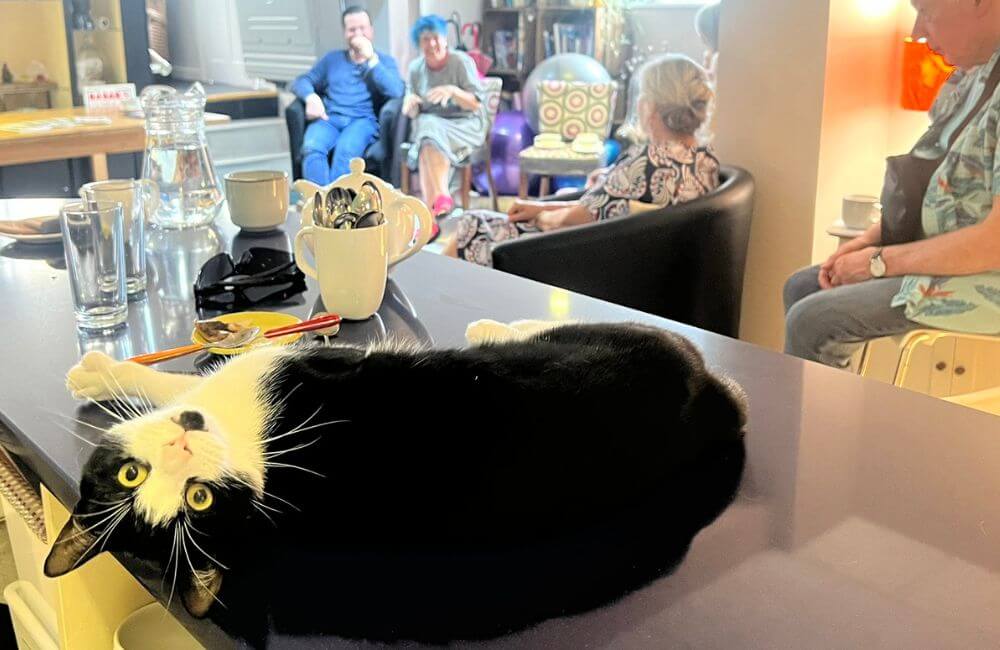
During Crieff Arts Festival, I’ve hosted events that bring Blue Noun guests, local people and visitors together around art, conversation and shared experiences.
These aren’t English lessons disguised as festival activities. They’re part of Blue Noun participating in the cultural life of the town — while creating another kind of space in which connections and conversations can happen naturally.
→ Crieff Arts Festival at Blue Noun 2025
This year, Blue Noun became a venue for the annual Crieff Arts Festival, hosting 3 evenings of literary events.
→ Crieff Arts Festival at Blue Noun 2026
As well as offering venue space to the literary events of the Crieff Arts Festival, in 2026, Blue Noun hosted two public exhibitions, introducing international artwork to the local Crieff community.
“I think about all the amazing parts of Scotland I love and want to share.
I want to share all these wonderful, kind things with my guests.
And I live in a community that will always make them feel welcome, so I want my business to give back to my community in the sme generous spirit.”
Ruth Pringle.
Occasionally, Blue Noun Builds a Holiday Around a Local Festival
Some local events are big enough, varied enough and interesting enough to become part of the structure of an entire English holiday.
Crieff’s food festival gives us local producers, food, stories and community life to explore, while the Drovers’ Tryst Walking Festival opens up a programme of guided walks, landscapes, local knowledge and conversations.
In these cases, I don’t recreate the festival for my guests. I build the English holiday around something brilliant that is already happening here.
→ Crieff Food Festival Holiday
Happening in October, this small local festival is the perfect way to get talking through exploring food and drink. Not just for food professionals, this holiday is an invitation for anyone who loves food to share the party.
→ Stories of the Land Walking Festival Holiday
A small-scale walking holiday in Scotland in May, combining the Drover’s Tryst Walking Festival with a private English workshop. Hiking, local routes, and real conversation.
Local Events Within the Structure of an Experience English Holiday
Local events are one part of a much bigger Experience English holiday.
They sit alongside time in nature, cultural visits, food and drink, conversations, creative activities, journeys and quieter moments. Different experiences do different jobs, and together they create the structure and rhythm of the week.

Just Going to Local Events Won’t Necessarily Improve Your English
Being surrounded by English isn’t the same as getting meaningful opportunities to use it.
Local events can be busy, noisy and socially difficult to enter. You can easily spend an hour somewhere interesting, hear plenty of English, buy something, look around — and barely speak to anyone.
The language value comes from how the experience is supported: what happens before we go, how I help you enter conversations while we’re there, what we notice, and what we do with the language and experiences afterwards.
I explored this by looking at one whisky-tasting event through two different lenses: the experience you could have by attending independently, and what can happen when the same event becomes part of a guided language experience.

Being a Good Guest
A local festival isn’t a Blue Noun attraction.
The people running it haven’t created an authentic Scottish experience for my language guests. They’re holding a harvest celebration, organising a walking festival, exhibiting their work, cooking food or creating something for their own community.
We are the guests.
That changes how I think about bringing people along.
I want our visit to support what’s happening: buying from local producers, paying for events, showing genuine interest in people’s work and treating the time and welcome people give us with respect.
It’s also why small-scale tourism matters to me. Arriving with one or two interested people is very different from delivering a group to consume the same experience. The things that make local events so valuable — their relationships, spontaneity and sense of community — are also the things that can be damaged when tourism becomes extractive.
For me, responsible tourism isn’t about finding increasingly “authentic” experiences for visitors to consume. It’s about being careful with the authentic experiences we’re fortunate enough to be invited into.
→ What is Regenerative Travel, and Why Does It Matter to Your English?
Local Events Are Full of Authentic, Real-World English
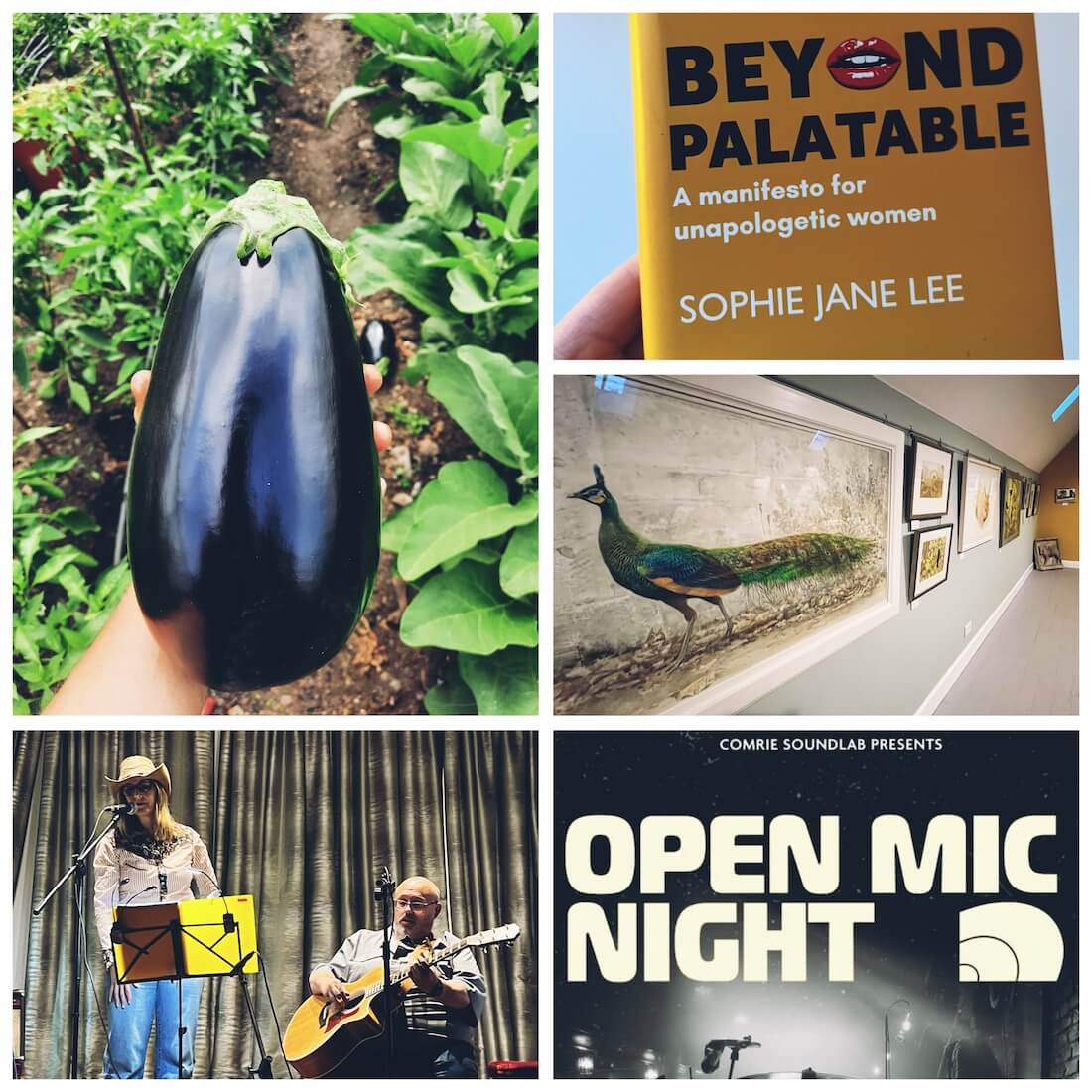
Local events are particularly rich places to experience authentic English — the kind of spontaneous, unpredictable language that can’t be reproduced in a classroom.
There are signs to read, unfamiliar things to ask about, people explaining what they’ve made or grown, snippets of conversation, local accents, jokes, stories, prices, instructions and unexpected questions.
I think of the world around us as a series of conversation walls — things that give us genuine reasons to notice, ask, explain, compare and talk.
At a local event, those conversation walls are everywhere.
We don’t need to invent a discussion topic or practise a situation that might happen one day. Something is happening in front of us, and your English has a real job to do.
This is an important part of how Blue Noun helps you move from English you’ve learned to English you can actually use.
Balancing the Four Strands of Language Learning
A balanced approach to language learning isn’t all about studying vocabulary and grammar.
The Four Strands of Language Learning divide learning between meaning-focused input, meaning-focused output, deliberate language study and fluency development — with roughly three-quarters of learning time happening through language use rather than deliberate study.
For many people learning English outside an English-speaking country, getting enough of that language-use time is difficult.
Local events help change the balance.
You’re listening to English because you want to understand what’s happening. You’re speaking because there’s someone you genuinely want to communicate with. You’re using familiar English in unfamiliar situations, and discovering where it works — and where you need more.
That is one reason Blue Noun’s intensive language-use holidays can complement years of classroom English so powerfully.
Small Events Can Be Big Experiences
A local festival might look like a small activity beside a castle, a steam train or one of Scotland’s spectacular landscapes.
But different experiences do different jobs.
Some of our bigger days are about discovering Scottish history, travelling through an extraordinary landscape or simply enjoying somewhere wonderful. I don’t need to squeeze language work into every moment of them.
A small local event can offer something completely different: people to meet, things to ask about, unfamiliar situations to navigate and conversations that could never have been planned in advance.
A good Experience English holiday needs both.
It’s the balance between these different kinds and sizes of experience that helps create the rhythm of the week.
→ Small Moments, Big Experiences: The Balance of Scale that Shapes our Holidays
Why Perthshire Matters
I’ve described Blue Noun as a business that couldn’t happen anywhere but Perthshire.
I could teach English almost anywhere. But I couldn’t create these particular English immersion experiences without being rooted in a place I know.
I know what’s happening locally. I notice the handwritten poster, the small festival, the exhibition or community event. I know which things might be interesting to a particular guest, and sometimes I know the people involved.
That local knowledge means your holiday doesn’t have to rely on a fixed programme of tourist activities. We can respond to what’s actually happening here while you’re here.
Perthshire isn’t simply the backdrop to a Blue Noun holiday. It’s one of the things that makes this way of learning English possible.
→ Why Perthshire Is Perfect for an English Language Immersion Holiday
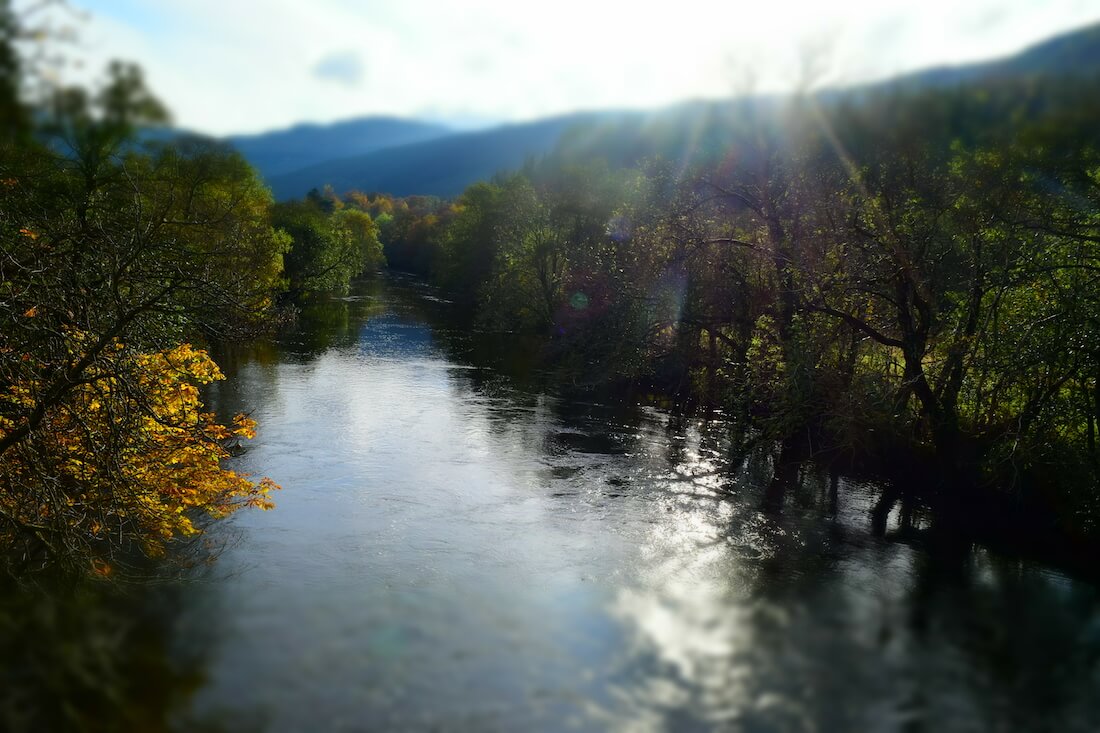
Come With Me as My Guest
This is perhaps the simplest way to explain how Blue Noun approaches local events.
Come with me as my guest.
We’re not arriving as a tour group to observe local life from the outside. We’re going somewhere I would genuinely go, joining something that’s already happening and taking part in whatever way feels natural.
That changes the experience.
You have someone beside you who understands the context, can make introductions, help conversations get started and give you the confidence to participate. But you’re not being shepherded through a manufactured “authentic experience”.
You’re simply being invited in.
For me, that’s one of the most valuable things a small, personalised English immersion holiday can offer.
Small Numbers Make This Possible
Blue Noun works with very small numbers of people deliberately.
When I invite one or two guests to come with me to a local event, I can pay attention to how you’re experiencing it, help when you need me and give you space when you don’t.
It also means we can join things naturally. We aren’t asking a community event to accommodate a language group or change what it’s doing for us.
That small scale protects something important on both sides: the experience local people have created, and my ability to give each Blue Noun guest genuine time, attention and care.
Selectivity protects my ability to be generous.
What Will Be Happening When You Visit?
I don’t know yet.
And that’s part of the point.
I won’t promise you a particular harvest festival, exhibition, food event or village celebration as part of your English holiday. What is happening depends on the season, the week you’re here and what is going on locally.
What I can promise is that I’ll be paying attention.
If something interesting is happening, and I think it will add something to your experience, we can go.
You won’t simply be sent there as a tourist or given an English exercise to complete.
You’ll come with me as my guest.
And for a little while, whatever is happening in this corner of Scotland becomes part of your English immersion too.
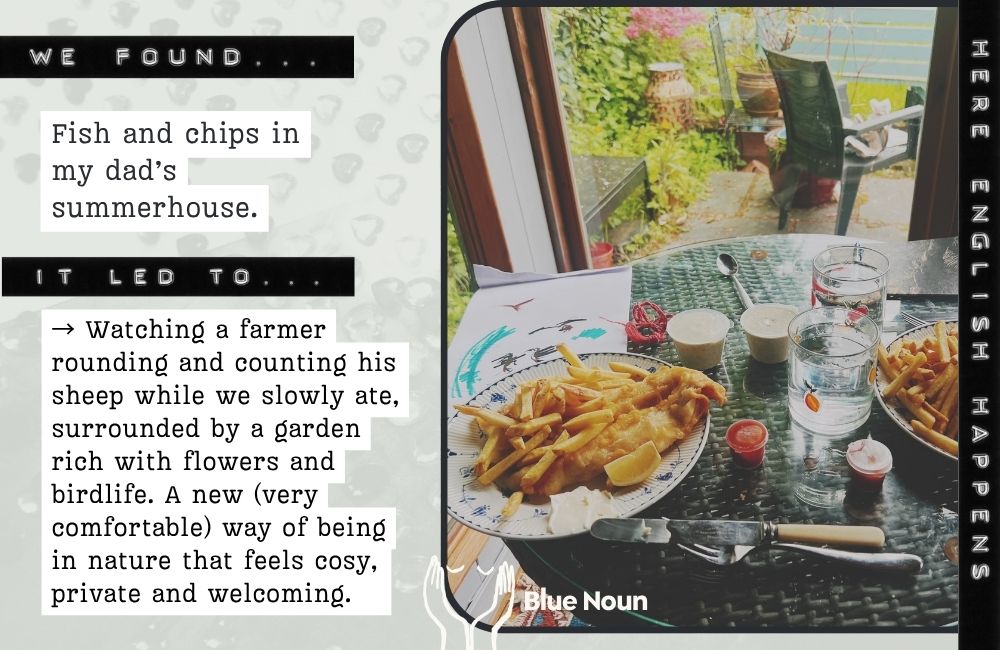
A Blue Noun Field Note
My Blue Noun Field Notes make visible some of what happens on a Blue Noun language holiday that a photograph alone can’t really explain.
This one was fish and chips in my dad’s summerhouse. Being invited into my family spaces matters. My family are incredibly welcoming to Blue Noun guests, and here we could simply settle in, eat slowly and feel at home — watching a neighbouring farmer round up his sheep from the comfort of the garden.
For a little while, you weren’t being taken somewhere as a visitor. You were being welcomed somewhere as our guest.
