A Different View Of Stirling — And Your English
English coaching from inside the Scottish landscape


Join me, an English coach, for a shared walk up Dumyat combining conversation, landscape and a more personal experience of Scotland.

Send a quick message with your preferred date.
I’ll get back to you to confirm the session and send over the booking link and a short pre-session questionnaire.
Experiences are offered around Blue Noun holiday schedules and selected cultural events, so availability will vary throughout the year.

Dumyat: More Than A Hill Walk
This experience is designed for visitors who want to experience Scotland more personally while using English naturally through conversation and shared experience.
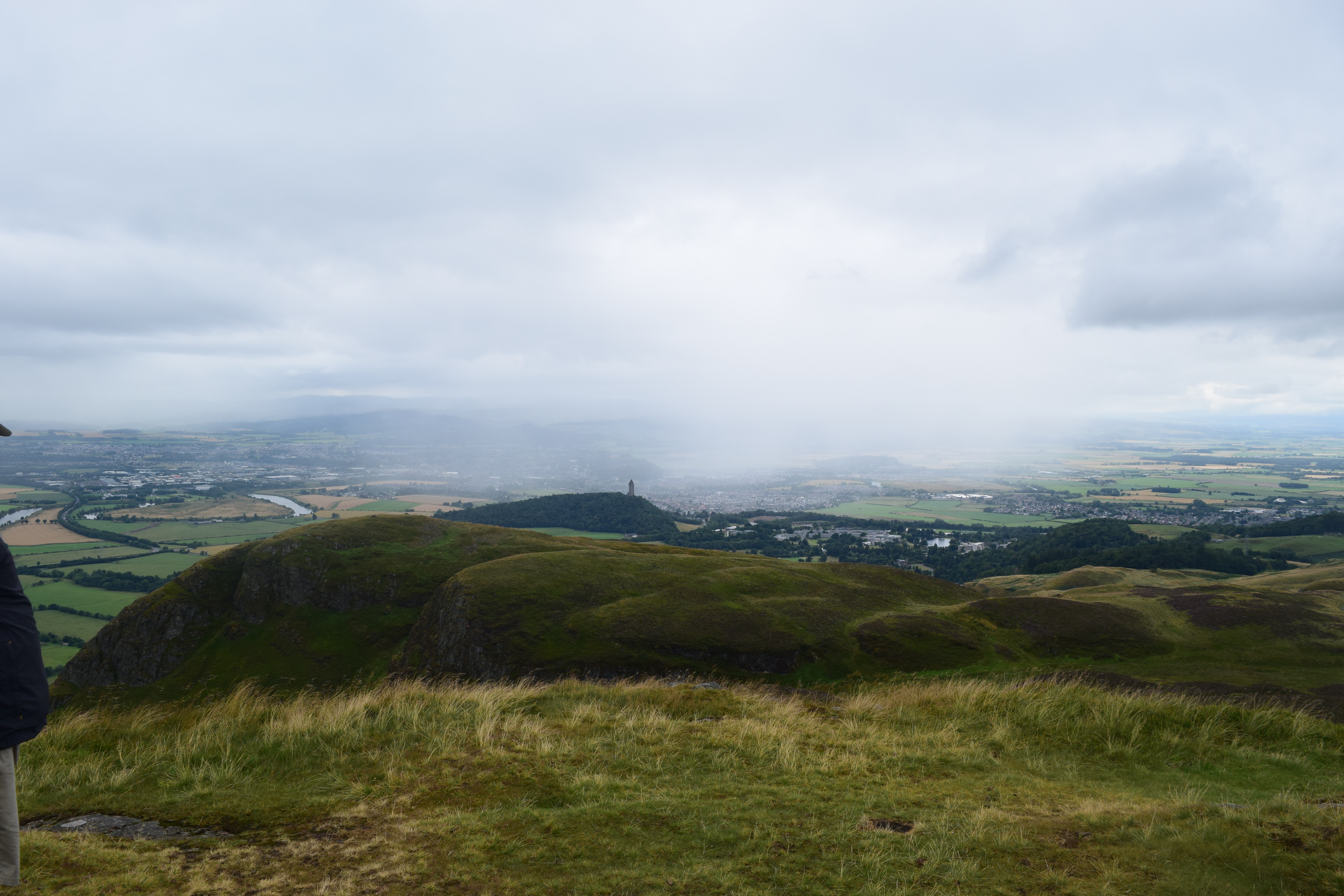
Together, we climb Dumyat, one of the most rewarding hills near Stirling, with time for relaxed conversation, landscape, wildlife and reflection along the way.
This is nothing like a language classroom lesson or a scripted tour.
It is a carefully curated English coaching experience shaped through movement, landscape, conversation and shared experience.
Walking side-by-side changes the rhythm of communication. People often stop monitoring their English so heavily and begin speaking more naturally, reflectively and confidently instead.
Throughout the experience, I help guests explore English through real conversation, emotional connection and meaningful experiences rather than performance or pressure.
That difference is at the heart of Blue Noun.
Want a better sense of how English coaching becomes part of experiences like this — and what the day actually feels like?
→ Read: Why We Often Take Guests Up Dumyat: English Coaching From Inside The Scottish Landscape
Review and Revive – On the Go
Throughout the experience, conversation naturally moves beyond small talk.
As an English coach, I use the walk to help guests reflect on their relationship with English, where they currently feel confident or stuck and what kinds of experiences help them communicate more naturally.
Many of the same themes explored in my Review & Revive English coaching sessions emerge organically during the day — but through shared experience, movement and conversation rather than sitting formally at a table.
Guests often leave not only with memories of the landscape, but with a clearer sense of how they want English to fit into their lives moving forward.


Meet Ruth Pringle
I’m Ruth, an English coach, co-host of the Alone with English podcast and founder of Blue Noun — one of the first English holiday experiences in Scotland to combine culture, community immersion and conversational English coaching through real-world experiences.
For more than five years, I’ve been helping international guests experience Scotland through conversation, landscape, creativity, local culture and shared experiences rather than traditional classroom teaching alone.
My approach is gentle, reflective and conversation-led.
I’m interested in helping people feel more connected, expressive and confident in English through meaningful experiences — whether that’s a hill walk, a live music event, a creative workshop or simply a good conversation over coffee after a day outdoors.
The Dumyat experience is one small part of that wider philosophy.
Practical Details
I walk in almost any weather — this is Scotland, after all.
However, if the forecast looks a little too Scottish for your comfort, please contact me the day before the walk and we can arrange either a reschedule or full refund.


Field Notes | How the Language Work Happens
A Blue Noun Field Note
My Blue Noun Field Notes make visible some of the thinking and decision-making that happens during a Blue Noun language holiday.
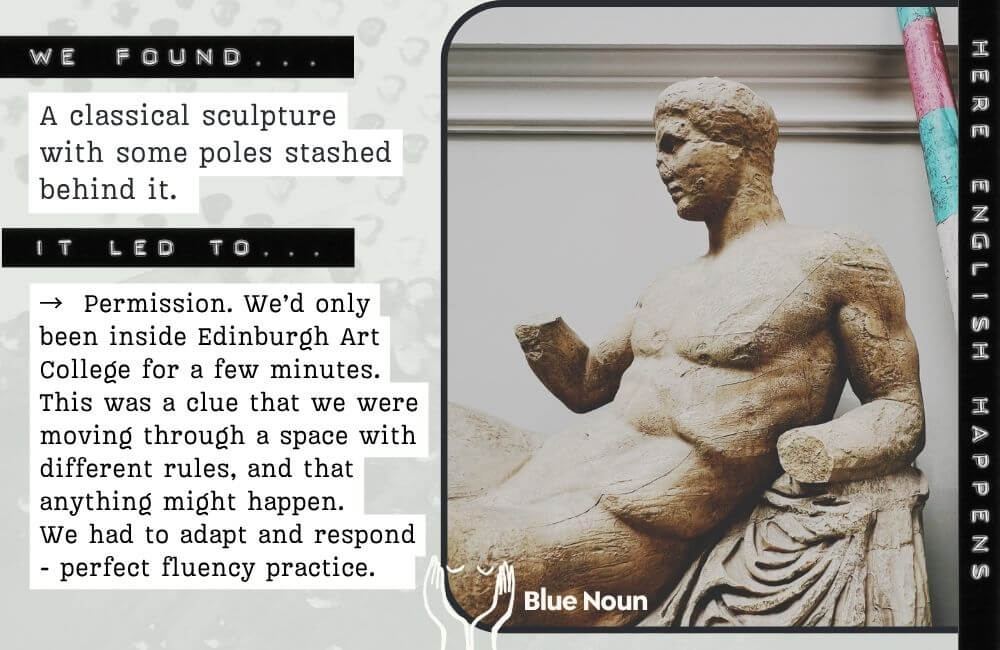
This one comes from an earlier visit to an art school. Within minutes of arriving, we found a classical sculpture with a collection of colourful poles stashed behind it — a small clue that we’d entered a space with different rules.
For me, immersion happens anywhere we don’t automatically belong. We have to pay closer attention, work out what’s happening and respond. Art spaces heighten that awareness of our environment: they ask us to notice, interpret, question and adapt. Our language has to react too.
That slight uncertainty creates permission — we don’t already know what is going to happen or what we’re supposed to say. And that makes these environments particularly rich places for practising the responsive, adaptable English that real fluency requires.
My Field Notes capture moments like this. But they’re only glimpses of a much bigger process of setting language goals, making teaching decisions and recognising progress.