
How English Is Designed Here
The Invisible Armature Supporting Calm, Confident English Experiences

Many of the people who come to Blue Noun have already spent years learning English.
They have studied grammar, built vocabulary, passed exams, worked internationally and reached a high level.
Yet there can still be a frustrating gap between the English they know and the English that is available to them when they actually want to speak.
They may translate internally, search for words they know perfectly well, monitor their accuracy while they are talking, or feel unexpectedly less articulate, interesting or capable in English than they know themselves to be.
I don’t think the answer is simply more English teaching.
Blue Noun is designed around a different question:
What needs to change around a person so that the English they already have becomes easier to use?
That question has led me to redesign many of the assumptions that normally sit underneath language education.
Not just what activities should we do? or where should we go? — but what kind of environment helps someone speak?
→ What happens when correction is no longer the organising principle?
→ What gives people a genuine reason to communicate?
→ What changes when the teacher stops being the centre of the experience?
→ How can a place become part of language learning without turning real life into a lesson?
These are design questions.
And they shape almost everything here.
Your Holiday is the Visible Part. The Language Design Sits Underneath It.
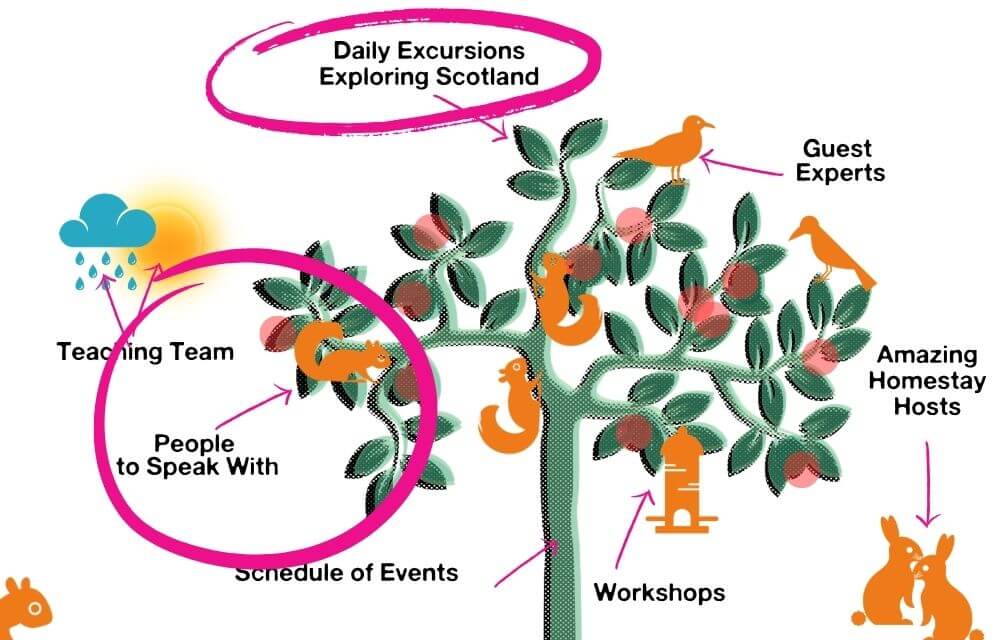
A Blue Noun holiday might contain walks, conversations, exhibitions, food, local events, making things, encounters with people and time spent simply noticing where we are.
But those things are not, by themselves, the method.
The method is in how they are chosen, connected and held.
I deliberately move away from several familiar structures of English-language teaching: the classroom as the default environment, the textbook as the source of content, the teacher as the person with the answers, predetermined language as the objective, and constant correction as evidence that learning is happening.
Removing those things does not mean removing expertise or structure.
It means relocating them.
Instead of putting the structure in front of you — today’s lesson, today’s grammar, today’s vocabulary — much of the structure sits behind the experience. I am noticing, selecting, connecting, adjusting, supporting and responding as the experience unfolds.
That is why something which can feel remarkably natural to the person experiencing it can actually be highly designed.

From Learning English to Using English
One of the biggest differences is that I am not trying to keep people indefinitely in the identity of English learner.
I want them to experience themselves as English users.
That distinction matters.
A learner naturally notices what they don’t know. A user needs to do something with what they do know: ask, respond, explain, joke, misunderstand, repair, contribute, notice, connect.
Real encounters provide evidence that this is possible.
Instead of completing an exercise successfully and being told that your English is improving, you experience yourself communicating with another person. You discover that you can find another way of saying something when the perfect word disappears. You survive uncertainty. You understand and are understood.
Confidence begins to come from evidence, rather than reassurance.
And once that becomes the objective, the design of a language experience changes considerably.

Designed around Attention, Not Performance
Traditional language learning often keeps part of your attention fixed on your English.
Was that tense right? Do I know this word? Am I making mistakes? What does the teacher think of my level?
At Blue Noun, I deliberately create experiences capable of pulling your attention somewhere else.
Towards an artwork. A landscape. Something you’re making. A strange object. A local story. Another person’s opinion. Something funny that has just happened.
You still use English — sometimes a great deal of it — but English is no longer always the most interesting thing in the room.
There is something worth communicating about.
This is one reason my background in art matters here. I spent fifteen years working professionally in art before moving into English-language teaching. It trained me to notice possibilities in places, objects, materials and encounters, and to construct experiences rather than simply deliver somebody else’s system.
A wall, a path, an exhibition, a conversation, a piece of local information or something we make together can all become useful — not because I need to turn everything into an English exercise, but because each can create attention, curiosity and a genuine reason to communicate.
“Ruth introduced me to her friends, and the spirit of ‘her’ place- the place she has built around her to be shared : a dimension you step into with your whole body and your heart. Nature , art , history, time outdoors , reading , exploring , slowing down , getting to know about Scottish birds and plants were the key elements of my stay.“.
Elisa T.
Designed to Feel Invitational
There is another important shift underneath the experience:
inviting rather than telling.
I don’t want someone’s English holiday to become another situation in which they are the audience for an expert.
The purpose of my knowledge is not to occupy more of the space. It is to make it easier for you to occupy it.
That changes how conversation is held, how correction happens, how activities are introduced and how much room there is for your knowledge, interests and responses to alter what happens next.
It also means I can respond to what emerges rather than continually dragging the experience back towards something I prepared earlier.
The expertise is still there.
It just doesn’t always need to be visible.
That is an important part of what I mean when I say Blue Noun is designed.
Where the design becomes visible
1. The Physical Experience
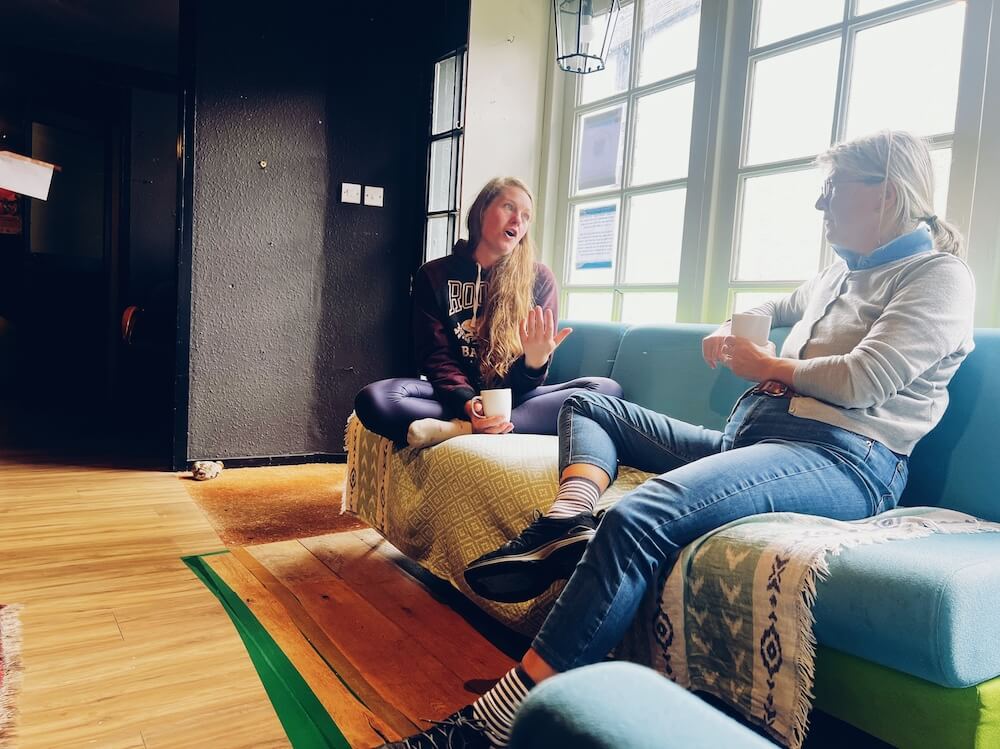
Where you are, who you’re with, and how the days move all affect how safely you can think, speak, and experiment.
That’s why we design for:
- small groups and quiet company
- beautiful, low‑sensory environments
- generous pacing and time outdoors
- movement, rest, shared meals, and everyday rhythm
These choices reduce cognitive load. They create the conditions in which attention returns — and language can surface without force.
You might recognise this feeling from the Dutch idea of gezellig: a sense of ease, warmth, and shared presence that makes conversation feel natural rather than effortful.
2. The Learning Experience
English here isn’t treated as something to perform or prove.
Instead:
- speaking is invited, not pushed
- correction is light, permission‑based, and confidence‑first
- language is allowed to emerge through experience
- progress comes from use, not pressure
This is not about doing less. It’s about doing what actually works for adult learners who are tired of English as an endless project.
One important ingredient in this design is how culture is handled.
You can read more about what we mean by culture-led English learning, and how culture is shared rather than taught here:
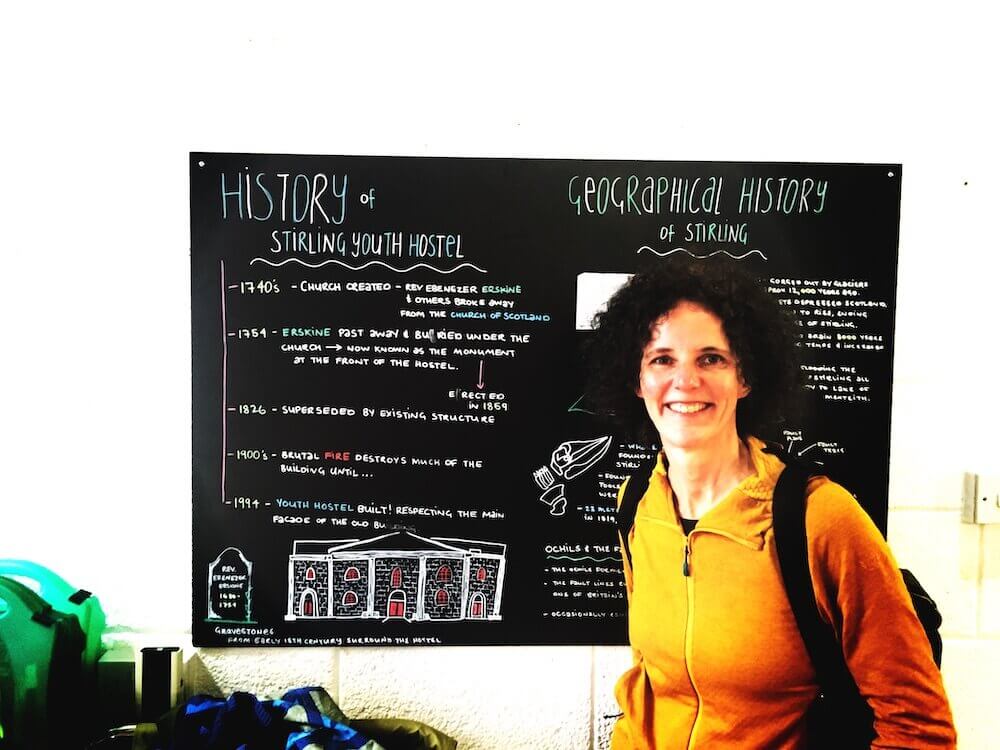
One example is something I call Conversation Walls. I keep track of displays and resources in public spaces around Scotland that I can shape into fluency work — knowing where to take people, what a place offers, and how to use it without making the experience feel like a lesson.
→ See how Conversation Walls turn Scotland into a resource for learning English
3. Our Physical Learning Space
If there’s no conventional classroom, where are we?
We do have our own learning space: comfortable, calm and deliberately designed to feel good to spend time in. It gives us somewhere to sit, talk, think, write and give your English focused attention when we need it — without recreating the atmosphere of a classroom.
4. Micro and Macro Experiences: Balancing Your Week
Not all excursions play the same role in a week — and that’s where scale matters.
At Blue Noun, we balance smaller, local moments with bigger, more expansive experiences, creating a natural rhythm across the holiday. Micro moments — conversations, community events, shared encounters — are where English opens easily. Macro moments — journeys, landscapes, time to take things in — offer space to reflect and absorb. It’s this careful curation of scale, rather than a packed schedule, that allows the experience to feel complete, and for your English to develop in a way that lasts.
→ Small Moments, Big Experiences: The Balance of Scale that Shapes our Holidays
5. Redesigning English, Safely
Taking apart familiar systems can be risky if nothing solid replaces them.
This approach works because it is held.
Behind the scenes, English has been redesigned so that:
- structure exists without rigidity
- intuition is supported by judgement
- freedom doesn’t mean chaos
- calm doesn’t mean vague
People are not left to “figure it out”. They are guided through an experience that has been shaped with care.
6. Designed for Individuals
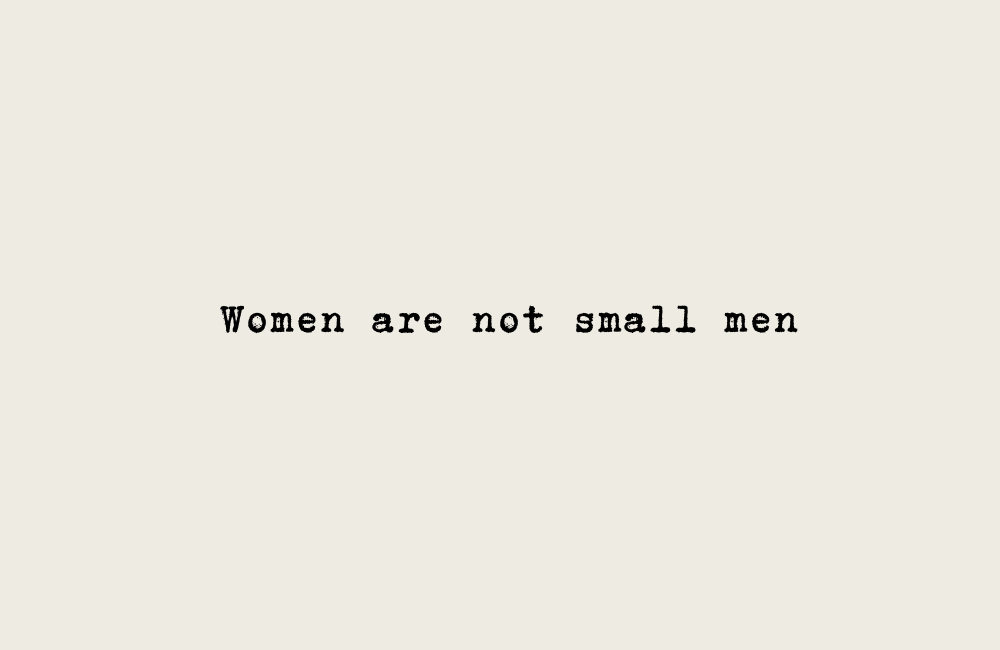
“Shrink it and Pink it”
Design choices shape the entire experience of a language holiday. Too often, programmes simply replicate classroom systems — rigid schedules, performance pressure, and one-size-fits-all learning structures — even when those systems were never designed with adult learners in mind.
In this article, I explore the idea of “shrink it and pink it” design, and what happens when learning experiences are thoughtfully built around the needs of women, rather than asking travellers to adapt themselves to a fixed formula.
Why You Can Trust the Process
This work is underpinned by Ruth’s eight years of formal study in art, music and literature, including two Master’s degrees, as well as years of professional practice.
That training matters here not simply as a credential, but because it develops a particular kind of capacity: the ability to notice what sits beneath the surface, work with complexity, hold uncertainty, stay curious, and care deeply about relevance, feeling and connection.
It doesn’t teach you what to say. It teaches you how to hold a process — how to make informed decisions while staying observant, responsive and open to what emerges.
Those skills are essential here. They make it possible to deconstruct English education safely — to keep what is useful, discard what is limiting, and introduce multidisciplinary experiences without leaving the learner to figure things out for themselves.
What can feel light and natural on the surface is supported by considerable experience underneath. This is not experimentation at the learner’s expense, but a carefully held process shaped by judgement, practice and care.
Who this is for
This approach is for people who:
- have done “all the right things” with English
- are capable, professional, and thoughtful
- want English to feel lighter, not louder
- sense that more of the same isn’t the answer
If English has taken you far but still feels effortful, the missing piece may not be more input — but a different design.
Here, English is not added to your life. It is woven into it — carefully, deliberately, and with respect for how adults actually learn.
→ Discover who Blue Noun helps
Where English Can Feel Different, by Design
The calm, light atmosphere people experience here isn’t accidental. It is the result of deliberate choices — about attention, pace, space, structure, and how people are supported as they use English.
Blue Noun may feel very different from conventional language learning, but that doesn’t mean the structure has disappeared. Much of it has simply moved out of your way.
English here has been carefully re-thought so that when familiar systems are loosened or removed, nothing collapses. Something more responsive takes their place — designed to support confidence, attention and ease.
The experience can feel natural because the design underneath it is doing its job.
Further Information
Learn More About Our Holiday Design
→ Learn How Emergent Language Happens Between Activities
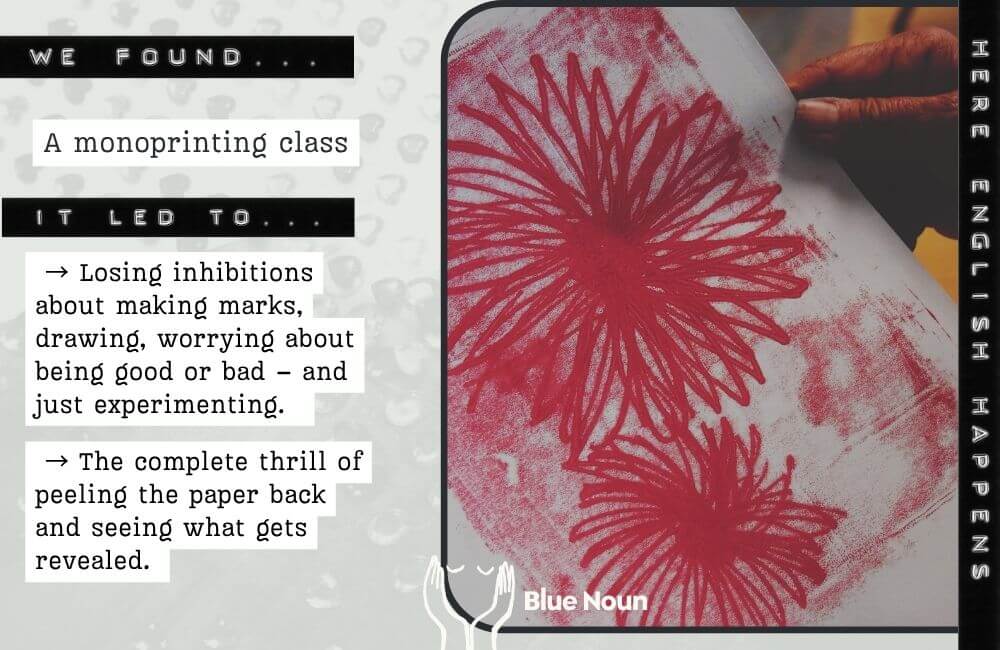
Field Notes | How the Language Work Happens
A Blue Noun Field Note
My Blue Noun Field Notes make visible some of the thinking and decision-making that happens during a Blue Noun language holiday.
