
How we Balance Learning, Wellbeing and Responsibility
The thinking behind how our English holidays are designed

Learning, wellbeing, and responsibility are often treated as competing priorities in travel and education. One is emphasised at the expense of the others: learning becomes intensive but exhausting, holidays feel restorative but disconnected from progress, or responsibility is added on as an afterthought.
At Blue Noun, we don’t treat these as trade-offs.
Our English holidays are designed around the idea that learning, a feel-good holiday, and responsible travel must be held together — not ranked, diluted, or used to justify compromises elsewhere. This balance shapes how weeks are structured, how activities are chosen, and how decisions are made across every part of the experience.
This page explains the thinking behind that balance.
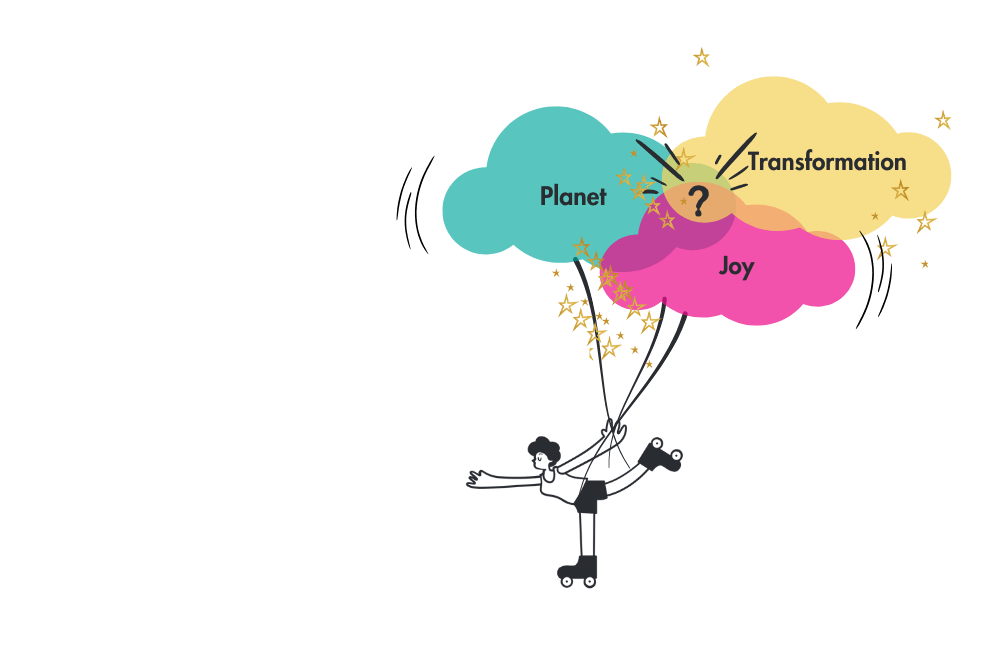
Three priorities, held equally
Blue Noun English holidays are built from several distinct components, each with a different role.
Rather than treating these elements as a sequence or a timetable, we use a simple visual structure — a tree — to show how they work together.
Your English language needs
English learning must feel real, usable, and sustainable — connected to your life beyond the classroom, not isolated from it.
A feel-good holiday
Time away should restore energy, not drain it. Enjoyment, rest, movement, and human connection are not rewards after learning; they are conditions that support it.
Responsible travel
Travel should respect place, people, and limits. Responsibility is not something added later, but something that shapes decisions from the start.
Rather than optimising for one of these and compensating for the others, we design our holidays at the intersection where all three are present at the same time.
This framework guides practical decisions — from group size and accommodation to pacing, communication, and the kinds of experiences we include.

Why these priorities aren’t traded off
In many learning holidays, one priority is used to justify weakening the others. Intensive learning is made exhausting. Rest and enjoyment are offered without meaningful progress. Responsibility is treated as an optional layer, added once everything else is decided.
We’ve found that this approach breaks down quickly.
When learning, wellbeing, or responsibility are treated as secondary, the experience becomes harder to sustain — for guests, for hosts, and for the places involved. Energy drops, pressure increases, and something essential is lost.
For us, balance isn’t about moderation. It’s about designing experiences where each priority supports the others.
Learning is stronger when people feel rested, safe, and engaged. Wellbeing is deeper when time away feels purposeful and connected to real life. Responsibility matters because learning and travel don’t happen in isolation — they always affect people and places beyond the individual.
This is why we don’t “add” responsibility later, or treat wellbeing as a reward once learning is done. All three are considered together, from the first planning decision onwards.
How this balance shapes decisions in practice
Holding learning, wellbeing, and responsibility together isn’t an abstract idea. It acts as a practical filter for decisions, shaping what we include, what we limit, and what we choose not to offer.
It influences scale. Group sizes are kept small, not to create exclusivity, but to reduce pressure on people, places, and hosts — and to make learning feel human rather than managed.
It shapes accommodation choices. We prioritise small-scale accommodation and homestays because they fit naturally into local life, spread impact more evenly, and avoid the concentration that comes with large campuses or hotels.
It affects pace and structure. Weeks are designed with space for rest, movement, and unplanned moments, rather than constant activity or performance. This supports both language use and wellbeing, while respecting the environments we move through.
It also informs how experiences are described and communicated. We use clear labelling and careful language so people understand what an experience involves, what it supports, and whether it’s the right fit — without inflated promises or pressure to decide.
These choices aren’t optimised for speed, scale, or volume. They’re shaped by the same balance throughout, so learning, enjoyment, and responsibility reinforce each other rather than competing.
What this framework protects
This framework exists to protect people and places from being pushed too hard, too fast, or too far. It helps guard against burnout — for guests, hosts, and those delivering the work — by resisting intensity for its own sake.
It also protects against exploitation. Guests aren’t treated as output, language practice isn’t extracted at the expense of wellbeing, and places aren’t reduced to backdrops for experience. Clear boundaries, honest communication, and deliberate limits are part of that protection.
Finally, it helps avoid extractive tourism models that prioritise scale, novelty, or spectacle over care and continuity. By holding learning, wellbeing, and responsibility together, decisions are made with long-term sustainability in mind — not just what works in the short term.
How We Set Goals Without Adding Pressure
If learning is to sit alongside wellbeing, assessment cannot be built around stress.
Many forms of goal setting for English courses rely on performance and measurement. We take a different approach. Progress begins with reflection — understanding how your English is actually functioning inside your real life, not just how it performs under test conditions.
We often use a simple metaphor to uncover that clarity.
→ Alternative Goal Setting for English Courses – Why Draw a Fish?
Because sustainable growth depends on the health of the whole ecosystem — not just visible results.
Language Holidays with Female Energy
Language learning does not happen in isolation from the body. Confidence, clarity, and curiosity grow more easily when people feel rested, nourished, and safe in their surroundings. That is why wellbeing is woven into the design of every Blue Noun holiday — through movement in nature, good food, and learning environments that remove unnecessary pressure.
In this article, I explore why many women are drawn to language holidays designed with wellbeing in mind, and why thoughtful design matters far more than simply adapting traditional classroom models.
Further Information
Each part of this balance is explored in more detail across the site: