
How We Share Nature on Our English Language Holidays
Respectfully, with curiosity and care
Sharing the Real Scotland
Scotland is not the untouched wilderness it’s often presented as.
It’s a landscape shaped by centuries of human use — farming, extraction, ownership, clearance, sport, conservation, and debate. Nature here often survives around human systems rather than thrives.
Compared to many parts of the world, it is still rich. There is space, weather, water, and life in abundance.
But it is also a poor substitute for what once existed, and for what could exist again.
Few corners are wild enough for humans to feel like guests rather than landlords.
When you do find them, that experience is powerful.
We work within this reality rather than pretending otherwise.
Understanding the landscape means acknowledging both its beauty and its history, without romanticising either.
With a Blue Noun holiday, you don’t choose a filtered version of Scotland. You encounter the full picture — and the conversations that naturally grow from it.
Nature is not another tool on our holidays.
It is something we consider a privilege to share — shaped by our own experience and by Scottish partners who work with wildlife in non-invasive ways.

Just as we are re-imagining and advocating for what English language learning can be, we aim to hold course towards a North Star: building a business that supports and defends nature.
Why We Share Nature
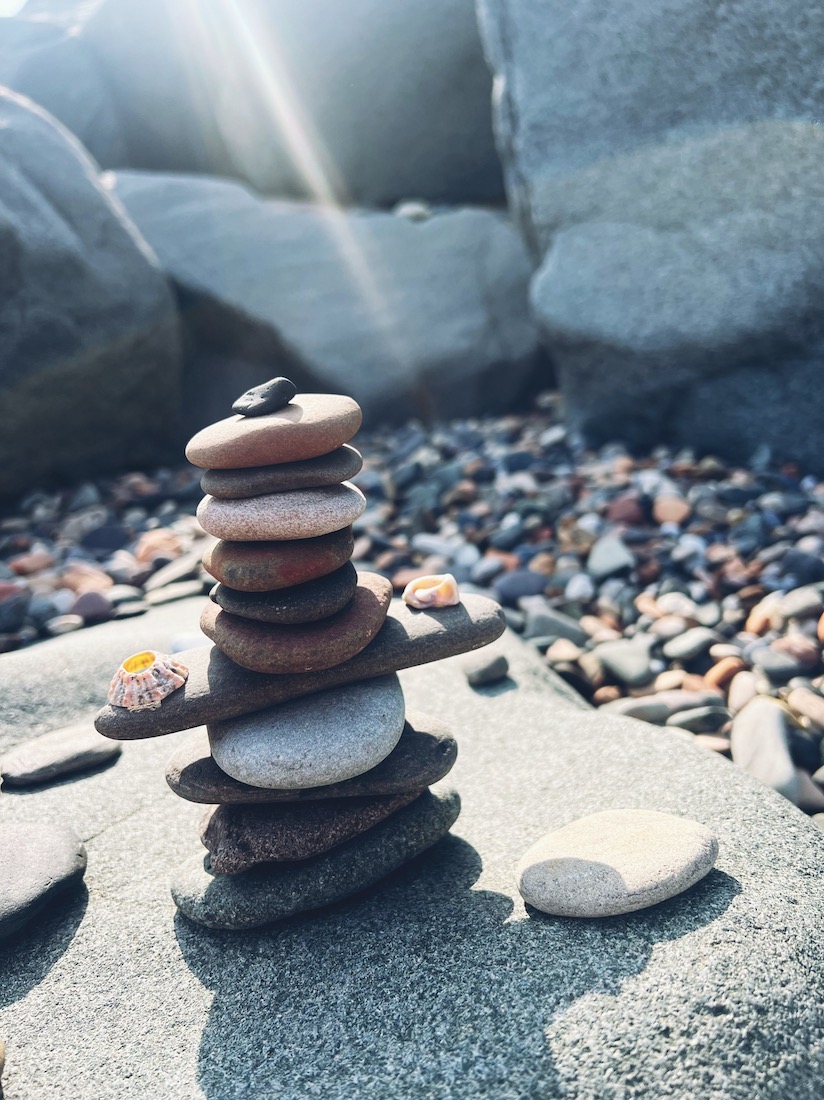
“My new language guest went from Milan airport to here, Dydsart Beach, stacking stones in under 3 hours.
Conversations around a table are only one way to experience language.
Conversations leaning on a rock, selecting stones, watching seabirds, with the waves and the landscape filling silence unfold differently.
If you’ve only known ‘need-to-speak’ with your second language, find ‘want-to-share’ moments.
They are where the deep connections are”.
Ruth Pringle 2026
One Guest’s Story
One of my Italian guests this summer loved cycling and walking, and the weather was gorgeous, so we spent most days outside in the landscape.
One thing she was really keen to see was a deer.
Normally in Scotland you can’t go far without seeing one, but maybe because of the uncharacteristic warmth, we kept failing.
We did the local Lady Mary’s Walk, where I know a field where usually all you have to do is watch. Eventually heads pop up to survey you, then disappear again as the deer carry on grazing.
But nope.
Earlier in the year, I’d been there with a different client and we’d seen a young fawn nestled into the grass beside the river, only visible because it stuck its head out of the undergrowth as it called for its mum.
We cycled to Innerpeffray Library, along a track where I normally scatter deer as I ride down it.
Nothing.
We climbed a hill beside a loch. We saw a rare golden eagle — but the herds of red deer I’d expect to see on the hillsides were absent.
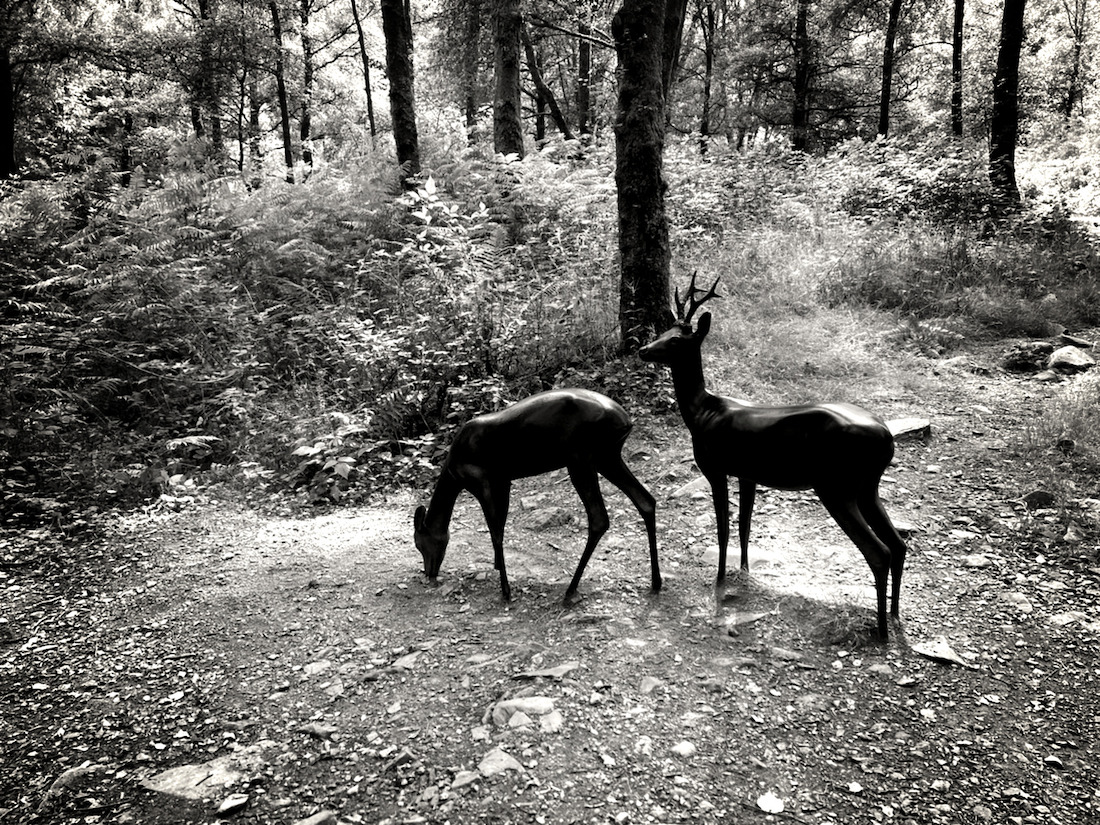
We even saw a beautiful sculpture of deer in Loch Lomond National Park.
But still no actual deer.
Then, on her last day, she told me her homestay hosts had been watching deer in their garden from their balcony.
She’d missed them by minutes.
Later that day, we were cycling along a single-track road back towards Crieff when I spotted movement in a field. We slowed down and looked.
There, in the shade of a hedge, was a roe deer.
Of all the dramatic deer encounters my guests have had, this was probably the least impressive.
But it was the one that meant the most.
→ Explore Experience English 1 to 1
“I didn’t quite know what I was buying when I booked. I’d never met anyone who brought together knowledge of language, the natural environment, and art and crafts like this.
It was like stepping inside another way of being”.
Antonio P.
How We Share Nature
Experience Nature Living, not Performing
We share nature in many different ways on our holidays — through walking, listening, eating, noticing absence, and sitting with complexity.
But it is important to know there is no formula.
We follow the seasons, and if we get lucky with a sighting, it’s a bonus.
We don’t curate nature as a list of sights. We share how nature becomes part of real conversation and real moments — and the pieces offer small glimpses of how that looks in practice.
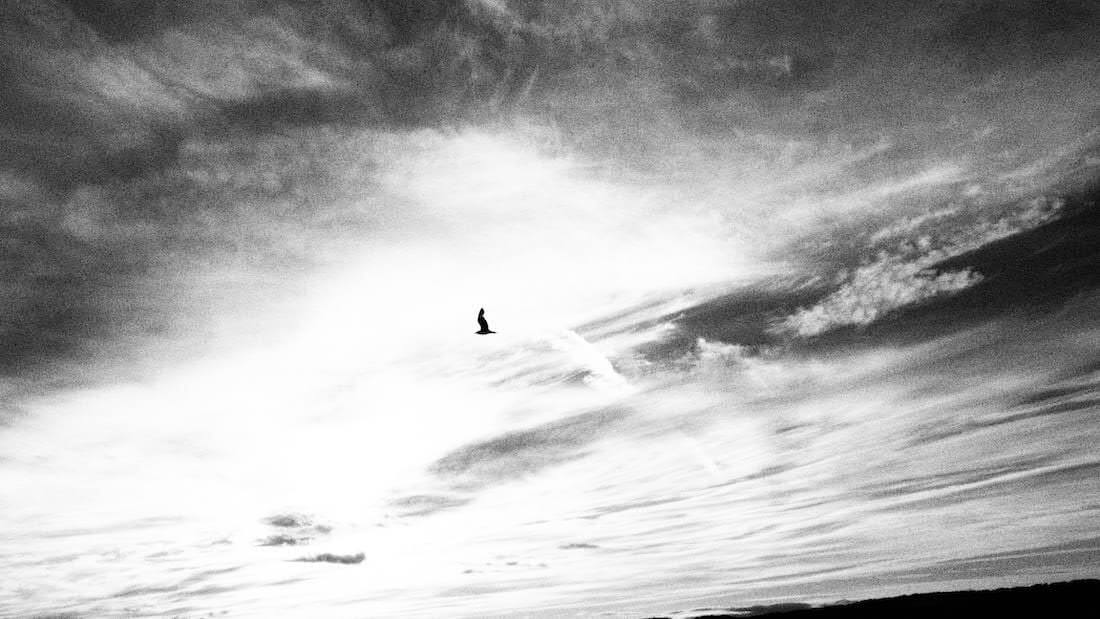
Scottish Bird Life
We regularly see kestrels, ospreys, and red kites in the skies over Perthshire — and occasionally eagles too.
One moment I always find magical happens on the scenic route from Edinburgh Airport to Crieff. As we cross Sheriffmuir, it’s common to see a kestrel hovering.
I love that within hours of stepping off a plane, we’re watching a bird held motionless in the sky.
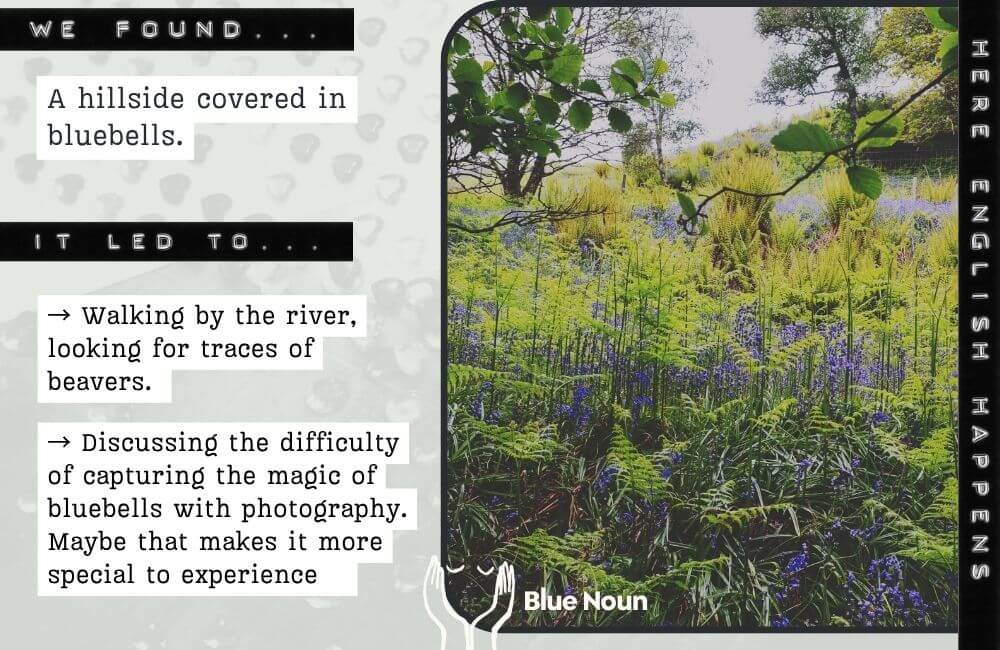
A Blue Noun Field Note
My Blue Noun Field Notes make visible some of what happens on a Blue Noun language holiday that a photograph alone can’t really explain.
This one came from walking beside a river, looking for traces of beavers, when we found a whole hillside covered in bluebells.
We tried to photograph it, but none of our pictures really captured what it felt like to stand there. That led to a conversation about why some experiences (and much of the Scottish landscape) resist being recorded — and whether that makes being there feel even more special.
Touched by Wildlife
It’s always a privilege to see wildlife – not a right. Enjoy this video of tiny young moorhens and imagine witnessing it yourself.
→ Argaty Red Kites
Argaty is a working farm that creates habitat for wildlife and, for the last decade, has been part of a nationwide project to reintroduce red kites to Scotland.
Join us in visiting the farm at feedingtime to see these magnificent birds circling and swooping. a photographer’s dream.
→ Golden Eagles
This blog tells the remarkable story of finding an injured golden eagle on one of our guided walks.
→ Unseen | The Crimes & Victims of Scotland’s Blood Sport Industry
→ Monarch of the Glen
Take a look at 7 deer encounters you may get on a Blue Noun holiday.
→ Try Canoeing or Kayaking (if you would like).
We love sharing a canoe trip because it helps you be a guest of nature and drift into places rarely seen by humans.
This blog shares an expedition to see beavers in the River Tay.
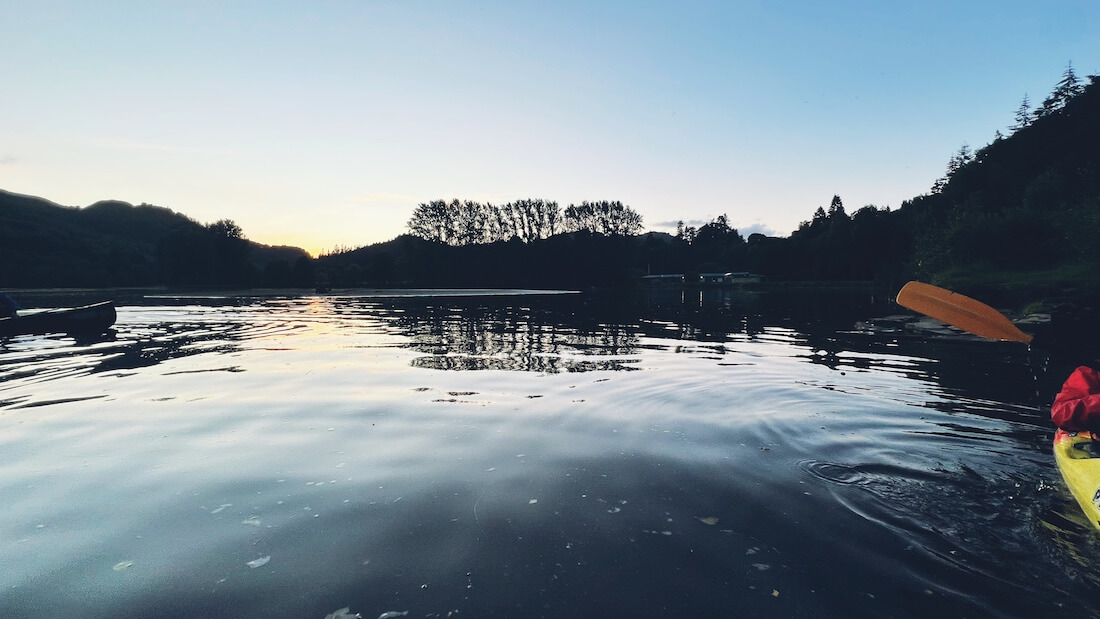
Do I Have to Go Canoeing?

landscape stories
→ Loch Freuchie and the Lost Souls of Glen Quaich
Take a walk around Loch Freuchie to discover Scottish history and modern-day land management.
I took this video of rare black grouse on a walk around Glen Quaich a few years ago.
→ A Story of a Cycle Path
This blog looks at how we share the landscape and nature through conversation while walking and exploring.
→ Imagining ‘What if’ for your English
This blog looks at one detail of our holidays: free-range milk, and how respecting that detail sets the tone for respecting your health and wellbeing and the ecosystem we reside in.
→ The View From Stirling Castle
This blog specifically helps visitors understand the landscape and wildlife they see from Stirling Castle’s battlements.
→ Practice Exercise for 2nd Conditional | About Scottish Fishing
A close look at fishing on Scottish rivers wrapped in language practice for independent learners
→ Practice Exercise for 2nd Conditional | About Scottish Fishing
→ A Slow Travel Visit to Loch Earn
If you’ve not visited Scotland, you may not know the ways that the landscape is always changing.
It’s a big part of why people fall in love with being here. Why they return.
And it’s why Scotland is the perfect destination for slow travel. The changing landscape makes you want to pause and just watch.
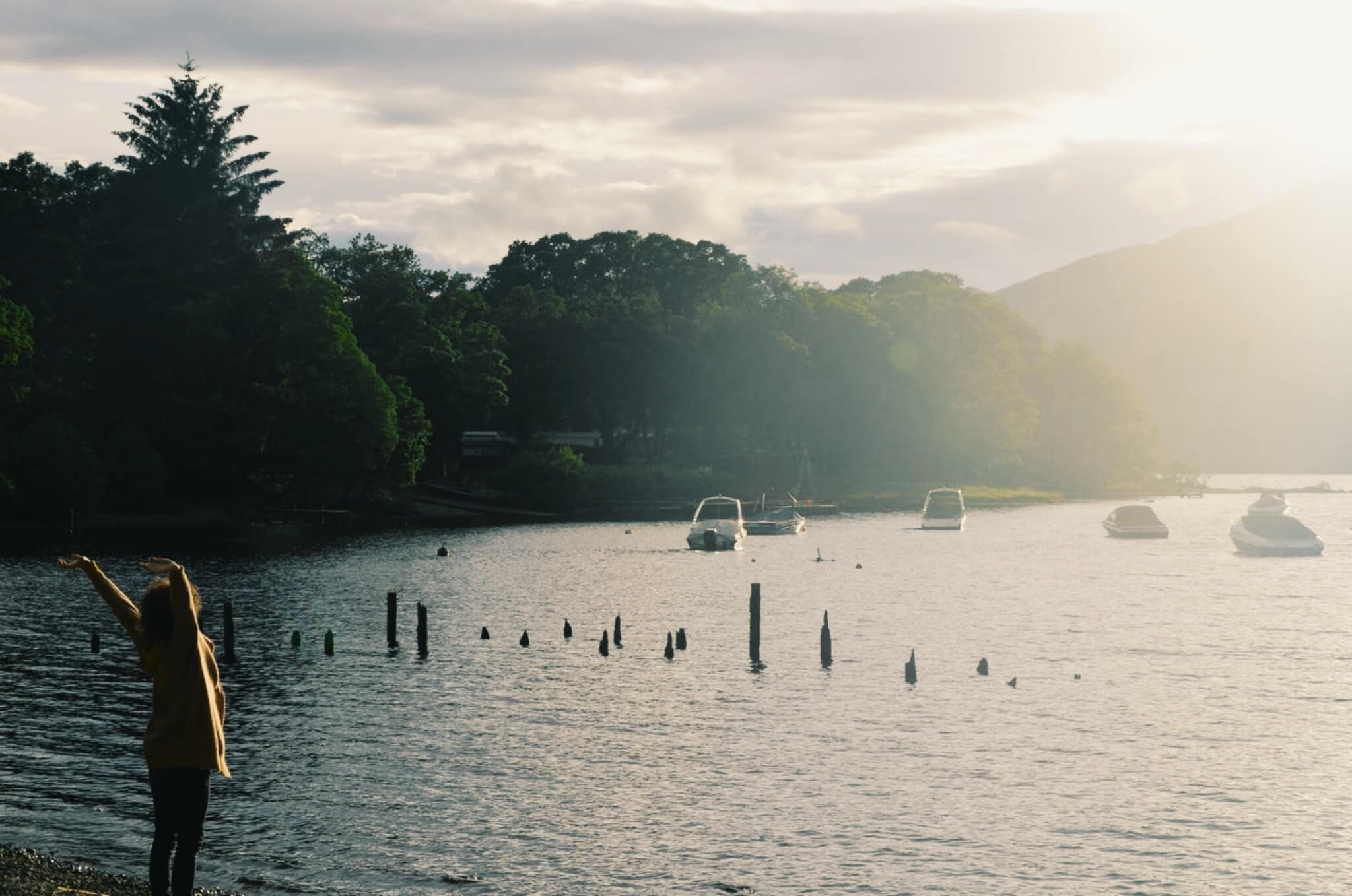
Wildlife Partners
Although we love going into nature with you, there are people in our local community who can share it with more expertise than us, including:
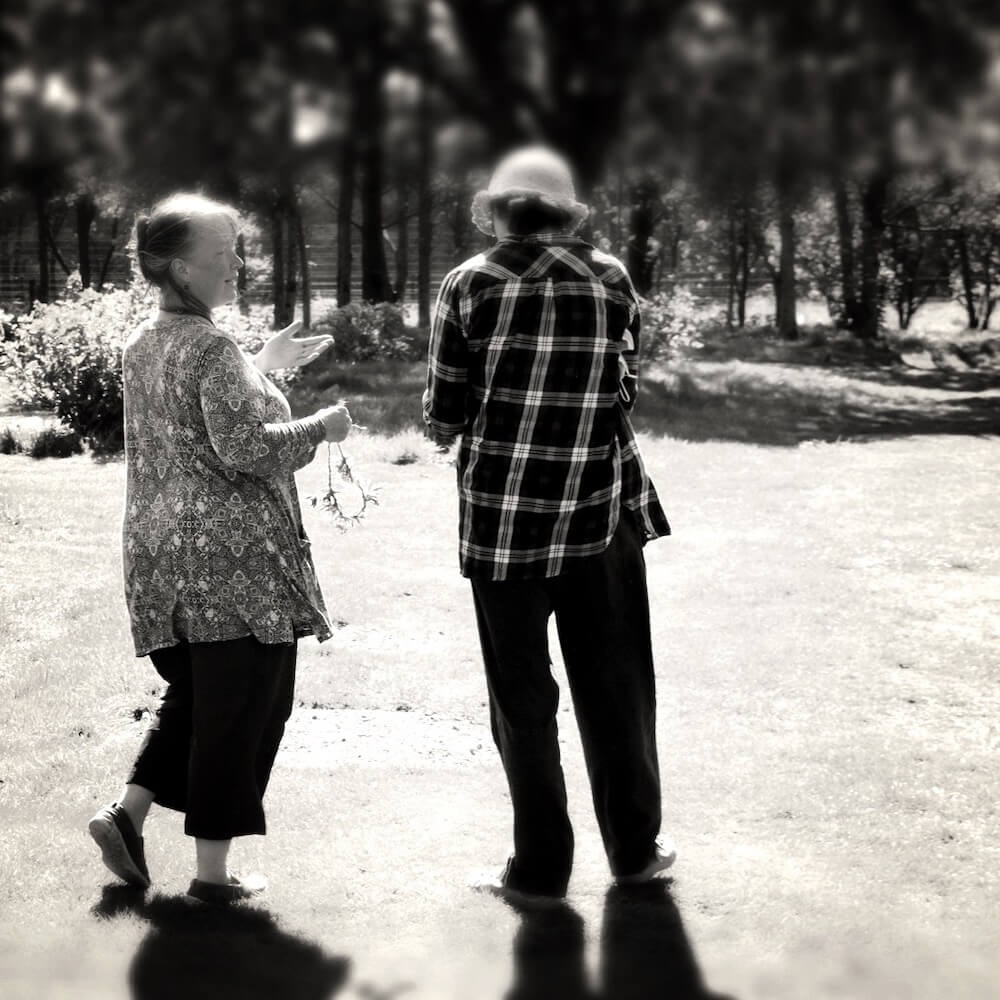
Claire Mullan
Herbalist and artist, Claire knows how to help you slow down and let nature touch your heart.
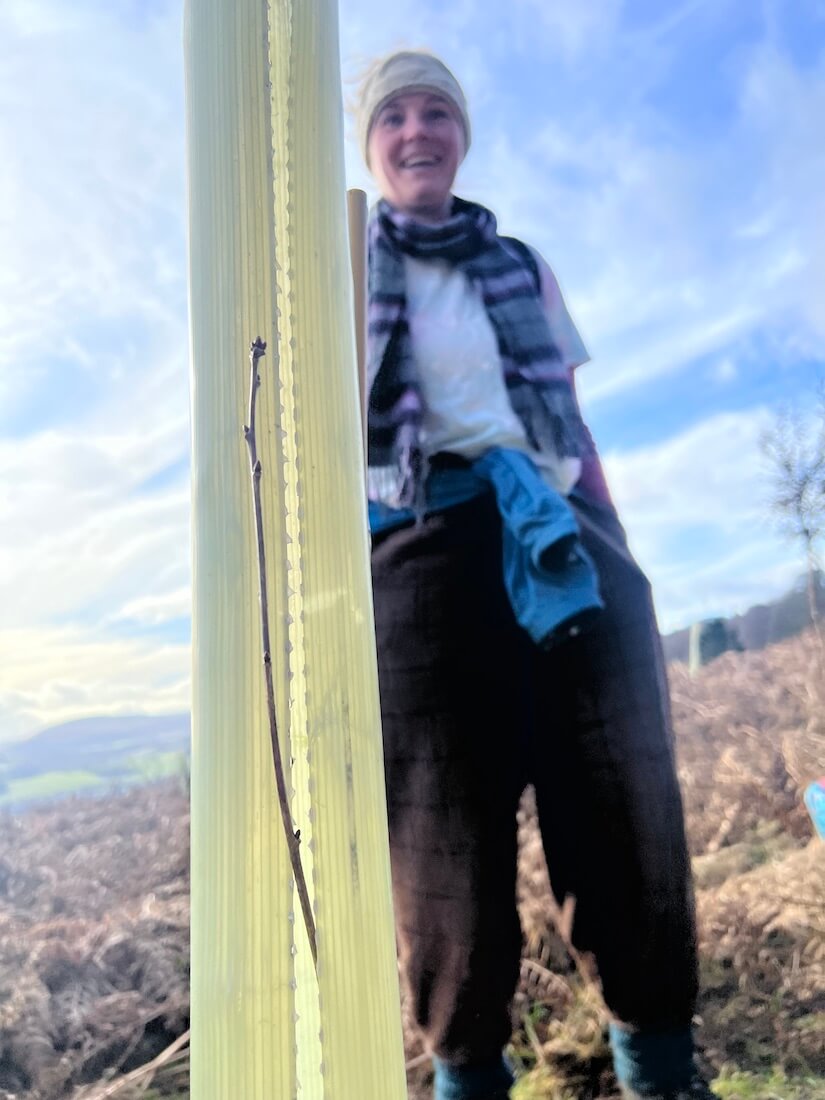
Jennifer Newall
A climate scientist who now shares nature and landscape in healthy ways, including guided walks, swims and cycling adventures.
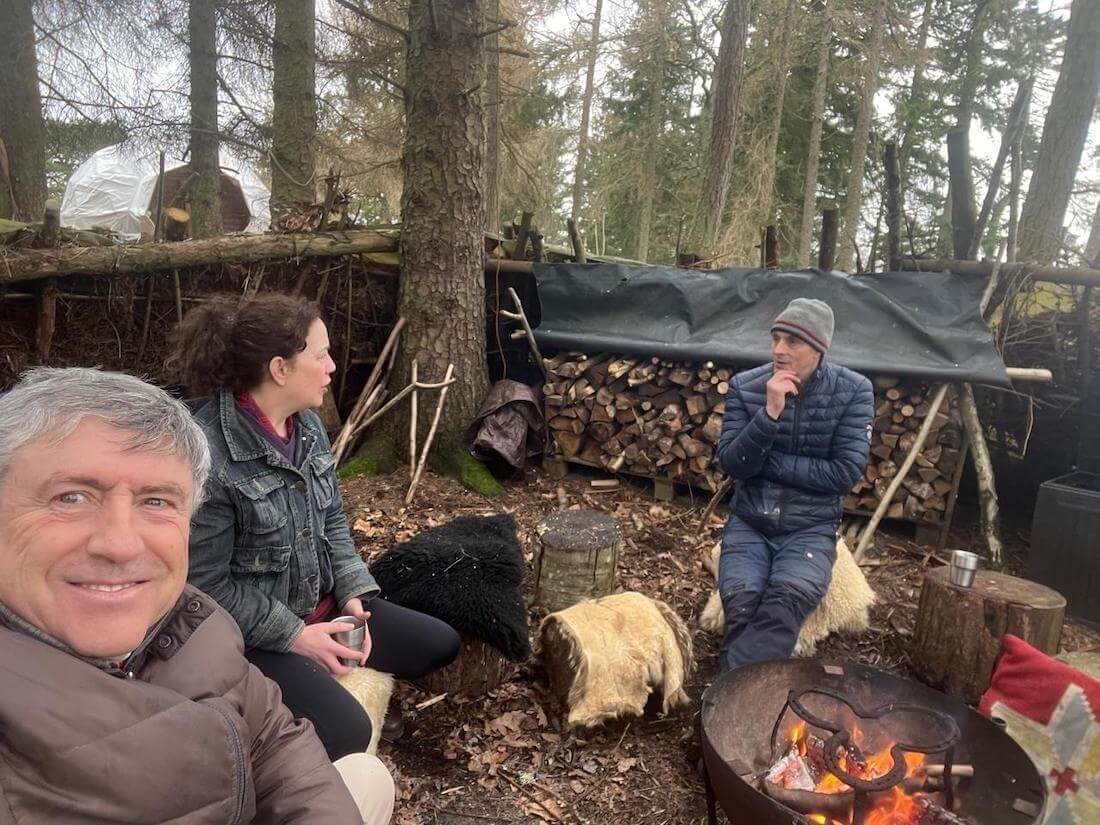
Iain, Do it Out Doors
Tucked into woodland in Perthshire, Do It Outdoors feels less like an activity centre and more like someone’s ongoing conversation with the landscape.
A Blue Noun Field Note
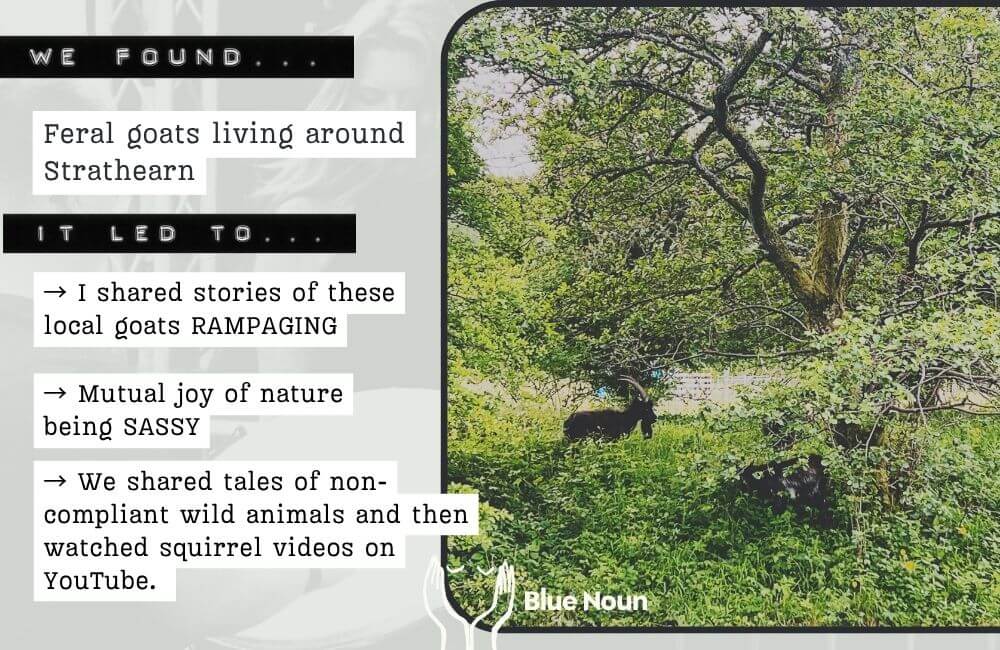
We came across these goats on a nature walk near the RIver Earn.
They are feral goats living around Strathearn — descendants of the hardy domestic goats once kept in Scotland, whose ancestors escaped, were released or were left behind as older farming systems changed.
They’re extremely good at making a life on steep, rocky ground and eating whatever the landscape provides.
They’re also wonderfully unruly neighbours. Stories about the local goats rampaging through gardens led us into swapping stories about wild animals behaving badly — and eventually gome back to the hub to share watching sassy squirrel videos on YouTube.
Responsible Travel
Nature is only one part of how we think about responsibility. You can read more about our wider approach here.
