How to Build Your Own English Holiday in the UK
We are Real-World English experts.
These are our tips for turning your holiday into a holiday that grows your English.

A D.I.Y Language Holiday
You don’t need to book a full language holiday to make meaningful progress with your English.
With a little planning, you can build English into almost any trip — whether you’re travelling alone or with family, to pursue a hobby, to stay in one place or to dash about seeing everything.
Make a few thoughtful choices, and you’ll have opportunities to notice, use and enjoy English while you’re away.
These are our best tips for practical ways to make your travels more conversation-rich, more memorable, and more supportive of your English.
Whether you’re visiting the UK for a weekend or travelling for several weeks, these ideas will help you return home feeling that your English is refreshed, charged and most importantly, yours.

Don’t Leave it to Chance
Most people underestimate how hard it will be to have quality conversations while travelling.
Don’t return home disappointed. Go with a strategy and a plan!

→ Before You Travel i
Spend time thinking about your language goals before the holiday starts, so you make choices that keep you on track.
This means that you will not only recognise good language opportunities as they happen, but also their potential, by their description.
Because you are choosing to DIY your language work, language opportunities won’t be labelled in a way that makes them easy to identify (as a language school would do).
Doing this research means you can more easily match what you need with what’s available.
→ Before You Travel ii
One of the easiest ways to improve your English while travelling is to make a few thoughtful selections before you leave home.
You can’t plan every conversation, but you can prebook experiences that naturally make English easier to use.
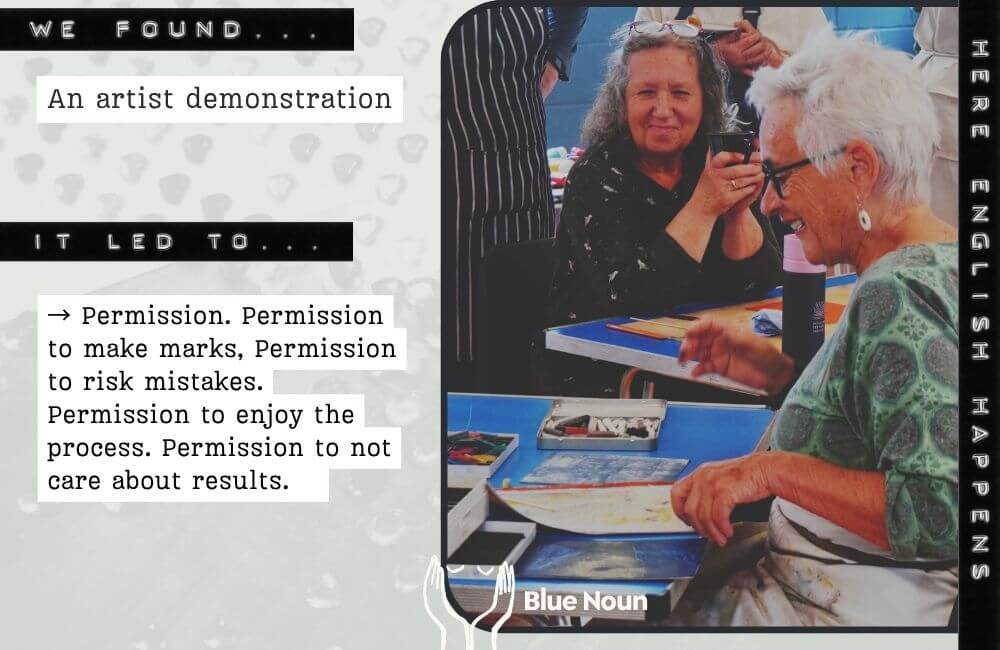
Start with something you already enjoy. If you paint, look for a local art workshop. If you love walking, join a guided walk or a local walking festival.
If you’re interested in music, history, food or gardening, see if there’s a small group experience where you’ll have opportunities to chat with local people and other visitors.
A little interest matching and research before your trip can turn ordinary holiday moments into memorable English ones.
As opposed to regular tourism, you’re not starting as an observer. You already understand the activity. This gives you a natural way into conversation because your attention isn’t on “speaking English”—it’s on doing something you genuinely enjoy.
It also changes your role. You’re no longer just visiting. You are part of something.
This feeds your identity as an English user powerfully.
It’s transformational because you were relaxed and having fun.
Get it right, and this is how you can feel coming home…

→ Find a Language School with Part-time or Drop-in Options
Depending on your personality, your need for rest, and your relationship with English, you might like to join a language class during your holiday. Some schools offer drop-in programmes, or book a couple of face-to-face lessons with a local teacher.
Blue Noun (us) has language options for holidays that are not classroom-based but give language support through a series of single-day experiences or creative workshops.
→ Explore One-Day English Experiences in Scotland
Adding a language skills workshop, a creative English experience, or a conversation session partway through your travels, when you’ve begun to notice what you can and can’t say, works so much better than hoping a language transformation will happen.
A short review towards the end of your trip can also help you make sense of everything you’ve heard, experienced and learnt and help you plan your next steps.
Importantly, this kind of support doesn’t take over your holiday.
It sits inside it.
You keep your freedom, but you’re no longer relying on chance.
Blue Noun is calling this The Middle Way.
In our opinion, it is an excellent way to effectively boost your English without compromising a private or family holiday.
→ More About a Private Language Holiday + Language School Course Hybrid Holiday
About Choosing Activities That Support Your English
Not every activity gives you the same opportunity to use English. Some will make it much easier to listen, ask questions and take part. Others can be surprisingly limiting, even if they should be a match.
Large group tours, for example, often move quickly and leave little room for conversation.
Smaller experiences tend to offer more opportunities to interact, ask questions and respond naturally. Hands-on experiences can be even more powerful.
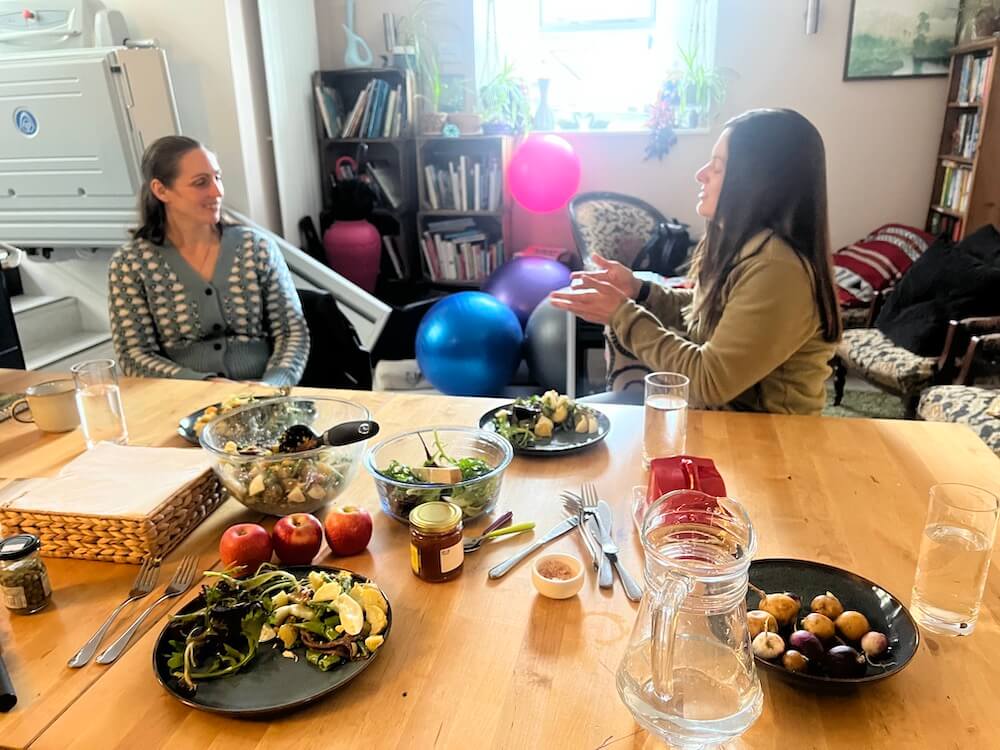
Creative workshops, farm visits, cookery classes and other practical activities give you context, repetition and a genuine reason to communicate.
These days they’re easy to find on Airbnb.
About Conversation Practice with Native Speakers
Not all conversation practice is the same.
This article compares free conversation with a native speaker, guided language development with a language professional, and stepping into a designed language experience, explaining the advantages and limitations of each.
Don’t Discount Obvious Tourism
Bus tours, for example, are designed with international visitors in mind.
The commentary is clear, the pace is manageable, and what you hear is supported by what you can see around you.
That combination makes it much easier to follow the language and stay engaged.
They are something I’ve recently added — slightly to my own surprise — to my English Coaching Days in Edinburgh.
Prove to Yourself Your English Works
Ultimately, if your language travel proves to yourself that your English works, it’s a great result.
Building confidence in English isn’t only about taking more lessons.
It’s about collecting enough real-world evidence of who you are in English.
And carefully designed experiences can be part of changing how you feel about speaking.
→ Language Travel: Collecting Real-World Evidence That Your English Already Works.




Tips for Coping
Lastly, if you find yourself disappointed by your comprehension, know you don’t need to understand every word for it to be useful.
Fast-spoken native English is hard to follow because it doesn’t sound like classroom English. This is the value of being immersed in it, even though it may feel disappointing to you at first.
There is a reason this is our most popular blog by a country mile!
Tips for Adapting
Notice which environments make English easier for you to access—and simply choose more.
Maybe you struggled in a museum tour, but had a really nice conversation with a waitress in the cafe. Be adaptable.
Be aware of what is working best for your confidence and your English.
Make it Manageable
A few hours of thoughtful support can help you notice patterns, build confidence and make better use of the English opportunities that naturally arise during the rest of your travels.
It doesn’t interrupt your holiday.
It becomes part of it.
A Pocket-sized English Travel Challenge for the Whole UK
If you’re able to find the right kind of English support locally, that can be a valuable part of your trip.
But in practice, that’s not always easy.
If you’re only in a place for a day or two, it can be difficult to find someone who:
- has availability at short notice
- knows how to work with the reality of a short trip — where your experiences, conversations, and questions become the material for the session
- can turn a real-life day into something that supports your English, rather than interrupting it
English is everywhere — but that doesn’t mean the support is.
So it’s worth having something with you.
A simple structure that helps you stay connected to your English as you travel — wherever you are.
If you’d like that, you can take a short English Holiday Challenge with you.
- a 15-minute English activity each day
- delivered by WhatsApp
- with light language support in the evening

Choose Support That Builds Confidence
Not all English support is equally helpful.
A few hours with the right teacher can be far more valuable than many hours in the wrong environment.
If you’re planning to invest in English during your trip, it’s worth understanding what actually makes a difference.
These articles will help you choose support that fits the way you want to learn and travel.
→ When More Lessons are not the Answer
Well-intentioned isn’t Always Useful
One disadvantage of travelling independently is that you have no one managing the language support around you.
Well-meaning people naturally translate, finish your sentences and correct your mistakes. While each interruption may seem small, together they can change the way you experience speaking English.
This page explains why Blue Noun approaches error correction differently.

A Different Kind of Progress
Language progress does not have only one form.
And remember, you don’t need to do everything at once.
It’s OK to set a goal like improving my listening or having three conversations a day.
There is a time and a place to do academic grammar crunching, and we are pretty certain that a holiday is not normally it.
→ Confident English: Why Feeling Good Speaking Matters More Than Progress
A small number of real experiences placed well into your holiday can go further than you might expect — especially when they fit naturally into your trip.
When your English is used in something that matters — a conversation, a place, a shared moment — it tends to stay with you.
You notice more.
You respond more easily.
You begin to trust what you can already do.
It’s not a complete learning system on its own.
But it can be the experience that shifts something.
The moment where your English starts to feel more like yours — and less like something you’re still trying to learn.